
3 Wild Animals Wisconsinites Can Be Fined for Feeding

Putting out food for wildlife feels like a small act of kindness.
Most of the time, nobody gives it a second thought.
But Wisconsin fines people for feeding certain animals, and one of them is an animal you might not expect to see in the state at all.
These are the wild animals you can be fined for feeding.
Note: This is general information, not legal advice. Wildlife feeding rules and county lists are subject to change, so confirm the current rules with the Wisconsin Department of Natural Resources.
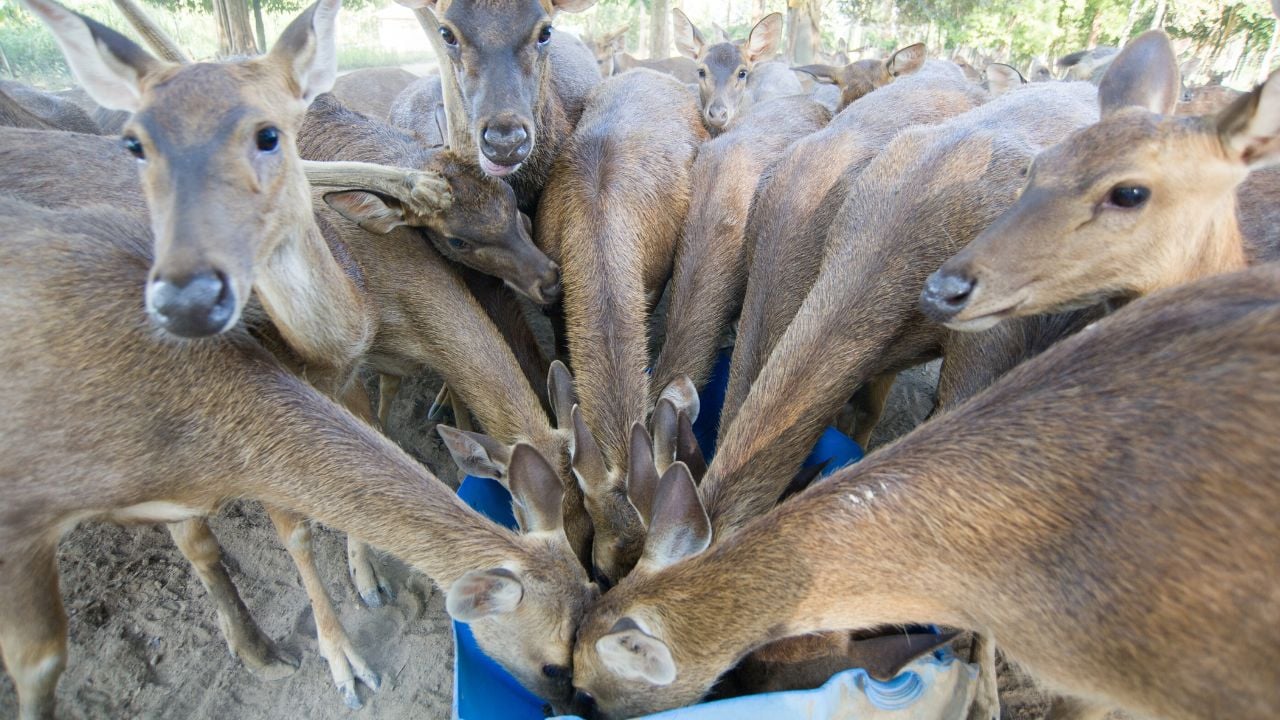
1. Deer
The Department of Natural Resources (DNR) bans deer feeding in 59 counties, and only 13 still allow it.
Whether a scoop of corn is legal depends on your county, so check the DNR’s list before you put anything out.
It takes a minute to check, which beats paying a ticket.
A conservation warden cited one man near Albany, in Green County, for feeding corn to deer, and he paid $343.50, The Monroe Times reported.
Ouch.
What Counts as Feeding Wild Animals
Wisconsin’s wildlife feeding rule covers any material placed to feed or attract wild animals.
That wording reaches well past corn.
Automatic, mechanical and gravity feeders are banned too, apart from certain bird feeders.
If you ignore a DNR notice to remove feed you placed illegally, the 2026 court bond schedule has a separate ticket line for that.
If you own or rent the land, you have to clear the feed out too once the DNR notifies you, when the person who put it there hasn’t.
2. Elk
It’s illegal to bait or feed elk, the DNR says.
The allowance that lets you hand-feed other wildlife leaves elk out, so hand-feeding an elk doesn’t get you around the rule.
Even apples can cost you.
On the court’s 2026 bond schedule, one ticket line covers placing material to feed or attract wild animals, and it lists $343.50 as the total.
That schedule has no separate feeding line for elk or bears.
3. Black Bears
The state’s feeding rule bars putting out feed for black bears, with narrow exceptions such as bait placed for bear hunting or bear dog training.
Because that ticket line covers any wild animal, a handout to a bear can draw the same ticket.
The DNR says never to feed a bear, whether you mean to or not.
Birdseed packs a lot of calories, which makes your feeder look like a snack bar to a bear.
Bears come back.
Black bears are known for returning to places where they’ve found food before, so a single handout can bring a bear back to your yard.
So bird feeders should come down whenever bears are active.
Even where deer feeding is allowed, you can’t put out feed at a site you know bears use.
If bears or elk start using your deer feeding site, you can’t place feed they can reach within 50 yards of your home or business for at least 30 days.
6 Things Snowy Owls Do When They Show Up in Wisconsin Every Winter
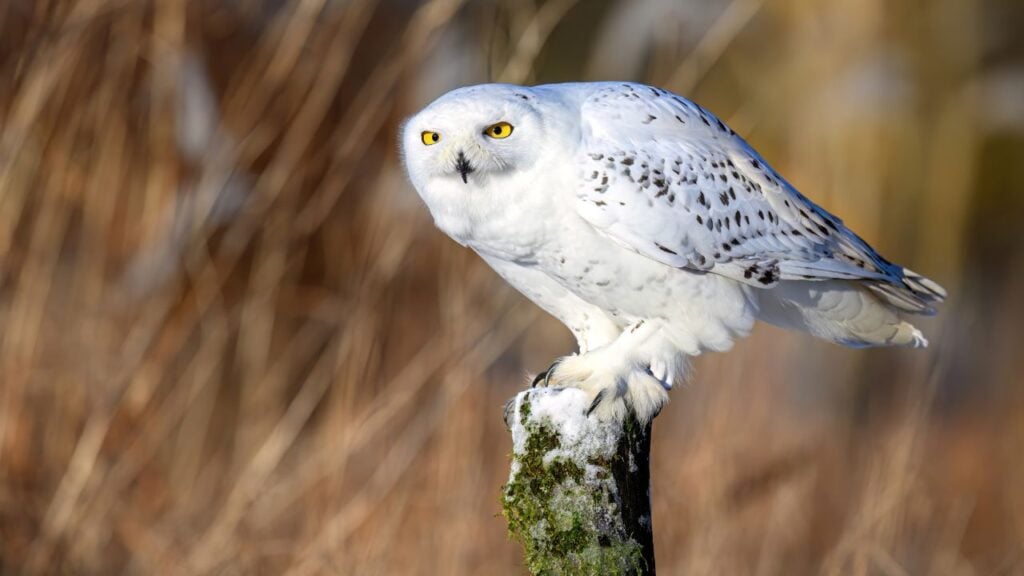
That white lump on a hay bale in a farm field might be a snowy owl.
Here’s what snowy owls do when they show up each winter.
6 Things Snowy Owls Do When They Show Up in Wisconsin Every Winter
Counties Where Deer Feeding Is Allowed
Deer feeding is still allowed in 13 counties, so your county can change the answer for deer in a way it doesn’t for elk.
Those counties are Ashland, Bayfield, Brown, Burnett, Door, Douglas, Iron, Kewaunee, Price, Rusk, Sawyer, Taylor and Washburn.
If your county is on the list, you can put out feed, but the state sets limits.
Washburn County joined the list when the DNR lifted its ban on Nov. 9, 2026.
You can put out no more than 2 gallons of feed at a site, and the feed can’t contain any animal part or byproduct.
That’s two milk jugs.
Your feeding site has to be within 50 yards of an owner-occupied home or a business open to the public.
It has to stay at least 100 yards from a road posted at 45 mph or higher.
County and local ordinances can still apply in those 13 counties, so check yours before you set anything out.
Bait Tickets by the Gallon
Hunting bait is feed put out for deer or bear, and an illegal pile draws a ticket that grows with its size.
If you hunt deer where baiting is allowed, you can put out no more than 2 gallons at a site, and sites have to sit at least 100 yards apart.
The court schedule lists $343.50 for illegal bait under 5 gallons, $544.50 from 5 to 25 gallons and $745.50 above that.
The big jump?
The biggest pile costs more than twice what a backyard handout does, so measure before you set bait out.
Illegal bear bait uses the same three tiers.
Counties on the Deer Feeding Ban List
A state law tells the DNR to bar deer feeding in counties tied to chronic wasting disease (CWD) or bovine tuberculosis.
Your county makes the list if it’s in a CWD control zone, had a confirmed positive after 1997 or has land within 10 miles of a confirmed positive.
One trigger is enough.
New detections can add bans yet this year, the DNR says, so you’ll want to recheck the county map before each deer season.
Psst! How much do you know about wildlife and the outdoors? Take our quiz and see how many you can get right.
Quiz
Wildlife IQ
Answer nine questions on wildlife, outdoors and state symbols. We bet you can’t get them all right. Prove us wrong?
Which bird is Wisconsin’s official symbol of peace?
Feeding Birds and Other Wildlife
Wildlife feeding has exceptions, including bird feeders and hand-feeding other wildlife.
Bird feeders get a pass.
Your feeder qualifies if it sits high enough, or is designed well enough, to keep deer from reaching it.
You can hand-feed other wildlife if the food stays within 30 feet of you and you clean up what's left before you walk more than 30 feet away.
A bird feeder more than 50 yards from your home is a different story because the court schedule has a separate line for it that lists $243.
6 Wisconsin Supper Club Habits Nobody Explains to Newcomers
Your first night at a supper club can come with a few surprises.
Here are the habits that can trip up a newcomer.
