
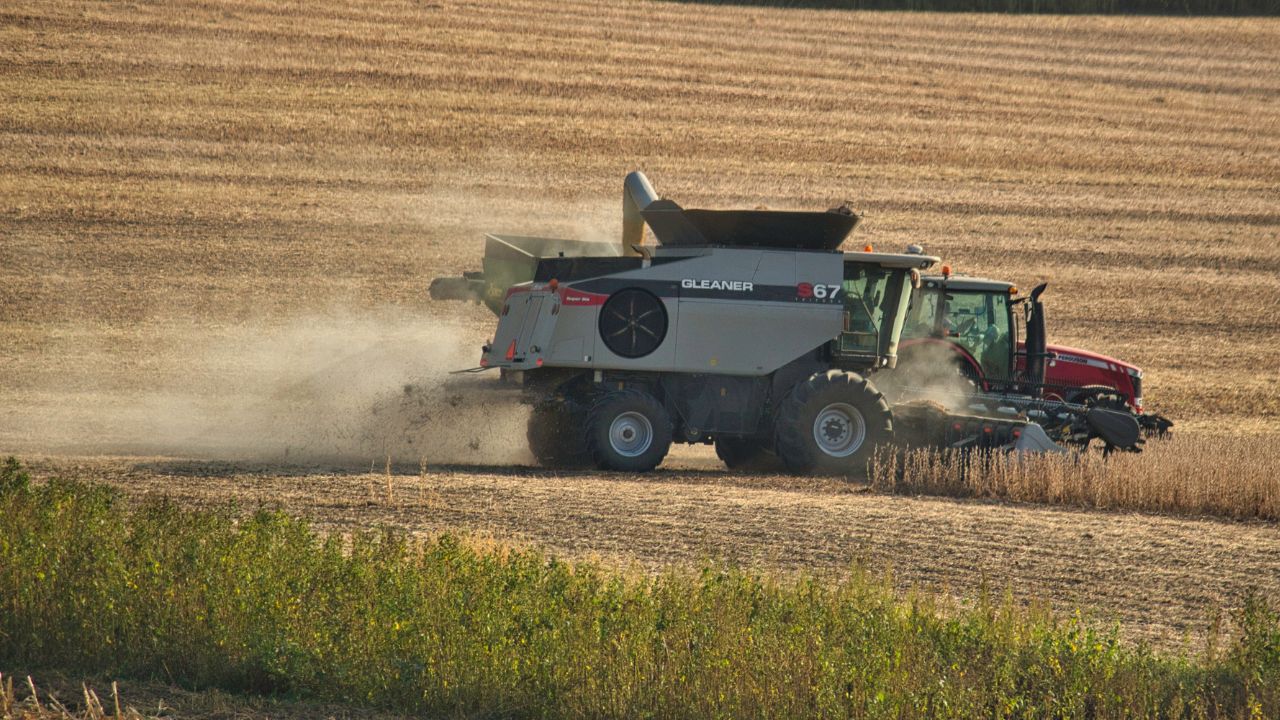
4 Farm Equipment Rules Iowans Break Every Harvest

A loaded grain truck rumbles off a gravel section-line road and onto Highway 30 outside Marshalltown, carrying more weight than Iowa’s normal semi-truck limit allows.
Nobody pulls it over.
Gov. Kim Reynolds’ office lifted Iowa’s usual overweight-road permit rule for corn and soybean hauls when this year’s harvest opened, an exception that runs out October 10.
But Iowa’s other farm equipment rules still apply.
These are the farm equipment rules Iowans break every harvest.
Note: This is general information, not legal advice. Iowa’s farm equipment rules and permit limits are subject to change, so confirm current requirements with the Iowa Department of Transportation.
1. SMV Emblem
The slow-moving-vehicle (SMV) emblem is the orange-and-red reflective triangle bolted to the back of almost every farm tractor, combine, and grain cart on the road.
Iowa Code 321.383 requires any farm tractor, self-propelled implement of husbandry, or towed equipment running 35 mph or under to display an SMV emblem.
That emblem has to be built to the American Society of Agricultural Engineers standard and visible from the rear.
Many farmers don’t.
Sun and weather wear on that reflective triangle faster than many farmers expect, and a faded or cracked emblem no longer meets the engineering standard it was built to.
Working lights and reflectors are exactly the equipment check that lapses when slow-moving machinery is logging the most road hours of the year.
Skip it, and the citation is a simple misdemeanor carrying a $135 scheduled fine under Iowa’s uniform citation schedule, not a trip to court.
Check yours before you pull onto the highway this fall.
2. After-Dark Amber Light
Iowa’s amber flashing light rule is the easiest requirement to let slide once the sun goes down.
Iowa Code 321.423 requires farm tractors and self-propelled implements of husbandry running 35 mph or under to run a flashing amber light, visible from the rear, from sunset to sunrise.
If towed equipment blocks that light from view, Iowa’s rule requires a second amber light mounted where drivers behind can see it.
Farmers run combines well past sunset once the crop is dry and the forecast turns.
Marshall County’s sheriff’s office names a dark amber flasher among the mistakes that show up every harvest season.
A dirty windshield doesn’t help either, and the same sheriff’s office lists grimy mirrors and windows right alongside it.
None of it takes long to fix before pulling onto the road, and the scheduled fine for the amber-light violation alone runs $45.
That adds up fast.
3. Signal Lights on Towed Implements
Iowa’s farm equipment lighting rules don’t stop at the tractor’s lights.
Iowa Administrative Rule 661-24.1 applies the state’s stop-lamp and turn-signal standard, Iowa Code 321.404, directly to a towed implement of husbandry, not just the vehicle pulling it.
A tractor rolls off the lot wired for a taillight, a brake light, and a turn signal.
Many grain carts, wagons, and other pull-behind implements don’t come wired at all.
That’s exactly why Iowa’s rule makes the towed unit’s lighting the operator’s responsibility once it blocks the tractor’s lights from view.
It still counts.
If a load you’re towing hides your tractor’s lights, Iowa’s rule puts a working taillight, brake light, and turn signal on that load, not just on the tractor.
Iowa’s citation schedule prices a violation of that stop-lamp and turn-signal standard at $45, the same fine as a dark amber flasher.
How Far Back a Towed Implement’s Lights Must Reach
Iowa’s rule sets exact visibility distances for a towed implement’s lighting, not a vague be-visible standard.
The taillight has to show red from 500 feet back.
The brake light and turn signal only have to reach 100 feet, but both still have to work.
Psst! How much do you know about Iowa’s farming history? Take our quiz and see how many you can get right.
Quiz
Iowa Harvest Trivia IQ
Answer these questions on Iowa farming and harvest history. We bet you can’t get them all right. Prove us wrong?
Which Iowa city is home to John Deere’s largest factory anywhere in the world?
4. Harvest Weight Ceiling
Iowa's harvest weight exception is easy to mistake for no rule at all.
Corn, soybeans, hay, and several other commodities can move under Gov. Kim Reynolds' harvest proclamation without the standard overweight permit, from September 10 through October 10.
It isn't a blank check.
The proclamation puts the Iowa Department of Public Safety in charge of watching how truckers use that exception, balancing public safety against the push to keep harvest trucks moving.
Gross weight still tops out at 90,000 pounds, and axle weight can't run more than 12.5% over the state's 20,000-pound legal limit.
The interstate system is excluded from the exception, and every truck still has to obey posted road and bridge limits.
That last part is where it breaks down.
Iowa's counties, not the governor's office, decide what a given bridge can carry.
A county engineer sets that number based on how the span was built, not on the calendar.
The proclamation's exception doesn't touch it.
Iowa's counties post those bridge limits for a reason.
A few pounds over on paper can mean structural stress on a span that's carried the same weight limit for decades.
10 Things the Record Shows About Boar's Head at the Publix Deli Counter
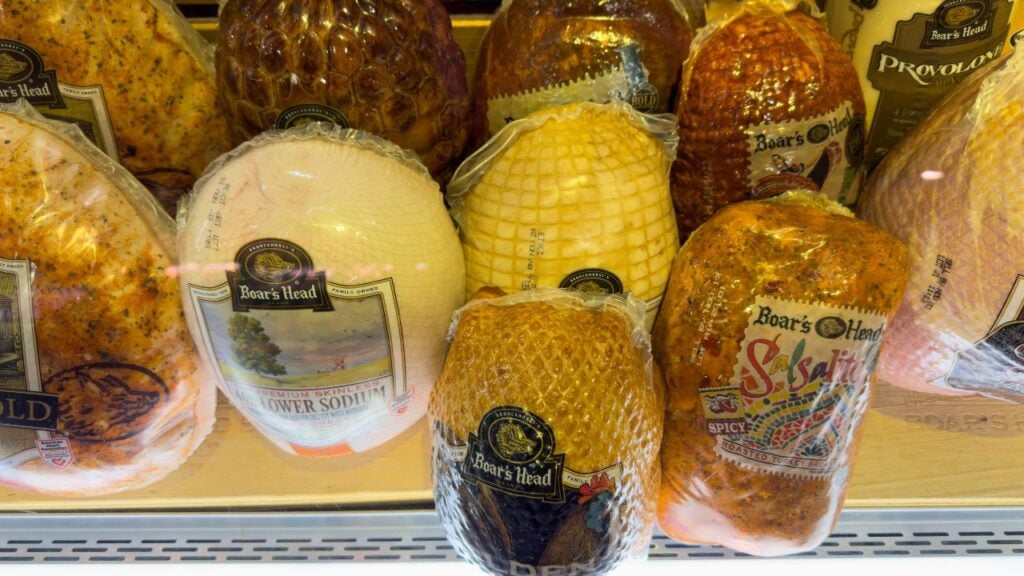
The Boar's Head label sits behind the glass at deli counters everywhere, and it has carried a federal paper trail since 2024.
None of that paper trail came from shoppers asking questions at the counter.
10 Things the Record Shows About Boar's Head at the Publix Deli Counter
