
4 Fees California Drivers Pay That Many Other States Skip

At least 23 states never make a driver pay to prove a car isn’t polluting.
California isn’t among them.
These are the fees California drivers pay that many other states never bill a driver for at all.
Note: This is general information, not tax or legal advice. Fees, rates, and exemptions are subject to change.
1. California’s Vehicle License Fee
California’s Vehicle License Fee charges every car owner 0.65% of the vehicle’s value each year, in place of a property tax on the vehicle.
It never skips a year.
On a $28,700 car, WalletHub’s 2026 analysis puts that fee at $187 a year, and the same math runs every year the car is on the road.
Half the states in that same analysis charge $0 in vehicle property tax on an identical car, Texas, Florida, New York, and Illinois among them.
Virginia charges the most in the country, over $1,100 a year on that same car, but California’s fee still applies to every owner, new car or old, without exception.
2. California’s Transportation Improvement Fee
California’s Transportation Improvement Fee adds a second, separate charge to every registration, on top of the Vehicle License Fee, based on what the car is worth.
It’s a second charge.
It’s not a substitute for the first fee.
The California Department of Motor Vehicles (DMV) sets a fee table that runs from $33 for the least expensive cars up to $231 for any vehicle worth $60,000 or more.
A driver renewing a $60,000 electric truck or luxury sedan pays that $231 before the Vehicle License Fee, the base registration, or any other charge joins it.
Texas charges every passenger vehicle the same $50.75 state registration fee in 2026, whether it’s a ten-year-old sedan or a new luxury SUV.
Ohio’s base registration fee works the same way, charging a flat rate no matter what the car is worth.
California charges two separate value-based fees on top of its own base registration, an extra cost a flat-fee state simply never adds.
The Math Behind California’s Two Value-Based Fees
California’s Vehicle License Fee and Transportation Improvement Fee both key off the same number: What the car is worth.
A $35,000 car owes 0.65% for the Vehicle License Fee, or $227.50 a year.
That same car falls into the $35,000-to-$59,999 bracket for the Transportation Improvement Fee, an extra $198.
Together, those two fees alone add up to $425.50, before the base registration, the smog fees, or anything tied to the county.
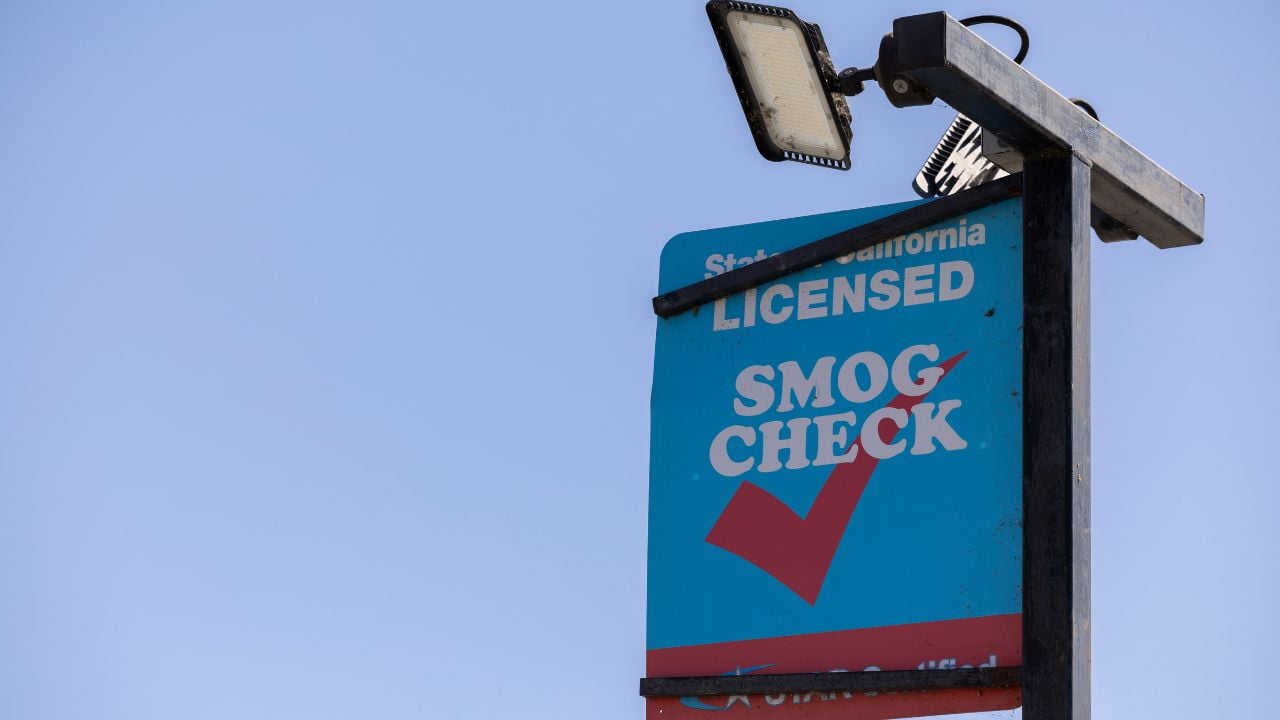
3. California’s Smog Check Fees
California requires many gasoline-powered vehicles to pass a smog check every two years, starting once a car passes eight model years old.
Electric cars skip it entirely.
That test isn’t free.
A standard test at a California smog check station runs $30 to $80, depending on the station and the county.
California’s Bureau of Automotive Repair also charges its own $8.25 certificate fee on every passing test, statewide.
A newer car can pay a $20 smog abatement fee instead of taking the test at all.
Selling a car under four model years old adds its own $8 smog transfer fee at the DMV.
At least 23 states, including Florida, South Carolina, Michigan, and Washington, require no vehicle emissions test of any kind, according to a 2026 state-by-state survey.
A gasoline car in California can’t renew its registration without dealing with smog costs in some form, year after year.
4. California’s Tire Fee
California’s tire fee adds $1.75 to the price of every new tire sold in the state, whether it comes on a new car or off a shop shelf.
That’s not sales tax.
California has charged that same rate since 2005, and it splits the money between CalRecycle’s tire-recycling grants and the California Air Resources Board’s pollution-control programs.
At least 14 states, including Massachusetts, Texas, Wyoming, and Iowa, collect no state tire fee at all, according to the U.S. Tire Manufacturers Association’s own state-by-state survey.
Buy four tires in California, and the state’s cut comes to $7 before the shop even mounts them.
Psst! How does California’s driver-fee bill stack up against the rest of the country? Sort this table by your own state and see.
California Is Testing a Bigger Change
California is piloting a mileage-based fee that could someday replace the gas tax altogether.
Not yet, though.
Caltrans ran a pilot program from August 2024 through January 2025, and volunteers paid a per-mile charge instead of the tax at the pump to see how the system would work.
The idea exists because the state collects less gas tax as cars get more efficient and more drivers go electric.
A final report on the pilot is due to the state legislature by December 2026, and nothing has been decided about turning it into a requirement for every driver.
More than 5,000 vehicles took part in the pilot.
Drivers logged their mileage one of three ways: A plug-in dash device, their automaker’s connected-car account, or a monthly photo of the odometer.
Caltrans paid each volunteer up to $400 for taking part, an incentive built into the test itself rather than a bill anyone owed.
8 WinCo Mistakes That Cost Californians Money Every Week

WinCo sells rice, rolled oats, and candy by the pound out of open bulk bins, and Californians line up for the savings.
A few habits at the register and the ATM machine cancel out the discount every single week.
8 WinCo Mistakes That Cost Californians Money Every Week
9 Ways to Spot a California Transplant Anywhere in America

A California transplant reapplies sunscreen under a gray Minneapolis sky in December, and a neighbor asks why she bothers.
Some habits never check the calendar, no matter how far from California they travel.
