

4 Findings in ASU’s 2026 Housing Report That Should Worry Older Arizonans

Staying put as you age sounds simple.
But a report from Arizona State University looked at home prices, rents, incomes and insurance, and some of what it found is hard to hear for older Arizonans.
Here’s what the findings could mean for older Arizonans and the people who love them.
Note: This is general information, not financial advice. Housing figures and dollar amounts are subject to change.
Who Ran the Numbers
The housing report from ASU is the flagship publication of the Arizona Research Center for Housing and Economic Solutions (ARCHES).
ARCHES is co-located at ASU’s Morrison Institute for Public Policy and two other Arizona university institutes, and a federal award helped pay for the work behind the report.
The researchers pulled together public data and outside reports on home prices, rents, incomes and insurance, then tracked how those numbers changed over the years.
The report also includes research spotlights, including one on aging that talked with residents around Prescott.
1. Yavapai County’s Older Adults
In its Prescott-area case study, the report finds that 44% of Yavapai County residents are over age 60.
That gives the county the second largest share of older adults in Arizona, with a median age of 55 compared with 39 statewide.
Census Bureau estimates put 36.8% of the county’s residents at 65 or older.
Roughly half of the county’s adults over 65 are low-income, meaning they earn 80% or less of the state median household income.
By that math, using the Census Bureau’s statewide median household income of $79,964, the line sits near $64,000 a year.
If you’re renting in the county, 54% of renters pay more than 30% of their income on housing.
Yavapai is also the only county in Arizona without a Public Housing Authority, a local agency that manages public housing.
Homes in the county aren’t cheap either, since Yavapai has some of the highest home prices in the state.
The report says 77% of the county’s residents own their homes.
Census Bureau figures put the county’s median home value at $425,200 against a median household income of $69,613, a gap of about six to one.
2. Aging in Place in Prescott
Researchers behind the housing report conducted four focus groups with Prescott-area residents over age 60.
Residents who were aging in place described rising rents for people on Social Security.
They also described aging homes unfit for changing mobility needs.
One participant described feeling stuck, living alone and older with more upkeep than they could handle and no way to afford a change.
Participants also said that food, transportation and medical care are hurdles to aging in place.
Practitioners who provide free or low-cost resources for seniors in the Prescott area described challenges with housing accessibility, affordability and stability too.
If you’re aging in place, you may recognize some of that.
3. Fast-Growing 65-Plus Population
Arizonans 65 and older made up 16% of the state’s population in 2014 and 20% in 2024, according to ASU’s housing report.
Over those ten years, that group grew 39%, three times the 13% growth of the state’s total population.
If you’re 65 or older, you’re in the group that outpaced every other age group.
Census Bureau estimates for 2025 put the share at 20.6%, or about one in five residents.
The report says access to safe, affordable housing for this group is critical.
4. Unsheltered Homelessness Among Older Adults
The 2025 point-in-time count in the report found 1,113 Arizonans aged 64 or older experiencing homelessness, about 7% of all unhoused people.
Of those, 583 were sheltered and 530 were unsheltered.
The elderly unhoused population rose 6.5% in 2025.
The share without shelter rose too, from 39% of the older group in 2023 to nearly half (48%) in 2025.
The report says low-income older renters face an elevated risk of homelessness as rising rents become cost-prohibitive on a fixed income.
Arizona’s median gross rent rose 38% from 2014 to 2024, from $1,211 to $1,672.
That’s $461 more every month.
If you rent on a fixed income, those rising rents are the squeeze.
Older adults may also be at higher risk of entering homelessness after a health problem or the death of a spouse.
Psst! How much do you know about Sun City, London Bridge and Arizona’s senior property valuation freeze? Take our quiz and see if you can ace it.
Quiz
Arizona Retirement Trivia
Answer these questions on Sun City, London Bridge and property tax breaks. We bet you can’t get them all right. Prove us wrong?
How many people toured Sun City during its three-day opening weekend in January 1960?
Homeowner Cost Burden
ASU's housing report found that 24% of Arizona homeowners spent 30% or more of their income on housing, utilities included, in 2024.
That share fell from 33% in 2010 to 21% in 2019.
It has risen since the pandemic, and 2024 was the second year in a row it went up.
The report calls the increases small.
Homes also got pricier faster than paychecks, since after inflation, home values rose 73% from 2014 to 2024 while household income rose 16%.
For households with someone 65 or older, America's Health Rankings, using Census Bureau data, found that 31.1% of Arizona households were cost-burdened in 2024, compared with 33.3% across the country.
That measure counts every household with an adult 65 or older, not just homeowners, so it covers a wider group than the report's 24%.
If your household is one of them, at least 30 cents of every dollar you bring in goes to housing.
Cost Burden on a Social Security Check
The report treats a homeowner as cost-burdened when housing costs, utilities included, take 30% or more of income.
Utilities weigh heavily in Arizona, where the yearly cost of air conditioning is more than double the national average.
The average retired-worker Social Security check was $2,074.53 a month in January 2026, according to the Social Security Administration.
Thirty percent of that check is about $622.
If that check is your only income, housing and utilities above $622 a month push you past 30% of it.
Home Insurance Premiums
The housing report says home insurance premiums in Arizona rose between 40% and 70% from 2019 to 2024.
It bases that range on reports drawing from different national data sources.
A September 2026 news story reports that Arizona homeowners now pay more for insurance than property taxes after premiums rose 71% in five years, with a LendingTree analysis putting the average annual premium at $2,225.
The 71% comes from a different analysis than the report's range, so the two figures don't match exactly.
That works out to about $185 a month.
At $2,225 a year, insurance costs more than the $1,950 for property taxes.
If Social Security is your main income, $2,225 is roughly 9% of the national average retired-worker check for a full year.
The report also cites an estimate that a $500 premium increase is linked to a 20% rise in the likelihood of mortgage delinquency within 12 months.
The Arizona Department of Insurance and Financial Institutions has never rejected a rate filing for a homeowner's insurance product.
Manufactured Home Prices
The report puts the average price of a manufactured home in Arizona at $148,800 in 2023, up more than 52% from $97,500 in 2018.
Arizona had the third-highest increase nationally during that stretch.
That's about $51,000 more than the 2018 average.
Nationally, the Consumer Financial Protection Bureau found that about 3.2 million adults age 60 and older lived in mobile homes as of February 2022.
That's nearly a third of all adults living in mobile homes across the country.
If you own a mobile home but rent the lot under it, ABC15 reported in 2024 that one Tempe resident's lot lease rose from $700 to $1,000 over five years.
7 HOA Fees Arizona Retirees Don't Budget for Until It's Too Late
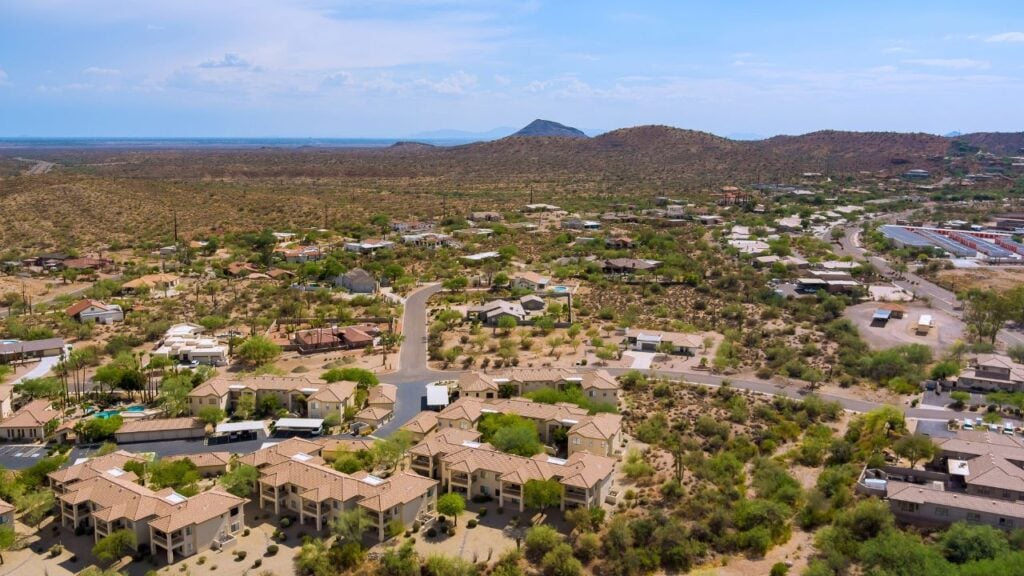
A mortgage payment or a rent check isn't the only housing bill.
Extra costs can pile up long before foreclosure becomes a worry.
7 HOA Fees Arizona Retirees Don't Budget for Until It's Too Late
3 Bashas' Deals Arizonans Miss by Shopping the Wrong Day

Some days at the grocery store are better than others, so the calendar can matter.
