
4 Homestead Exemption Steps South Carolina Widows and Widowers Miss

South Carolina’s homestead exemption wipes out property tax on the first $50,000 of a home’s value.
That means on a $250,000 house, the county bills as if it were worth $200,000.
A surviving spouse can keep that break. Whether they do comes down to steps the county never walks anyone through.
These are the homestead exemption steps South Carolina widows and widowers sometimes miss.
Note: This is general information, not legal or tax advice. Exemption rules, deadlines, and required paperwork are subject to change, so confirm the current details with your county auditor’s office.
1. Reapplying in Your Name
South Carolina’s homestead exemption resets the moment a qualifying spouse dies.
The exemption wipes out tax on the first $50,000 of a home’s value for anyone 65 or older, permanently and totally disabled, or legally blind.
South Carolina law defines that phrase precisely for this exemption.
Permanently and totally disabled means the inability to hold a job because of a medical condition expected to last at least a year or result in death.
The South Carolina Department of Revenue (SCDOR) is direct about what comes after approval.
A homeowner never has to reapply, except after a move or the death of the person who qualified.
A spouse’s death is exactly that second trigger, not a paperwork afterthought.
Widows and widowers who assume the exemption carries over into their name lose it.
The county auditor has no way to know a homeowner died until somebody files a new application.
It never happens automatically.
The Math Behind the $50,000 Break
South Carolina’s homestead exemption doesn’t erase a tax bill.
It shrinks the number a county starts from.
Say a home carries a taxable value of $250,000.
With the exemption, the county, the municipality, the school district, and any special assessment calculate their share on just $200,000 of that instead of the full $250,000.
The county still taxes every dollar above that first $50,000 the normal way.
2. Getting the Deed Fast
South Carolina gives a widow or widower a strict window to make the home legally theirs.
That same homestead law keeps the exemption alive for a widow or widower under one condition.
They have to acquire complete fee simple title or a life estate to the house within nine months of the death.
Occupying the home isn’t enough.
The deed has to say so.
That’s a tight window.
South Carolina requires an estate to stay open for creditor claims for at least eight months after the notice to creditors first runs in the newspaper.
The person settling the estate can take longer than that to close it out completely.
A widow or widower who waits on probate to finish before touching the deed can watch the nine-month window close first.
Talking to the probate court or an estate attorney early is what keeps the nine-month clock and the estate’s timeline from colliding.
3. Skipping the Wait Until 65
A South Carolina widow or widower doesn’t have to turn 65 to keep the homestead exemption.
Only the spouse who died needed to qualify.
Dorchester County’s auditor’s office spells this out for applicants directly.
A surviving spouse doesn’t have to be 65, disabled, or blind to keep an exemption their spouse already earned.
That runs opposite to how many widows and widowers assume the rule works.
A homeowner who waits to file until their 65th birthday, thinking that’s the requirement, can go years paying full tax on a home that already qualified through a late spouse.
A widow in her 50s whose husband was already 66 and drawing the exemption keeps every dollar of it.
She needs the deed in time, and she has to stay unmarried.
Age never enters into it.
4. Filing by July 15
South Carolina holds every homestead exemption application to one filing date, and a widow’s or widower’s brand-new application meets that same deadline.
The statute requires a written application before July 16 of the tax year to claim that year’s exemption.
That’s the exact application Reapply in Your Name describes above.
A widow or widower who waits past July 15 to file that new application in their name doesn’t just start the exemption late.
They lose a full year.
Lexington County’s assessor’s office lays out what that looks like in practice.
An application filed between January 1 and July 15 covers that same tax year.
One filed on July 16 or later rolls forward to the year after instead.
A grieving family can lose track of a deadline that easily.
That first cutoff doesn’t bend for anyone.
Lexington County’s page describes one narrow exception behind it, though.
A first-time applicant can still file between July 16 and the county’s first penalty date for that tax year.
A widow or widower filing for the exemption for the very first time after a spouse’s death counts as a first-time applicant.
Qualify during that later window, and the county may refund the preceding year’s tax.
It isn’t a second July 15.
It only opens a possible refund for someone filing that first application late.
Psst! How much do you know about South Carolina property tax breaks beyond the homestead exemption? Take our quiz and see how many you can get right.
Quiz
Palmetto Property Tax IQ
Answer these questions on South Carolina property tax breaks. We bet you can’t get them all right. Prove us wrong?
Does South Carolina’s property tax code offer any exemption for the surviving spouse of a service member killed in action?
What Remarrying Undoes
A South Carolina widow's or widower's surviving-spouse exemption comes with one condition attached.
That condition is remarriage.
That same homestead law only protects the exemption so long as the surviving spouse remains unmarried.
A second marriage cancels the break tied to the first spouse's qualification, no matter how long it ran.
That doesn't shut the door completely.
A remarried widow or widower who is 65 or older, permanently and totally disabled, or legally blind can still apply for the same $50,000 exemption under the ordinary homestead rules.
That application asks the remarried homeowner to qualify in their name this time.
The 65-or-older, disabled, or blind requirement no longer transfers from a spouse who died.
A remarried widow or widower has to meet one of those three tests personally to keep the $50,000 exemption.
9 South Carolina Roadside Stands Locals Stop At and Tourists Drive Past

A minivan cruises down Business Highway 17 near Murrells Inlet with the windows down and a hotel in Myrtle Beach already loaded into the phone's navigation app.
Nobody in that minivan slows down for the folding table of boiled peanuts on the shoulder, and that's exactly the stand locals stop for.
9 South Carolina Roadside Stands Locals Stop At and Tourists Drive Past
7 Charges on Every South Carolina Power Bill That Have Nothing to Do With Electricity
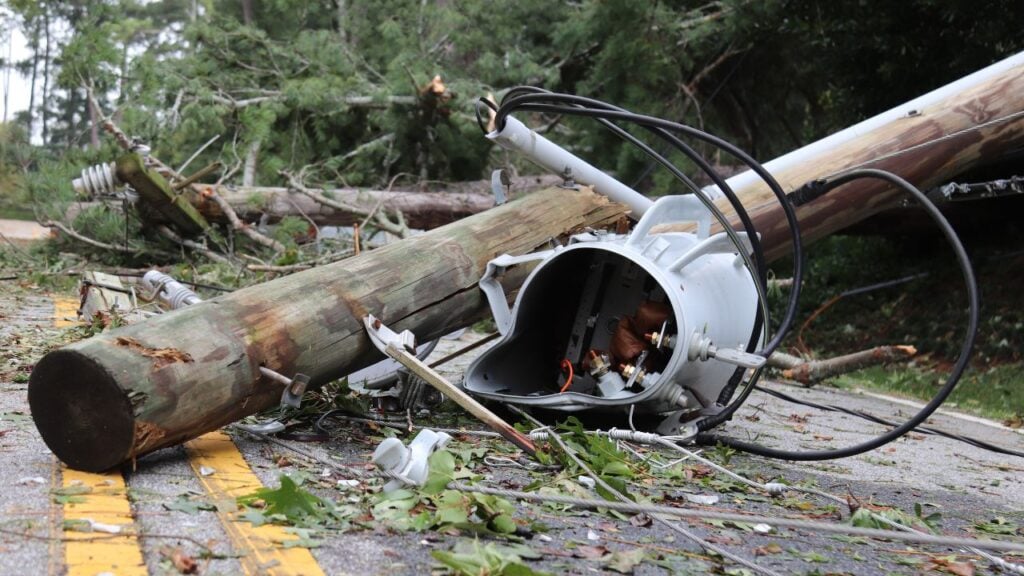
Duke Energy Carolinas customers started paying $4.58 more every month starting in January 2026, to retire bonds sold after Hurricane Helene.
That line has nothing to do with how much power a home uses, and it isn't the only one buried in a South Carolina electric bill.
7 Charges on Every South Carolina Power Bill That Have Nothing to Do With Electricity
