
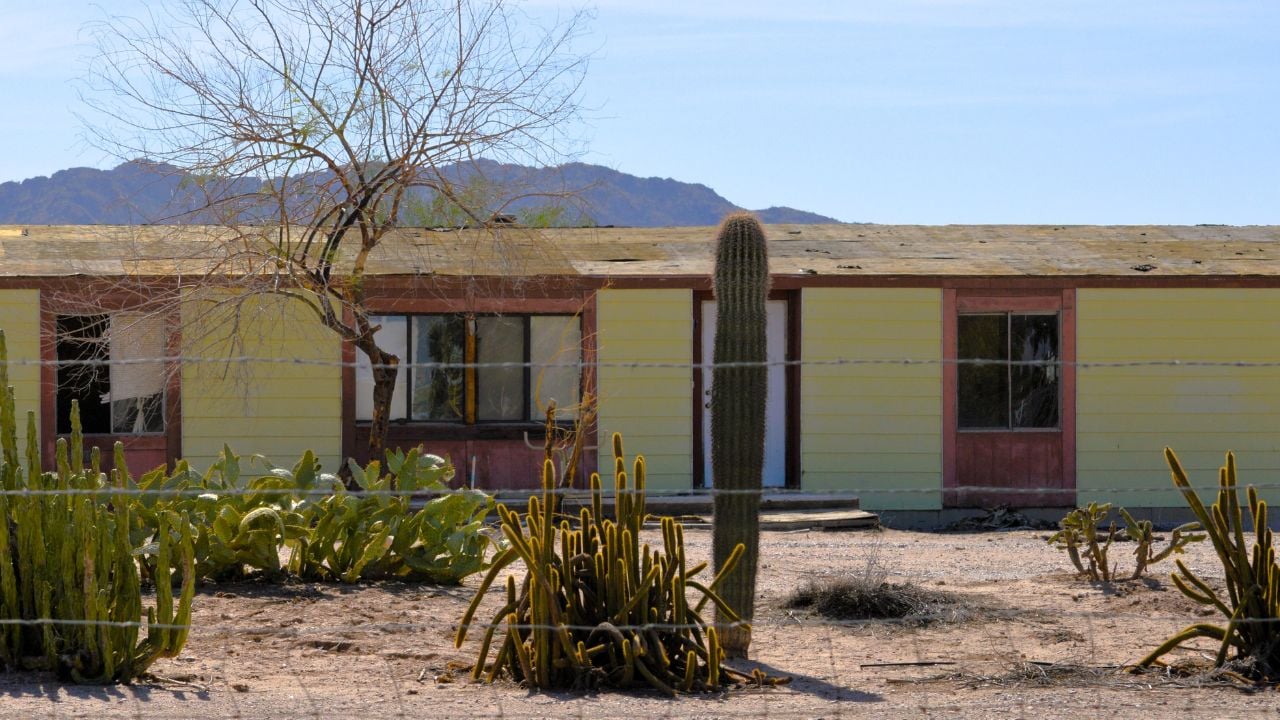
4 Squatter Laws Every Arizona Homeowner Needs to Know

A squatter inside your Arizona home can face criminal charges, not just a court case.
The right path to getting them out depends on the situation, and the law gives you more than one.
Here are the squatter laws every Arizona homeowner needs to know.
Note: This is general information, not legal advice. Property laws and required timelines are subject to change.
1. Unauthorized Occupant Fast Track
Senate Bill 1426 added a court route for removing squatters from your home.
Gov. Katie Hobbs signed it on May 29, 2026.
It took effect in September.
The Legislature passed it with bipartisan support.
The law adds a new way to bring a forcible detainer case, the court action owners use to regain possession of a property.
If someone living in your home without authorization refuses a reasonable request to leave, you or your authorized agent can take that person to court.
Keep a record of when you asked the person to leave, since the statute depends on that request.
Once the judge signs a judgment against that occupant, the court has to issue a writ of restitution immediately.
A writ of restitution is the court order that returns the property to the owner.
A constable has estimated that removal under the law could take less than five days.
The fast track leaves out current or former tenants, immediate family members of the owner and anyone who had a prior agreement with the owner to live there.
2. Ten Years on the Land
Adverse possession is the rule that can cut off your right to sue a squatter after years of use.
You have ten years to file a lawsuit against someone who has been using your land and claiming it against you.
During that time, the person has to be cultivating, using and enjoying the property.
If you wait longer than that, the deadline can bar your lawsuit.
That can happen with a lot you inherited and never visit.
How Squatters’ Years Are Counted
The adverse possession statute defines a squatter’s hold as an actual and visible taking of land that opposes the owner’s claim.
Possession counts as peaceable only when no legal action to recover the property has interrupted it.
The years can pass from one holder to the next if the holders share privity of estate, a legal link between them.
3. Three Years With Shaky Paperwork
A squatter who shows a deed or similar paperwork can shorten the time you have to sue.
If the person has peaceable, adverse possession under title or color of title, you have three years to file.
Color of title is a chain of transfers that reaches the person living there, even if one link in the chain is irregular.
A deed that isn’t perfect can still cut your time to sue from ten years to three.
Psst! Can you tell which property claims hold up? Tap each card and see how many you can call.
4. Trespass That Counts as a Felony
A squatter inside your house can face criminal charges as well as a court case.
Arizona law makes it a class 6 felony to knowingly enter or remain unlawfully in a residential structure.
That covers both the person who breaks in and the person who stays where they have no right to be.
If a stranger is living in your house, you’re dealing with a possible crime, not only a civil dispute.
Photograph the property and write down the date you first found the person there.
Exceptions to the Fast Track
The squatter fast track in Senate Bill 1426 comes with conditions.
It covers a residential dwelling or property used for residential purposes.
It doesn’t apply if a lawsuit is pending between you and the occupant.
Nor does it apply if the property was open to the public when the person walked in.
The law leaves landlord and tenant rights under the state’s Residential Landlord and Tenant Act as they were.
After a Property Sale
Squatters aren’t the only occupants a court can remove.
A separate statute lets you use forcible detainer against someone who stays after a property sells and receives written demand for possession.
Foreclosure sales and trustee’s sales are covered, and so are ordinary sales by an owner once the title transfers.
The statute doesn’t touch anyone living there under a lease or another right that outranks the sale.
Forged Deeds and Liens
Reporting on the squatter law described one couple whose home was fraudulently sold through notarized documents filed with the county.
Recording a document you know, or have reason to know, is forged or groundless against a property is a class 5 felony.
You can sue for at least $5,000 or triple your actual damages, whichever is greater, plus attorney fees.
You can ask the superior court to clear your title through a special action, a court case that asks a judge to remove the document from your title.
When an Occupant Claims a Lease
Squatters can create a false lease to try to prove they have a rental agreement, according to Capitol Times coverage of the law.
The squatter fast track doesn’t reach current or former tenants, though, so an occupant who is a tenant falls under the landlord and tenant act instead.
That act bars a landlord from unlawfully locking out a tenant or willfully cutting off electric, gas or water service.
If you lock out a tenant anyway, that tenant can recover possession of the home or end the rental agreement.
Either way, the tenant can recover an amount not more than two months’ periodic rent or twice the actual damages, whichever is greater.
5 Things That Happen to an Arizona Senior Freeze When a Homeowner Moves

Thinking about a move after years in the same Arizona home?
If you’ve held your house for years, a move can change more than your address.
5 Things That Happen to an Arizona Senior Freeze When a Homeowner Moves
9 Florida Fence and Property Line Rules Neighbors Get Wrong

A fence post set two feet over the line can turn next-door neighbors into courtroom opponents.
Florida’s fence and property line rules can be easy to miss.
