
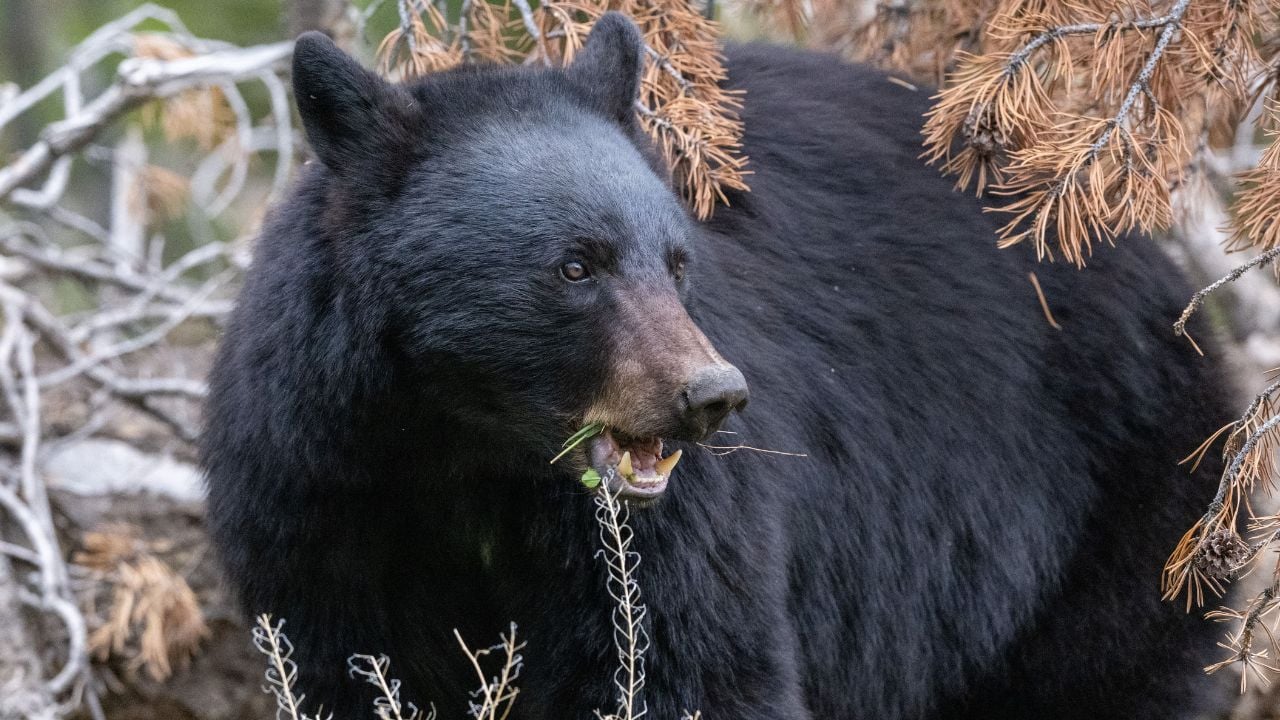
4 Things Black Bears Do in Late Fall That Surprise North Carolinians

It’s November, and you might figure every black bear in North Carolina is tucked away for winter.
Some won’t den until December or January. Until then, they’re out looking for food nearly around the clock.
Here’s what black bears do in late fall that surprises North Carolinians.
Note: This is general information, not legal advice. Wildlife rules and local ordinances are subject to change, so confirm the current requirements with the North Carolina Wildlife Resources Commission.
1. Gaining Pounds by the Day
When fall feeding lasts into early winter, black bears can put on as much as 3 pounds a day.
To gain that much, they search for food up to 20 hours a day.
Bears are typically most active at dawn and dusk, so watch for a bear on your early walks and when you take the trash out in the evening.
2. Eating Leftover Corn and Acorns
North Carolina State University’s extension service lists acorns, beech nuts and persimmon fruits on the black bear menu from August through November.
Its list for late October through March includes corn and other leftover grain, plus acorns, gallberry fruits and greenbrier.
3. Denning as Early as November
The Wildlife Resources Commission says black bears can start entering dens as early as November.
Inside a tree cavity, hollow log or cave, they usually build a nest of leaves, sticks and grass.
The nest often looks like a giant bird nest.
Many people picture a den deep in the woods.
That’s not always the case.
Bears have been known to den under bushes, in brush piles and in piles of building materials.
Vacant buildings, garages, storage sheds and vacation homes that sit empty over the winter are on that list too.
To keep them out, secure your property before they settle in.
BearWise.org has instructions you can follow for crawlspaces, porches and decks.
4. Delaying the Den
Black bears don’t all den on the same schedule.
Some hold out until December or January, and they keep searching for food nearly around the clock.
In the coastal plain, male bears may stay active throughout the winter.
Where bears find dependable year-round human-provided food, they may not hibernate at all.
That’s one more reason to keep your garbage and bird feeders out of reach.
Bird Feeders and Garbage
Black bears also go after bird feeders, unsecured garbage and compost, along with soybeans and standing corn.
In Highlands, an ordinance bars you from leaving food, garbage or anything else where bears can reach it.
Neighbors in the BearWise-recognized Mountain Meadows I community in Asheville agreed to put garbage carts at the curb only the morning of collection.
You can follow the same cart routine even if your neighbors haven’t signed on.
BearWise, a program supported by state wildlife agencies, lists six at-home basics.
They include securing food, garbage and recycling, taking bird feeders down when bears are active and never leaving pet food outdoors.
Cleaning and storing your grill is on the list too.
Reporting Concerning Black Bear Behavior
The N.C. Wildlife Helpline takes calls about concerning or threatening black bear behavior.
It’s open Monday through Friday, 8 a.m. to 5 p.m., at 866-318-2401.
For emergencies after business hours, call 800-662-7137.
If a bear poses an emergency, call 911.
After Hurricane Helene
Hurricane Helene changed what a black bear could find in Asheville and the rest of Buncombe County.
In October 2024, state wildlife officials said storm damage to infrastructure and local government services created increased opportunities for bears to find food.
Trash, unattended donation drop-offs and rotting foods were among the sources.
If you leave trash outside, a black bear can find it quickly and be tempted to come back.
Residents were also asked to keep windows and doors closed and latched when bears were nearby.
Acorns were plentiful in October 2024 as well.
Driving Near Bears
The Wildlife Resources Commission lists steps for avoiding a collision with a bear or any other wildlife.
At night, consider driving below the speed limit to give yourself more stopping time.
Scan the sides of the road for eyeshine at night, and pay extra attention where bushes and trees are close to the road.
The North Carolina Wildlife Resources Commission says most insurance companies advise honking your horn repeatedly and flashing your high beams if you see an animal in the road.
Avoid the animal only if you can do so safely, and don’t swerve into another lane or slam on your brakes unless you know you can.
Psst! How much do you know about black bears in North Carolina? Take our quiz and see if you can ace it.
Quiz
Black Bear IQ
Answer eight questions on North Carolina’s black bears and the rules around them. We bet you can’t get them all right. Prove us wrong?
By the time they den, black bears can gain roughly what share of their summer weight?
Buncombe County Bear Reports
Black bears and people cross paths often in Buncombe County, which accounts for over 40% of the human-bear interactions reported statewide.
From May 1 through Sept. 30, 2026, the commission received 836 reports of bear activity there.
Of those, 71 involved a bear inside a home.
On Oct. 1, 2026, the state approved an emergency rule banning the feeding of black bears in Buncombe County.
If you live there, it covers leaving out unsecured trash or pet food, not just feeding bears on purpose.
The rule still needed final approval from the Office of Administrative Hearings when it was announced.
State wildlife officials said the rule will have criminal consequences and, for the first time, allow state wildlife enforcement jurisdiction.
A matching temporary rule has a public comment period that ends Nov. 6, 2026.
The share is higher for forced home entries.
Of the forced home entries by bears reported statewide over the last three years, 72% happened in Buncombe County.
14 Things Only a North Carolina Childhood Teaches You

Growing up in North Carolina teaches you things kids in other states don't pick up.
A kid in Murphy and a kid in Manteo learn different lessons.
14 Things Only a North Carolina Childhood Teaches You
4 Regional BBQ Styles That Divide North Carolina Neighbors

This guide covers four regional barbecue styles, from eastern whole-hog to Lexington's tomato dip.
It shows what divides North Carolina neighbors, plate by plate.
