
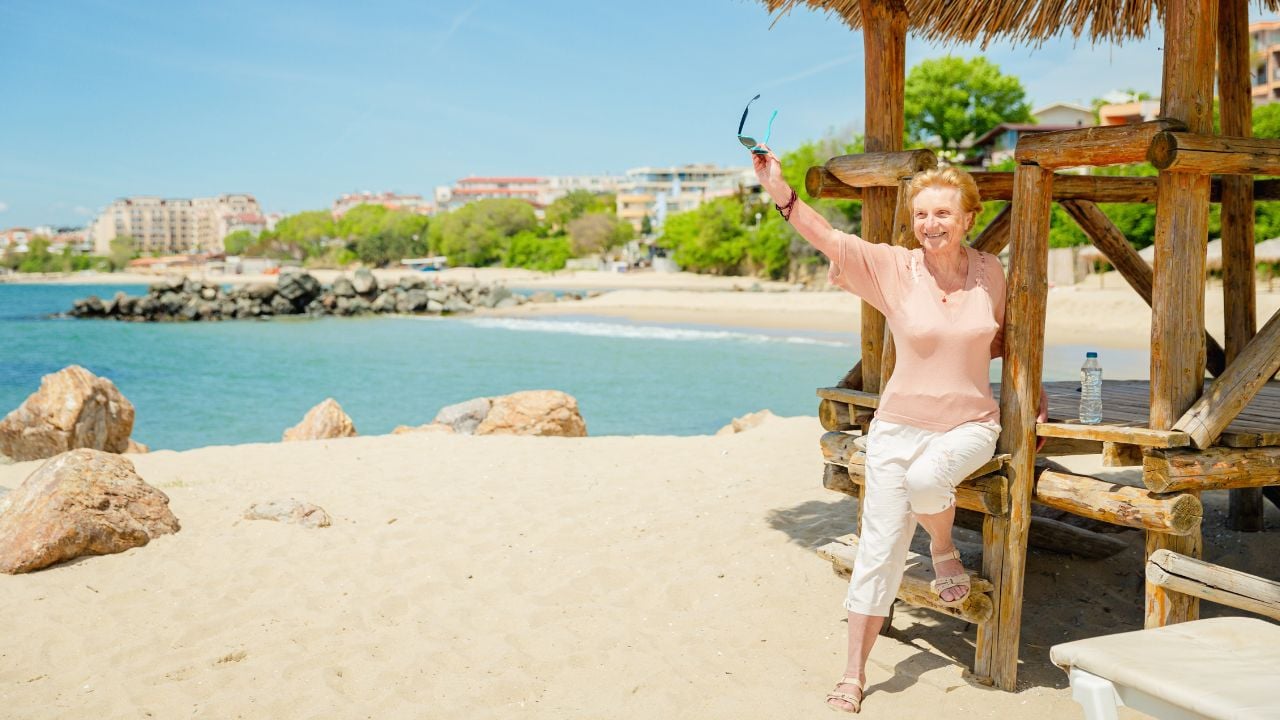
4 Things Florida Snowbirds Do in September That Give Them Away

The Sarasota-Bradenton area’s population climbs by 25 percent or more once winter settles in.
But in the months and weeks before that jump, Florida’s snowbirds are already giving themselves away from a thousand miles north.
These are the signs Floridians spot every September, long before the worst of snowbird traffic shows up.
Note: This is general information, not insurance, tax, or legal advice. Coverage terms, deadlines, and local rules are subject to change.
1. Storm Shutters From Spring Through September
Florida’s snowbirds leave a lot of houses shuttered from spring straight through September, and September holds hurricane season’s statistical peak, September 10, its single most dangerous day.
A year-round resident’s shutters move with that danger.
They go up when a storm’s forecast track gets serious and come back down once it has passed, sometimes more than once in the same month.
An empty snowbird house just stays closed the whole time, blinds and all, since nobody’s there to run that cycle.
Same house, every week.
The gap shows up in local code, too.
Lee County requires shutters removed within 30 days after a storm passes, occupied or not, while Charlotte County carves out an exception for a home that’s sitting empty.
During the season’s most active stretch, neighbors can tell exactly which house is being watched storm to storm, and which one hasn’t moved since May.
2. Home-Watch Visits in Overdrive
Many Florida snowbirds pay a home-watch service to check on their house while they’re up north.
It’s a weekly walk-through that looks for a leak, a dead air conditioning (AC) unit, or a pest problem before it turns into a disaster.
September is the highest-stakes stretch of that whole arrangement.
The owner is still a thousand miles away right as hurricane risk peaks for the year.
Nobody’s home.
So the inspector’s car shows up in the driveway more often, not less.
A resident who’s living in their own house has nobody to hire.
Their house was never empty to begin with.
Psst! How much of a Florida snowbird are you? Run through this checklist and see where you land.
3. The Winter Lease Lock-In
Not every Florida snowbird owns their winter place, and renters sign on a clock owners don’t.
South Florida’s winter rental season leased close to 33,100 residential units in the 2023-24 season, a 15% jump over the year before, according to one Miami brokerage’s own tracking, CondoVulturesRealty.com.
Those leases don’t sign themselves the week the tenant lands with the last suitcase.
Applications, deposits, and signatures move weeks ahead of a November move-in, and for many renters, September is when that paperwork lands.
There are no keys yet.
A homeowner who already holds the deed skips all of it.
4. The Remote Property Tax Deadline
Florida’s snowbirds are still up north when their county mails a proposed property tax notice in August, and the window to formally challenge it closes fast.
Property owners get 25 days to file a petition, and in Sarasota County, that deadline landed on September 11 in 2026.
A resident who is home can walk the notice into the courthouse.
The snowbird can’t.
A snowbird still up north has to fight it by phone, by email, or through a property manager they’re paying to watch the mailbox.
If you miss it, the assessed value stands for the year, whatever the market did.
That’s the kind of deadline a snowbird can’t afford to lose track of from four states away.
The Car Insurance Juggle
Florida’s snowbirds who park a car up north for the summer usually aren’t paying for full coverage on it.
Many drop to a reduced or comprehensive-only policy the moment that car goes into storage for the summer.
That keeps just enough protection on the books for fire, theft, or a falling tree limb.
It’s cheaper coverage for a car nobody’s driving.
Before the drive south, whenever that turns out to be, they’re back on the phone with an agent, putting full liability and collision on again.
A driver who never left never dropped coverage in the first place.
There’s no call to make.
Where Their Mail Goes
A Florida snowbird’s mail can’t just sit on hold for four or five months.
The U.S. Postal Service (USPS) caps a hold at 30 days, so anyone gone longer has to switch to full mail forwarding instead.
That means a second piece of paperwork eventually lands, pointing delivery back to the Florida house before the owner’s back in it.
A year-round resident’s mail carrier never stopped.
There’s no form in sight.
The Crowd’s Wait Until October
Florida’s snowbirds aren’t filling the roads or the restaurants yet in September, whatever the paperwork suggests.
Sarasota Magazine puts the arrival wave starting in November, with the season running through April.
Other Florida coverage points to October as the month locals start noticing the shift in traffic and restaurant crowds.
September belongs to the phone calls and the paperwork, not the people.
The extra cars and the crowded restaurants aren’t part of September yet.
September’s snowbirds are still a thousand miles away, working the phones instead.
What a 25% Jump in Sarasota Looks Like
Florida’s snowbirds don’t just visit Sarasota-Bradenton, they change its head count.
The area’s population rises by 25 percent or more once peak season sets in, per Sarasota Magazine’s reporting.
Palm Beach, Collier, Lee, and Martin counties see the same kind of swing on the other coasts.
Picture one extra household moving in for every four that sat empty all summer, and a packed Publix parking lot in January stops being a mystery.
12 Giveaways That Prove You Weren’t Raised in Florida
Florida elementary schoolers have raised more than $2 million putting their own crayon art on license plates that end up bolted to a stranger’s bumper.
Grown adults drive around with a fifth grader’s manatee drawing on the back of their car, and only someone who sat through Florida public school thinks that’s completely normal.
12 Giveaways That Prove You Weren’t Raised in Florida
10 Florida Springs Locals Go To Instead of the Beach
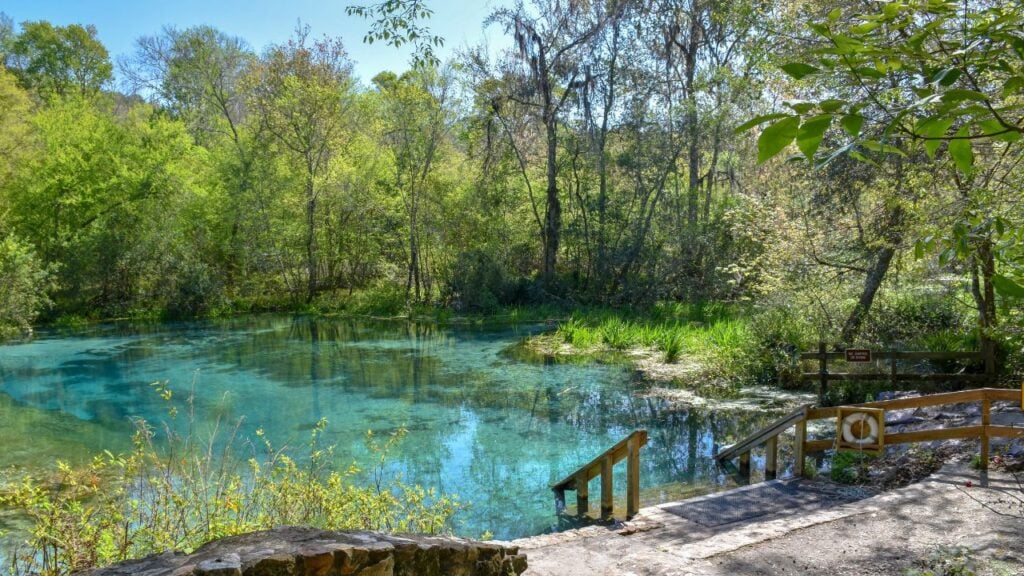
Florida’s springs hold at a near-constant 72 degrees every month of the year, while the ocean near the state’s biggest cities climbs into the upper 80s by August.
That gap is why so many Floridians skip the sand and drive inland instead, straight to the same handful of springs their families have used for generations.
