
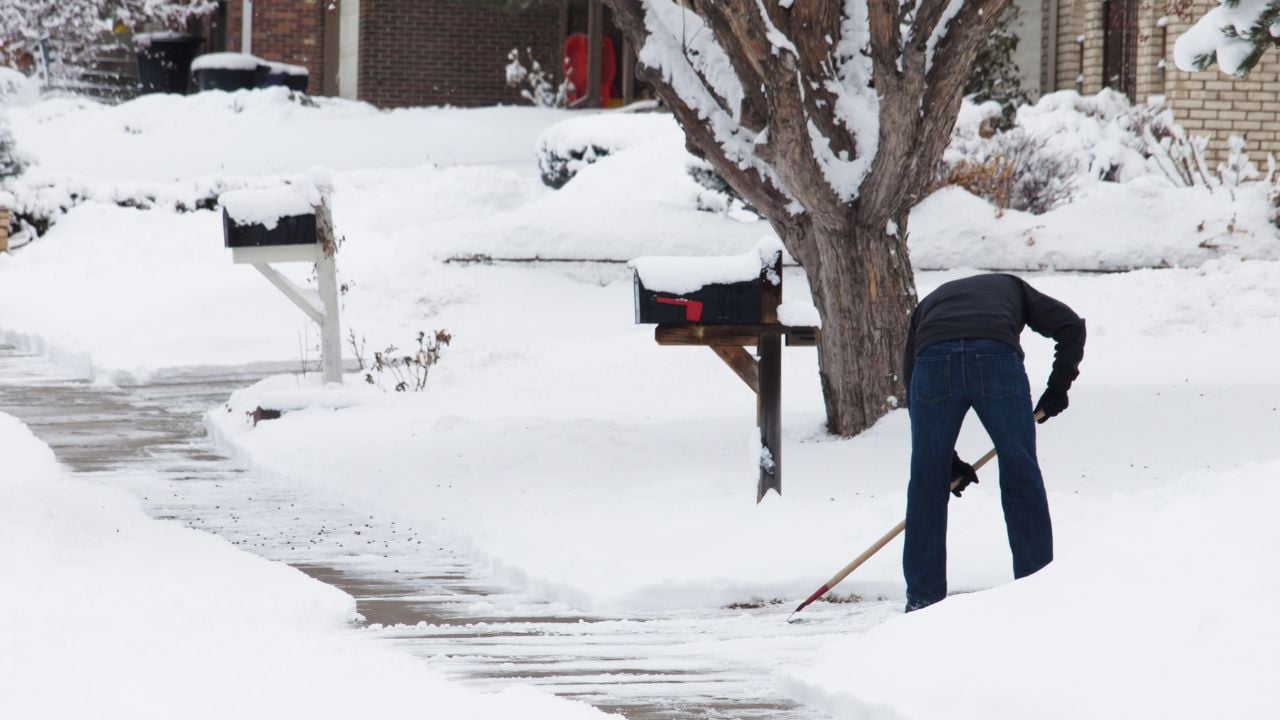
4 Utah Snow Removal Rules Homeowners Get Fined For Every Winter

Snow doesn’t wait for a homeowner’s schedule, and neither does a fine.
One overdue driveway can turn into a several-hundred-dollar bill before the week is out.
These are the snow removal rules Utah homeowners can get fined for.
Note: This is general information, not legal advice. Snow removal ordinances and fine amounts vary from place to place and are subject to change.
1. Salt Lake City’s Sidewalk Clock
Salt Lake City gives homeowners one day to deal with a storm.
City code requires every sidewalk cleared within 24 hours of the last snowflake.
The cleared path has to reach at least 42 inches across, plus any corner or curb ramp on the property.
If a homeowner misses that window, the fine rises with every extra day, up to $200 a day for a property with more than 200 feet of street frontage.
That adds up fast.
A smaller lot doesn’t get a pass either, since the same code still charges a daily fine that starts at $50 and keeps rising the longer the sidewalk stays buried.
The Math Behind Salt Lake City’s Fine
Salt Lake City treats a missed sidewalk deadline as a civil infraction, not a criminal charge, so a citation shows up as a bill instead of a court date.
The fine for a larger property doesn’t jump straight to the top rate.
It builds in steps: $100 on day one, $150 on day two, and $200 every day after that.
Five days of a buried sidewalk on a larger property adds up to $850.
The total breaks down to $100 for day one, $150 for day two, and $200 apiece for the three days after that.
2. North Salt Lake’s Dumping Fine
A driveway’s worth of snow pushed onto a North Salt Lake street can draw a fine.
City code makes it unlawful to push snow from a homeowner’s property onto the public street.
That’s a separate violation from the 24-hour sidewalk deadline every property owner there already has to meet.
Fines for that violation alone run up to $100 a day.
Not just a warning.
The logic behind it is simple: A travel lane the plow just cleared fills right back in the moment a driveway’s worth of snow lands in it.
That leaves the sidewalk duty and the street ban as two separate violations from the same storm.
3. Park City’s Plow-Back Rule
Shoveling driveway snow back into a Park City street feels like common sense to many homeowners.
Park City’s snow removal guide bans homeowners, businesses, and the snow removal contractors it licenses alike from shoveling, plowing, or blowing snow back into the street.
That ban is codified in Municipal Code Section 14-4, and the city’s guide notes a violation can come with a fine.
Contractors don’t get a pass.
Between the resorts and Main Street, Park City’s plow crews are out after nearly every storm.
A driveway’s worth of snow shoved back into a travel lane can undo that work in minutes.
That’s exactly why the same guide also bans piling snow around a fire hydrant or dumping it onto a neighbor’s yard.
Psst! How much do you know about Utah’s mountains and winters? Take our quiz and see if you can ace it.
Quiz
Utah Winter IQ
Answer these questions on Utah’s coldest records, snowiest seasons, and mountain history. We bet you can’t get them all right. Prove us wrong?
Which Utah spot holds the record for the second-coldest temperature ever measured in the contiguous United States?
4. West Valley City's Citation Rule
An officer, not a warning letter, enforces West Valley City's snow removal deadline.
Homeowners there get the same 24 hours as Salt Lake City residents to clear the sidewalk once a storm ends.
Once an inch of snow or ice sits on the road, cars have to come off West Valley City streets too.
The ticket comes first.
City policy states that police officers are authorized to cite a resident for either violation on the spot, sidewalk or street.
A homeowner can end up owing two separate fines out of the same storm.
Towing Instead of Ticketing
Not every city reaches for a dollar fine: Ogden and Riverton both reach for a tow truck instead.
Ogden's snow rules decide when a car has to leave the street.
The rule doesn't wait for a plow to show up first.
City code bans parking on an Ogden street once snow removal looks "apparent or imminent."
The same ban kicks in once an inch of snow or ice has already piled up on the road, whichever comes first.
Then the tow truck comes.
A car still sitting there more than 48 consecutive hours after it becomes snowbound counts as abandoned under that same code.
Ogden tows it and holds it in impound until the owner pays to get it back.
Riverton's snow parking rule runs on the calendar instead of the forecast.
From November 1 through March 1 every year, no vehicle can sit on a Riverton street during a snow event or anywhere snow has piled up on the shoulder.
Violators get ticketed or towed.
Riverton Police handles the calls rather than public works.
That same city ordinance puts the job of clearing snow around fire hydrants, mailboxes, and driveways on the homeowner next to them, not on the city.
No Statewide Snow Law
Utah's Legislature has never passed one snow-shoveling law that covers the whole state.
That job falls to city councils, so a fine in Provo can look nothing like the fine next door in Orem.
A rule enforced in Park City might not exist three exits down the canyon.
None of it lines up.
Even the parts of Salt Lake County that aren't part of any city carry a version of the rule.
Emigration Canyon's code makes it a violation to shovel driveway snow onto a county road in a way that blocks travel.
Code enforcement there can act on that rule just like any city's.
7 Things a Utah Ski Town Charges Tourists That Locals Never Pay
A Utah ski town runs two price lists, and only one of them belongs to the people who live there.
Parking, day-use fees, and even the shuttle can cost a visitor several times what a local pays for the exact same afternoon on the mountain.
7 Things a Utah Ski Town Charges Tourists That Locals Never Pay
5 Things Utahns Do at a Farmers Market That Confuse First-Time Visitors

Utah farmers markets run on a few unwritten rules that regulars follow without ever thinking about them.
Wooden tokens, cash-only booths, and a produce line first-timers never see coming all trip visitors up before they reach the honey stand.
5 Things Utahns Do at a Farmers Market That Confuse First-Time Visitors
