

5 Alabama Property Tax Breaks Homeowners Over 65 Never Apply For

With everything costing more, a tax break you never claim hurts extra.
Older Alabamians who own their homes may qualify for some relief, though you often have to apply for it.
Ask about these breaks before you miss out.
Note: This is general information, not legal or tax advice. Amounts and filing deadlines are subject to change, so confirm the current details with your county tax assessor or revenue commissioner.
1. State Homestead Exemption
If you’re over 65, the Alabama Department of Revenue says you’re exempt from the state portion of property tax.
Even if your Alabama return shows income above $12,000, the homestead table still exempts you from the state portion.
To get it, Alabama Administrative Code rule 810-4-1-.23 says the owner as of the October 1 lien date must apply to the tax assessing official in your county.
A claim you file after December 31 applies to the following tax year.
For example, Alabama assesses residential property at 10% of its value, so a home your county values at $200,000 has $20,000 in assessed value.
The state’s rate is 6.5 mills, or $6.50 for every $1,000 of assessed value, so that’s $130 a year in state tax before the exemption.
You’d owe none of it.
2. $5,000 County and School Exemption
Under department rules, you can exempt up to $5,000 of your home’s assessed value from county and school district property taxes.
You get it when you’re 65 or older and the adjusted gross income (AGI) on your most recent state income tax return comes in under $12,000.
Cullman County’s revenue commissioner calls its version the H2 exemption.
The group is owners 65 or older with an Alabama AGI of $12,000 or less and federal taxable income above $12,000.
If your combined federal taxable income is $12,000 or less, the full exemption fits you instead.
3. Full Exemption From Property Taxes
The full exemption covers your principal residence for all property taxes levied by the state, any county or any municipality, under the department’s rules.
You qualify at 65 or older when the net annual taxable income on your and your spouse’s latest federal return is $12,000 or less.
You also have to own a single-family home and live in it as your primary residence on the first day of the tax year.
4. Jefferson County’s Special Senior Exemption
The Special Senior Exemption freezes the assessed value of your home at its value for the year before you claim it, according to a Vestavia Hills city page.
There’s no income test.
You do need to be 65 or older and to have the property assessed in your name for the five years right before you claim.
Age alone won’t qualify you.
If your home’s value drops, you only need to reclaim the exemption at the lower rate.
The exemption stays on the property when you renew your over-65 exemption each year.
The page, which carries no date, also says the property must be your principal place of residence for at least five years.
You file by April 30, mailing or emailing the form and a picture of your valid photo ID to the Jefferson County Tax Assessor in Birmingham.
April 30 is a different date from the state’s October 1 through December 31 window for homestead claims.
5. Baldwin County’s Assessment Freeze
In Baldwin County, a department rule freezes your home’s assessed value at its level in the year before you claim the senior property tax appraisal.
You have to be 65 or older as of the October 1 lien date for which you claim it.
You also need at least 10 years of maintaining property in the county as your principal place of residence.
Consecutive years aren’t required.
It limits the freeze to a single-family home you own and live in.
An addition you make after claiming it isn’t eligible for the original freeze.
You’re still subject to any applicable homestead exemption and millage rate changes, meaning changes to the tax rate.
You claim it the same way you claim a homestead exemption.
Property Tax Paperwork by County
Baldwin County’s exemptions page lists income as taxpayer and spouse combined for its age-65 property tax exemptions, and Madison County’s page counts your income and your spouse’s together too.
Madison County’s tax assessor asks for a non-filing letter from the Internal Revenue Service or a copy of your tax transcript if you aren’t required to file federal income taxes.
Madison County doesn’t accept handwritten tax returns.
Mobile County’s revenue commission says proof of age is required when you apply.
Disability and Blindness Exemptions
The state property tax exemption also covers you if you’re blind or retired due to permanent and total disability, regardless of age, according to rule 810-4-1-.23.
Either one also gets up to $5,000 of assessed value off your county and school district taxes.
The department’s exemptions table lists the income limitation for both as none.
If you’re permanently and totally disabled, you also get an exemption from all ad valorem (property) taxes.
You prove disability with a pension or annuity paid because of it, or with a written certification from physicians.
At least one of those physicians has to be treating the disability.
In Baldwin County, proof of blindness is one letter from a licensed ophthalmologist or optometrist stating vision of 20/200 or less in your better eye with correcting glasses.
Yearly Renewals and Penalties
Mobile County’s revenue commission says owners with an age-and-income, disability or blindness exemption get a renewal form each October in place of a property tax bill.
The form has to be returned by December 31.
Don’t toss that envelope.
Cullman County’s revenue commissioner says it’s your responsibility to make sure the claim is done each year, and its office mails you a letter annually to make it.
Baldwin County’s exemptions page says its H-2 and H-3 exemptions, the tiers with income limits, must be validated by signature every year.
Its H-4 exemption, for income above $12,000, is claimed once.
Once you’ve qualified for an income-based exemption, rule 810-4-1-.23 lets you verify your eligibility each year by mail on an affidavit form from your county assessing official.
Mobile County’s page also says exemptions aren’t transferable because the exemption goes to the owner and not the property.
If you knowingly and willfully give false information on a claim, you owe twice the tax that would have been due, going back up to 10 years, plus 15% interest a year.
Psst! How much do you know about Alabama taxes? Take our quiz and see if you can ace it.
Quiz
Alabama Tax IQ
Answer these questions on Alabama taxes, retirement income and property. We bet you can’t get them all right. Prove us wrong?
Which of these payments is exempt from Alabama income tax?
Automatic 7% Cap
You don't have to apply for Alabama's 7% cap, the Department of Revenue says.
It caps the yearly increase in your home's taxable assessed value at 7%.
For example, if your assessed value was $20,000 last year, it can't rise past $21,400 this year.
The cap applies to single-family owner-occupied homes for tax collections beginning October 1, 2025.
It has limits.
The cap comes off when ownership changes, with exceptions for transfers between spouses or family members at no cost and transfers due to death.
An addition or a significant improvement to your property is another reason the cap doesn't apply.
5 Things an Alabama Family Can Settle Without Full Probate

Alabama tied its small-estate cutoff to an inflation formula in October 2025, and the bill's synopsis put the amount at $47,000.
Some of what a family inherits can be settled without full probate.
5 Things an Alabama Family Can Settle Without Full Probate
8 Alabama Storm Shelter Laws Homeowners Find Out About After They Build One
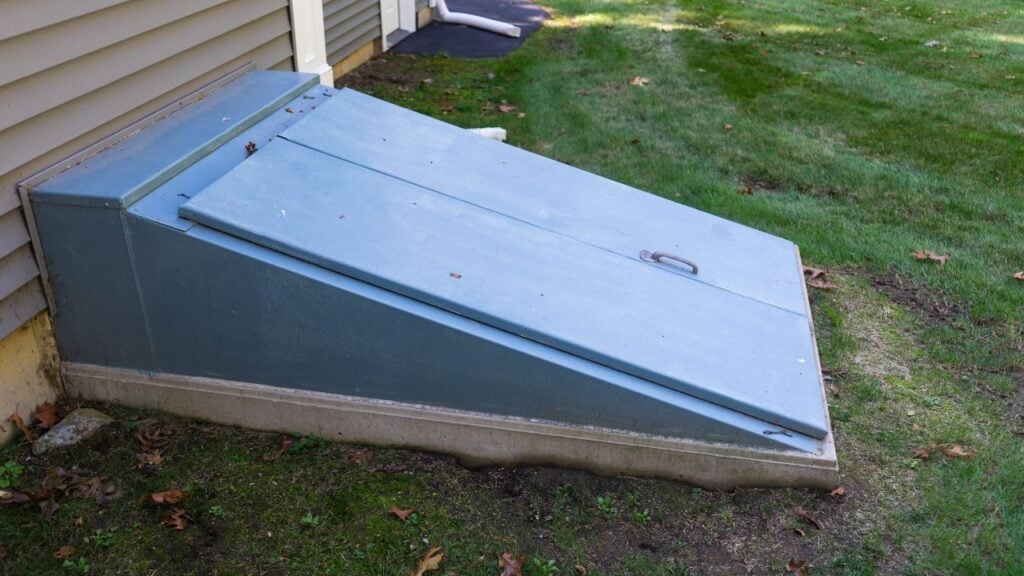
Alabama's storm shelter tax credit caps out at $2 million a year, shared among all taxpayers statewide.
Getting the shelter built is the easy part.
8 Alabama Storm Shelter Laws Homeowners Find Out About After They Build One
