
5 Arkansas Laws and Insurance Rules That Matter When a Storm Drops a Tree on Your Property

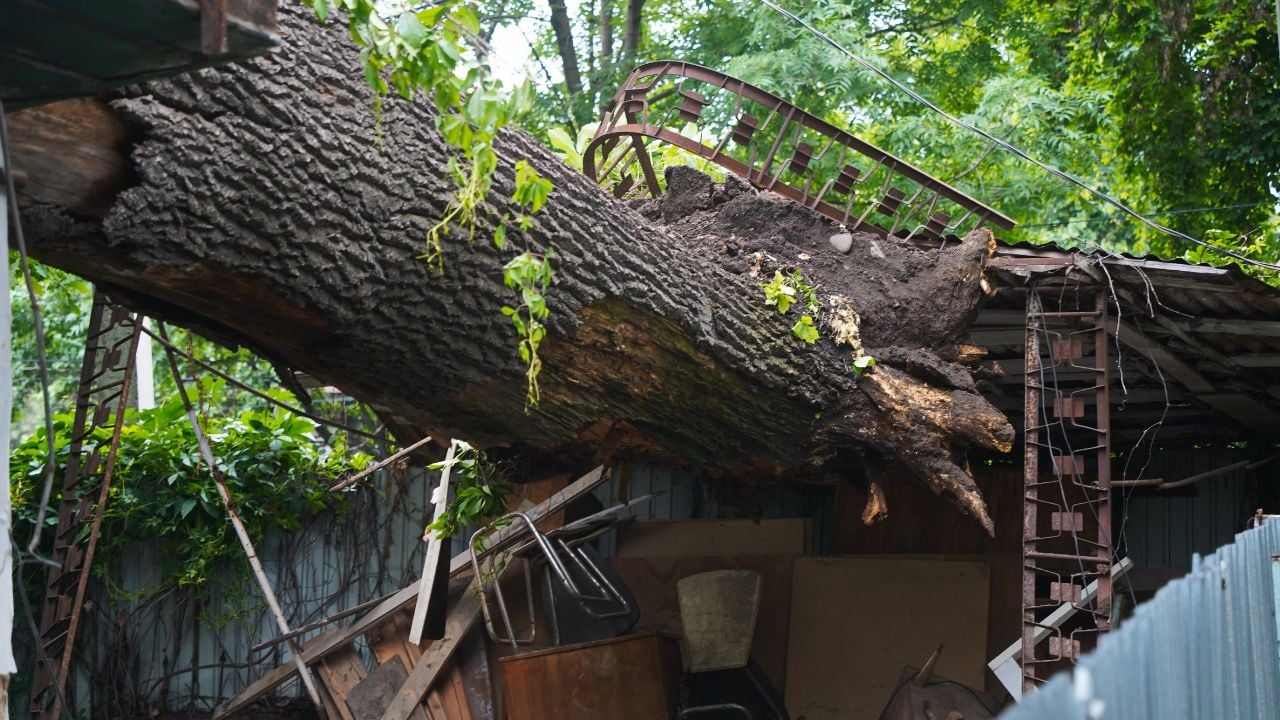
The wind dies down, you step outside, and there’s a tree where it shouldn’t be.
The next few days mean phone calls, paperwork and decisions, some of which come with rules attached.
Here’s what Arkansas law and your insurance policy say about the cleanup.
Note: This is general information, not legal or insurance advice. Arkansas statutes, insurance rules and deadlines are subject to change, so check the specifics with your insurer or the Arkansas Insurance Department.
1. Rule 43’s Claim Deadlines
Rule 43, the Arkansas Insurance Department’s rule on unfair claims settlement practices, gives your insurer deadlines once you report a tree through your roof.
Once you report the damage, your insurer has 15 working days to acknowledge the claim, unless it pays you inside that window.
Your insurer must also promptly provide the necessary claim forms, instructions and reasonable assistance.
After you submit properly executed proofs of loss, your insurer has another 15 working days to tell you whether it accepts or denies the claim.
That’s about three weeks each.
2. 12% Damages for Late Payment
A late-paying insurer can end up owing more than the claim.
Under Arkansas Code 23-79-208, an insurer that fails to pay a loss within the time your policy specifies after you demand payment owes 12% damages on the loss.
Attorney’s fees come on top.
Recovering less than you demanded doesn’t defeat the 12% damages or the fees if the amount recovered is within 20% of the amount demanded or sought in the suit.
The Math on the 12% Penalty
On an unpaid $9,000 tree-damage loss, the 12% damages come to $1,080.
That brings the insurer’s bill to $10,080 before attorney’s fees.
The 20% test works out to a recovery of $7,200 or more on a $9,000 demand.
A homeowner’s policy has a separate test for the attorney’s fees, which arise when the amount you recover is within 30% of the amount demanded.
On a $9,000 demand, that means $6,300 or more.
3. Cleanup Price Limits
Arkansas Code 4-88-303 bars anyone from selling goods or services used for emergency cleanup at more than 10% above the price charged right before a storm emergency.
That general rule runs 30 days after the declaration, while a separate rule for contractors selling repair, reconstruction or emergency cleanup services runs 180 days.
Which period applies can depend on who you hire.
Each cap is 10%.
Both start after the President or the Governor declares a storm emergency, or after a city or county executive declares a local one.
A seller can top the cap only by proving the increase came directly from added costs, such as a supplier’s charges or labor and materials.
Even then, the price can’t run more than 10% above its cost plus its usual markup.
In February 2025, the Arkansas Attorney General sued a tree service under the Arkansas Deceptive Trade Practices Act.
The suit alleges it charged more than $20,000 to remove a single tree after declared emergencies.
4. City and County Immunity
If a tree from city or county property comes down on your property, Arkansas Code 21-9-301 sets the rules for any damages claim you bring against that local government.
Counties, cities and other political subdivisions are immune from liability and from suit for damages.
The exception applies to the extent that they may be covered by liability insurance.
The text never mentions trees.
5. Burning Limbs During a Burn Ban
Can you burn the limbs from a downed tree while a burn ban is on?
Arkansas Code 5-38-310 lists setting fire to any forest, brush or other flammable material in violation of a burn ban as unlawful burning.
A permit issued by the top official of the local government that declared the ban is a defense.
Cutting a Neighbor’s Tree
Clearing storm debris from your yard is one thing, and cutting a tree that still stands on a neighbor’s land is another.
Arkansas Code 18-60-102 covers anyone trespassing who cuts down, injures, destroys or carries away a tree growing for use or shade, or timber or wood, on another person’s land.
That person shall pay treble the value, with costs.
Treble means three times.
The multiplier drops to single damages, with costs, if you had probable cause to believe the land or the tree was yours.
Insurance Department Tips
The Arkansas Insurance Department’s post-storm tips say to contact your insurance company or agent as soon as possible.
You should also ask what forms, documents and information you’ll need to process your claim.
Take photos or video of the damage, and don’t throw anything away unless your insurance company tells you to.
For hiring a crew, always get more than one bid, check references and phone numbers, and never sign a contract with blank spaces.
The Better Business Bureau collects contractor complaint information.
For more help, the department lists Consumer Services at 800-852-5494.
Coverage Gaps
The department’s severe weather tips say not all policies cover debris or tree removal.
If the damages are below your deductible, you would need to pay for the repairs.
If they’re much larger, turn the claim in to your insurance carrier.
If you carry comprehensive coverage, that coverage, other than collision, pays if a storm or flood damages your car.
Psst! How much do you know about storm cleanup? Take our quiz and see if you can ace it.
Quiz
Storm Cleanup IQ
Answer these questions on storm cleanup, burn bans and insurance deadlines. We bet you can’t get them all right. Prove us wrong?
The Arkansas Insurance Department says to avoid storm repair contractors who offer you what?
Fall Storm Season
Fall storms can send tornadoes through the state.
The National Weather Service in Little Rock counted 891 tornadoes from 2000 through 2022, and 339 of them came between September and February.
That's 38%.
So a tree can drop on your property well after spring ends, and you can't treat fall as a safe stretch.
Tornadoes were most prevalent across the state in the fall in 2001, 2002, 2004, 2005 and 2014.
8 Restaurant Chains Arkansans Defend Harder Than They Should

Some Arkansans get defensive about the restaurant chains they grew up with.
8 Restaurant Chains Arkansans Defend Harder Than They Should
