
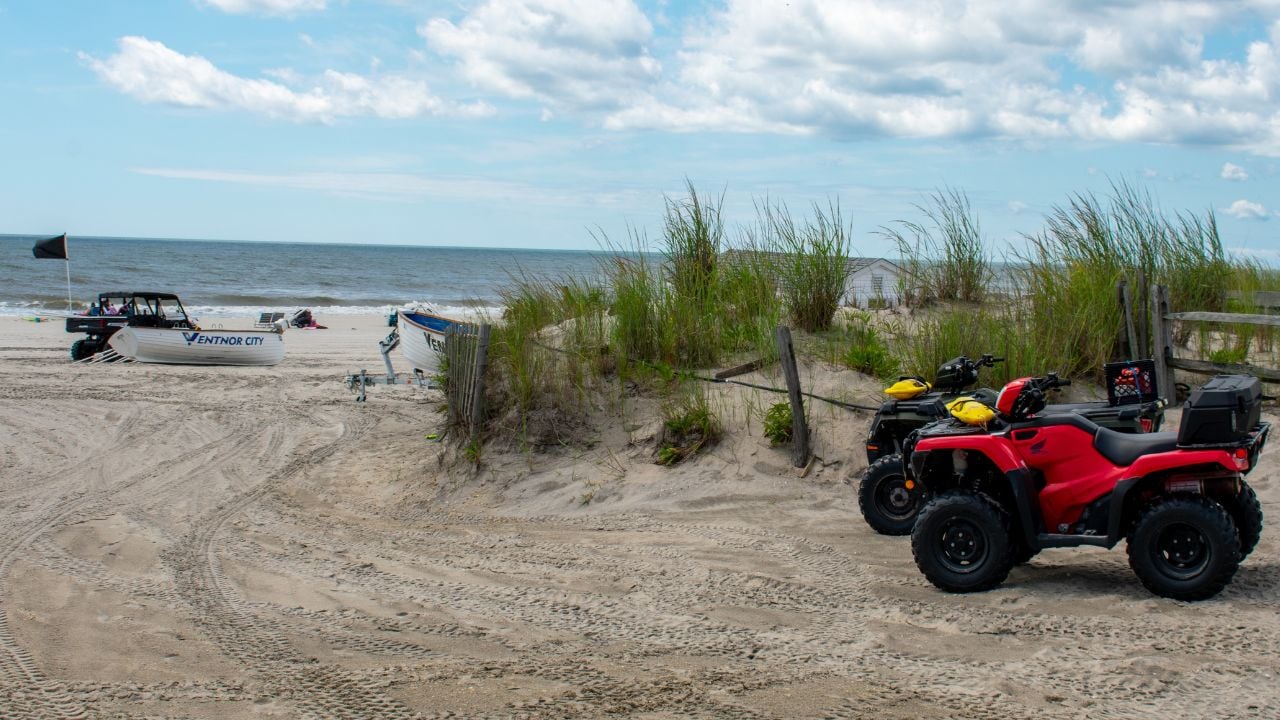
5 Beach Renourishment Fees New Jersey Shoreline Owners Don’t See Coming

The Army Corps of Engineers signed a $21.6 million contract this year to renourish two Cape May County beaches.
New Jersey covers part of that.
Property owners along the shoreline cover pieces of it too, sometimes years after the trucks leave, and rarely on a bill anyone warned them about.
These are the beach renourishment fees New Jersey shoreline owners often don’t see coming.
Note: This is general information, not legal advice. Beach and dune permit fees vary by shore town and are subject to change. Confirm the current requirements with your municipal clerk’s office or the New Jersey Department of Environmental Protection.
1. Needing a State Dune Permit
For a New Jersey shoreline owner, fixing an eroded dune starts with the state’s permission, not a shovel.
The New Jersey Department of Environmental Protection treats dune work as coastal construction, the same category as a bulkhead or a boat ramp.
Routine dune maintenance falls under a general permit, which runs $600 to $1,000 under the state’s coastal fee schedule.
A dune walkover itself is treated differently: It’s a separate, no-fee authorization under that same rule.
Work that doesn’t fit those routine categories needs a full waterfront development permit instead, starting at $2,000 under that same schedule, before a single truckload of sand moves.
Nothing moves until that clears.
2. Paying to Move Your Sand
In Long Beach Township, a New Jersey shoreline owner can’t just grab a shovel and move sand around a private beach without official sign-off.
The township treats that as regulated coastal work, and it requires a permit before any sand comes off an oceanfront lot.
The application costs $350.
A licensed engineer the owner hires and pays separately has to prepare it.
On top of that, the same ordinance requires a refundable $1,500 deposit.
Miss the mark, and Long Beach Township keeps enough of it to finish the job.
That deposit buys no guarantees.
3. Covering Avalon’s Application Escrow
Before Avalon even reviews a beach or dune plan, a New Jersey shoreline owner already owes money.
Avalon charges a $1,000 application fee for certain beach and dune development proposals, separate from anything the state charges.
On top of that, the borough collects a $2,500 escrow deposit to cover its engineer’s review time.
That escrow account isn’t the town’s money to keep.
The borough tracks it all.
What Happens to Avalon’s Escrow Money
New Jersey’s escrow law covers Avalon’s $2,500 deposit the same way it covers every other town’s professional review account.
State law requires the borough to send an itemized accounting of every dollar its engineer spends.
State law requires the refund of whatever’s left over within 45 days of the final bill.
A $2,500 deposit that only costs $900 in review time comes back at $1,600, not zero.
4. Missing a Walkover Renewal Deadline
Beach Haven’s dune walkover permits expire every year.
A New Jersey shoreline owner has to renew on time or pay for the delay.
The borough sets April 1 as the deadline, with a base fee of $100.
File after that date, and Beach Haven adds a $400 late fee on top, pushing the total to $500.
That’s five times the fee.
Miss the borough’s July 1 cutoff completely, and the application isn’t accepted at all.
The owner forfeits the walkover for that year, full stop.
5. Paying for Town-Ordered Work
New Jersey shore towns don’t have to ask permission twice when a dune needs rebuilding.
State law lets a municipality restore an owner’s eroded dune itself, then bill the full cost back to that property.
Long Beach Township and Beach Haven both give an owner 15 days to apply for a repair permit once a dune is damaged.
From there, the owner has 10 days to start the work and 30 days to finish it.
Miss any of those deadlines, and the town does the work itself and turns the bill into a lien.
No lawsuit needed.
That lien attaches to the property tax bill, at the same interest rate as any other unpaid tax.
The authority for all of it comes from New Jersey’s Local Improvement Law.
That statute lists “the improvement or reimprovement of any beach or water front” as one of the projects a town can specially assess.
This year’s $21.6 million Army Corps contract for Cape May County runs on the same principle, just bigger.
New Jersey’s assessment law is what lets a town reach into a single owner’s pocket to cover what Washington doesn’t.
Psst! How much do you know about New Jersey’s shoreline history? Take our quiz and see how many you can get right.
Quiz
New Jersey Shore IQ
Answer these questions on New Jersey’s lighthouses, storms, and coastline. We bet you can’t get them all right. Prove us wrong?
Which New Jersey lighthouse is the oldest continuously operating lighthouse in the entire United States?
A Dune Easement Payment, Just Not Much
New Jersey's Supreme Court reset the math on what a shore town owes a property owner when it takes beachfront land for a protective dune.
The 2013 ruling in Borough of Harvey Cedars v. Karan said a dune's storm-protection value counts against the payout, the same way any other benefit would.
Harvey Cedars had taken a permanent easement over 3,381 square feet of the Karans' oceanfront lot to build a 22-foot dune.
A jury originally awarded the Karans $375,000.
The state Supreme Court reversed that award and ordered a new trial where the storm-protection offset could be weighed.
The Karans skipped the second trial and settled with the state for $1 instead.
The Karans walked away with a single dollar.
A different Harvey Cedars couple, the Groissers, later took their easement dispute all the way to a jury.
They sought $800,000 for their oceanfront easement.
The jury, applying the same storm-protection offset, awarded them $300.
Not close.
The ruling applies statewide, not just in Harvey Cedars, so any New Jersey shore town taking a dune easement through eminent domain can lean on the same offset.
An owner who signs the easement voluntarily skips the court fight, but the value math behind it doesn't go away just because nobody argues over it.
9 New Jersey Myths Residents Are Sick of Correcting

New Jersey packs more people into every square mile than any other state, yet outsiders still treat it like a flyover strip between New York and Philadelphia.
Residents end up correcting the same handful of assumptions on repeat, starting with the idea that nobody there has pumped gas at a self-service pump since 1949.
9 New Jersey Myths Residents Are Sick of Correcting
4 Lidl Checkout Mistakes That Cost New Jersey Shoppers Every Week

Lidl keeps its prices down by filling about 80% of its shelves with private-label brands instead of the big names shoppers already recognize.
That setup makes it easy to fall into a few checkout habits that cost New Jersey shoppers more than they realize.
4 Lidl Checkout Mistakes That Cost New Jersey Shoppers Every Week
