
5 Casserole Traditions That Divide Nebraska Church Potlucks

Walk into a Nebraska church potluck, and the casserole table is where the opinions are.
The dish may look the same from pan to pan, but cooks disagree on how it should be made.
These are the casserole traditions that divide Nebraska church potlucks.
1. The Canned-Soup Camp
A potluck casserole almost always starts with a can opener.
Campbell’s says close to 40% of its cream of mushroom soup sales nationwide go toward one dish.
Green bean casserole is the payoff, turning up on fellowship-hall tables from Scottsbluff to Omaha.
That’s the traditionalist camp.
Smithsonian has reported that close to 20 million Americans serve this exact casserole every Thanksgiving, decades after the recipe first showed up in a company test kitchen.
Some cooks skip the can, building a from-scratch cream sauce with fresh mushrooms and cream instead of a red-and-white label.
Bring the scratch version to a church potluck next to three cans-only casseroles, and somebody will ask what’s different about yours.
Not everyone means it as a compliment.
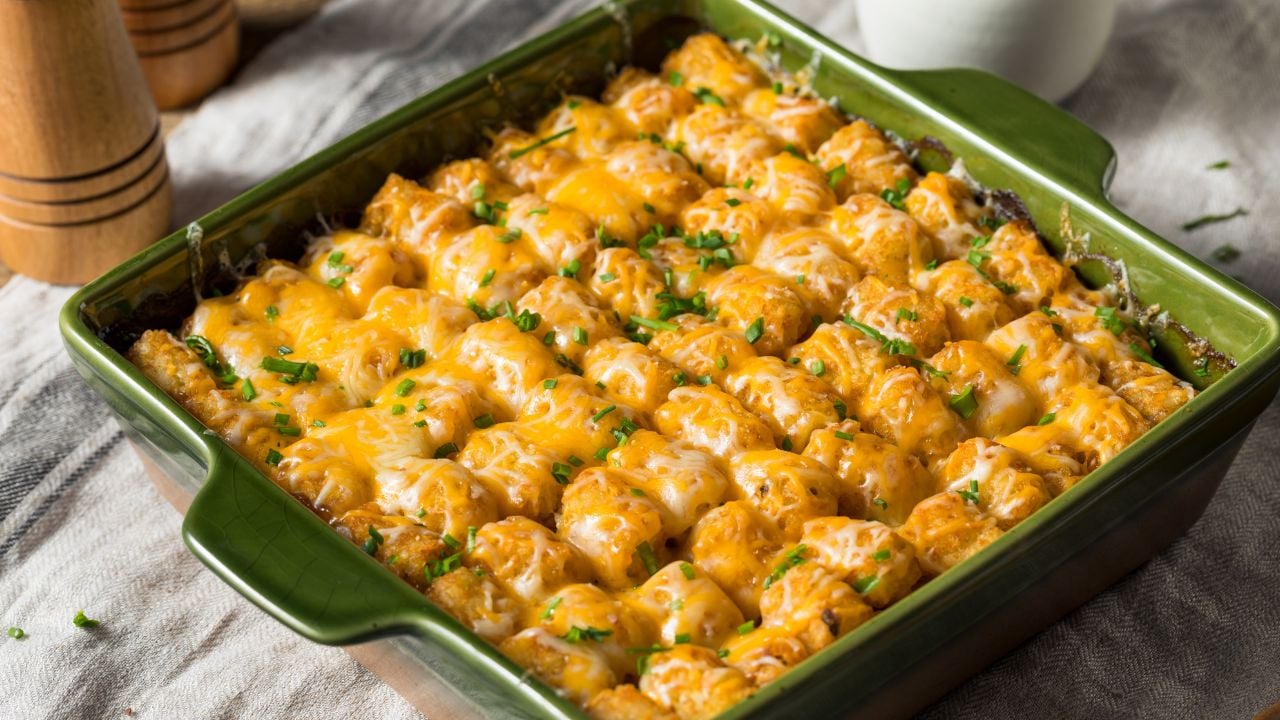
2. Crispy Tots or Soggy Tots
Tater tot hot dish belongs to the Upper Midwest by birth, and Nebraska’s Lutheran and German-heritage congregations have folded it into the potluck rotation for decades.
A test kitchen that develops recipes for a living puts it plainly: The trick with this dish is getting the tots to brown, not drown.
Cooks split over how to manage that.
One camp layers the tots on before the casserole goes into the oven.
The cream sauce steams them limp from below by the time the dish comes out.
The other camp holds the tots back until the last stretch of baking.
They stay crunchy on top instead.
Crunchy wins arguments.
Cooks split into both camps, plus a third group that stirs the tots straight into the filling and refuses to apologize for it.
Corn or green beans in the filling starts a second argument underneath the first one.
Ask two people at the same table which way is correct, and each one answers like the matter was settled years ago.
Psst! How much do you know about the potluck culture behind Nebraska’s casseroles? Take our quiz and see how many you can get right.
Quiz
Casserole Culture Quiz
Answer these questions on hot dish history, Nebraska trivia, and potluck culture. We bet you can’t get them all right. Prove us wrong?
Which Omaha-based company mass-produced and marketed the first “TV dinner” in 1954?
3. Corn Flakes or Potato Chips
The cheesy hash brown casserole, the one many cooks still call funeral potatoes, splits a fellowship hall into topping camps before anyone even tastes it.
One cook swears by crushed corn flakes tossed in melted butter.
Another reaches for crushed potato chips instead.
A third sticks with buttery cracker crumbs, the way it's always been done in her family.
A recipe outlet that tested all three toppings side by side still landed on corn flakes as the winner, calling the crunch classic for a reason.
Not this crowd.
Lutheran, Methodist and Catholic congregations all serve this casserole, but none of them agree on what goes on top.
The potato-chip cooks aren't switching sides for one taste test, and neither is the cracker-crumb table two chairs down.
4. Egg Bake Timing
A church breakfast casserole, the sausage-and-egg bake that shows up at pancake feeds and men's breakfasts alike, tests everyone's patience with the clock.
Some cooks pull it straight from the oven, set it on the table, and let it sit through two services and a coffee hour.
Others won't let it stay out that long.
The difference isn't stubbornness.
It's two camps reading the same food-safety guidance and deciding how strictly to follow it once the coffee hour runs long.
The Two-Hour Rule
A perishable casserole, including an egg bake, is only safe left unrefrigerated for two hours, according to the U.S. Department of Agriculture, or one hour once the room passes 90 degrees.
After that window closes, the dish needs to move to a cooler packed with ice or a warming tray holding it above 140 degrees.
A fellowship hall without air conditioning in late summer cuts that window in half without anyone noticing.
5. Store-Bought at the Sign-Up Table
A store-bought casserole from the grocery deli case still divides a potluck table, even though nobody says so out loud.
National food writers have polled the question informally, and many people say bringing something from the store isn't rude at all.
Potlucks don't always agree.
Small congregations feel that tension sharper than a big-city church ever would.
Everyone at a forty-member country church already knows whose casserole dish has the chipped blue lid.
They'll spot just as fast whose "homemade" contribution came out of a plastic clamshell.
Somebody usually eats the deli casserole anyway, since nobody wants a dish to go home half full.
The State Fair's Casserole Class
The Nebraska State Fair runs a casserole contest, judged the same way a fellowship hall judges one, just with a scorecard attached.
The State Fair's Foods Department runs an Egg Casserole Dish class inside its Breakfast Cookoff division.
The fair's rulebook caps each entry at one quart, roughly the size of a small potluck pan.
Judges score every entry on taste, originality and appearance, and every entry needs a written recipe attached.
First place pays $20.
That's a modest prize for a class that still draws serious competition every August.
Church deacons don't hand out ribbons, but the same three things decide whose recipe a neighbor asks for after a Sunday potluck.
Nobody says a word about it at the table.
They just remember it until the next potluck rolls around.
9 Signs Someone Was Raised in Nebraska, Even Decades After They Left
Memorial Stadium has sold out every Cornhusker home game since November 3, 1962, a streak Omaha television station WOWT calls the longest active run in college football.
A kid raised on those Saturdays carries more than a football habit out the door when they leave the state.
9 Signs Someone Was Raised in Nebraska, Even Decades After They Left
6 Things Nebraskans Do Every Autumn That Tourists Find Puzzling

Nebraska has more cattle than people, and autumn is when a lot of that livestock crowds the highway.
That's one piece of the logic behind a Nebraska fall, and the rest of the season runs on rules just as local.
6 Things Nebraskans Do Every Autumn That Tourists Find Puzzling
