

5 Disappearing Things Virginians Won’t Get to Enjoy Much Longer

If your drive home from Thanksgiving took you down a country road, you probably passed a small farm or two without a second look.
Sights like that feel permanent because they’ve been around for as long as many of us can remember.
Not all of them will be.
These are the disappearing things Virginians may not get to enjoy much longer.
1. Tangier Island
Tangier Island averages just three feet above sea level.
Since 1850, erosion and rising seas have taken two-thirds of its land, National Public Radio reported in 2025.
Many residents still make their living on the water, and in summer you may see crab shanties on stilts holding softshell crabs.
Getting there takes a boat.
If you’d like to see the island, ferries leave from Onancock and Reedville in Virginia and from Crisfield in Maryland, according to the National Park Service.
One climate researcher projected that the island will need to be abandoned in roughly 25 to 30 years.
Experts say the island could be almost all underwater in the next 50 years.
Many Virginians who’ve thought about visiting might want to plan the trip sooner rather than later.
In 2025, the most recent census estimate put the population at 240, a 30 percent drop from 2022.
A seawall went up on the west side in 1990, and a stone jetty to protect the harbor followed in 2020.
2. Hometown Newspapers
Virginia has lost six independent newspapers to closure or merger since July 2024, Axios Richmond reported in April 2026.
They include the Independent-Messenger in Emporia and the News Progress in South Hill.
Does your county still have a local newspaper?
Not every county does.
In 2023, just seven Virginia counties were in news deserts, and by 2025, 16 had no local news source.
In April 2026, the counties without a dedicated news source included Caroline, Cumberland, Buckingham, Charles City and Prince George.
If your county still has a paper, a subscription is the simplest way to help keep it going.
Northwestern University’s Medill School of Journalism found that nearly half of Virginia’s localities, 64 in all, had only one local news source in 2025.
That includes Goochland, Powhatan and Hanover.
3. Shenandoah Hemlocks
Eastern hemlocks in Shenandoah National Park have been under attack since the early 1990s by an insect called the hemlock woolly adelgid.
By 2003, roughly 95 percent of the park’s hemlocks had succumbed to it, according to the National Park Service.
The National Park Service says hemlock now makes up less than 1 percent of the park’s forest cover, so you may have to go looking for hemlocks.
The insect has the potential to cause additional significant tree mortality in the park.
Rangers switched to soil treatments in 2005, and since 2015 the park has worked with Virginia Tech to release predatory beetles.
You can see what’s left on the Limberlost Trail, a fully accessible 1.3-mile loop.
In the early 1900s, a grove of a hundred old hemlocks stood where the trail is now.
A few still stand.
If you look at the base of some hemlocks, you may notice a white painted dot, which means rangers have treated the tree.
8 Vanishing Diner Foods Virginians Still Talk About

Some diner favorites are getting harder to find, one lunch counter at a time.
A few of them might be on your list of favorites.
8 Vanishing Diner Foods Virginians Still Talk About
4. Small Farms
Virginia had 38,995 farms in 2022, and 83 percent of them were small.
What counts as small?
The University of Virginia’s Weldon Cooper Center says a farm is small when it brings in less than $50,000 a year in sales.
If you buy tomatoes or peaches at a farm stand, you may be buying from a small farm.
Between 2002 and 2022, the number of farms in Virginia fell 18 percent, mostly because of sharp losses among small farms.
That’s nearly one farm in five.
Nearly half of those losses came between 2017 and 2022, so the pace picked up.
Small farms contributed just 5 percent of the state’s total farm output in 2022, down from 12 percent in 2002.
Psst! How well do you know the Old Dominion? Take our quiz and see how many you can get right.
Quiz
Old Dominion Trivia
Answer these questions on Virginia’s history, landmarks and everyday life. We bet you can’t get them all right. Prove us wrong?
In April 1865, Lee surrendered to Grant at Appomattox Court House. What kind of building did the two generals meet in?
5. Wild Bobwhite Quail
Wild bobwhite quail began declining in Virginia in the mid-1900s, according to the Virginia Department of Wildlife Resources.
If you spot a bobwhite on a country walk, you're seeing a bird that has grown less common.
In 1973, the state had 143,000 quail hunters who killed almost 1.2 million quail.
By 2017, it had about 8,000 hunters who killed about 12,000 wild quail.
How big is that gap?
For every 18 quail hunters Virginia had in 1973, it had about one in 2017.
The Virginia Department of Forestry made a similar point in 2018, saying bobwhite populations had decreased significantly over the previous half-century.
Virginia Quail Per Hunter, 1973 and 2017
Quail hunting in 1973 worked out to roughly eight birds per hunter, going by the department's totals.
By 2017, the same math gives about 1.5 birds per hunter.
The catch shrank faster than the number of hunters, so fewer hunters can't explain the drop alone.
A Drive-In's Second Chance
The drive-in theater in Stephens City opened in 1956, and in 2025 it nearly became another place on this list.
How close did it come?
In August 2025, the drive-in's operators said the family that owns the property had listed it for $1.5 million, Northern Virginia Magazine reported.
The drive-in closed for good on November 30, 2025.
A buyer stepped in.
A local who grew up going there bought the property.
By July 2026, the drive-in, now called the Historic Route 11 Drive-In Theatre, had reopened and celebrated its 70th anniversary.
If there's a drive-in near you, buying a ticket is the simplest way you can help keep it open.
Across the country, there were more than 4,000 drive-ins at the height of their popularity in the 1950s and '60s.
By July 2026, only about 300 remained.
7 Mistakes That Give Away Anyone Who Didn't Learn to Drive in Northern Virginia
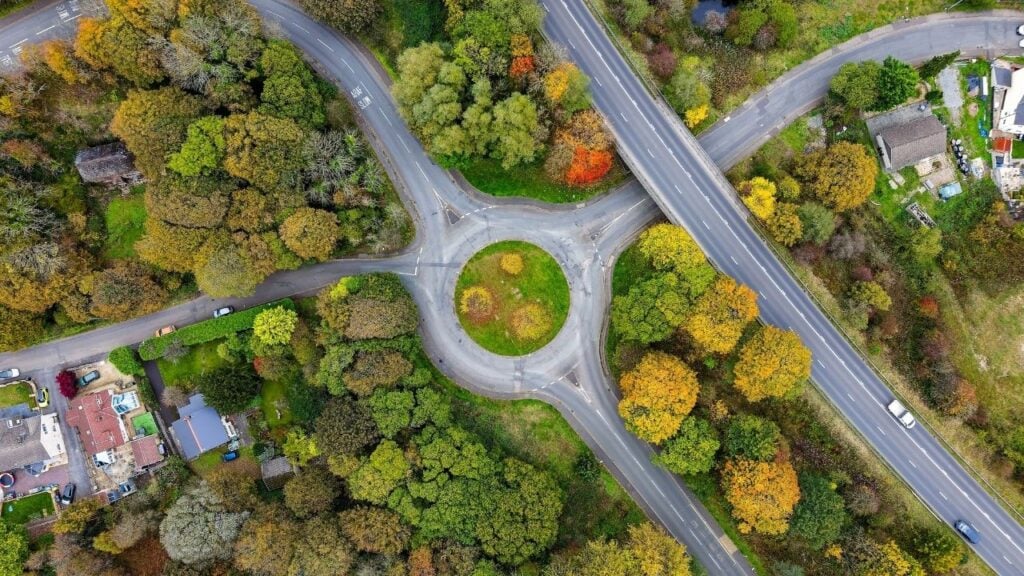
Driving around Washington comes with a set of unwritten rules.
If you didn't learn to drive in Northern Virginia, a few of your habits may give you away.
7 Mistakes That Give Away Anyone Who Didn't Learn to Drive in Northern Virginia
