

5 Everyday Habits That Texans Inherited From Their Grandparents

The Texas Department of Agriculture holds its 52nd Family Land Heritage ceremony this year, honoring families who’ve kept the same farm or ranch running for a hundred years.
A century is long enough to pass down more than the deed.
These are the everyday habits Texans inherited from their grandparents.
1. Dominoes After Sunday Dinner
Texans have kept the domino game 42 alive since two bored kids invented it in Parker County in 1887.
The state made 42 its official domino game in 2011, putting it in the same company as the mockingbird and the bluebonnet.
Not bad company.
Texans still gather around card tables for 42 at family reunions, in church halls, and at tournaments that turn up around the state throughout the year.
Hallettsville hosts one of the state’s best-known 42 tournaments every year, an event Texas Co-op Power has called the state’s largest gathering of 42 players.
Many of the players standing at those tables learned to count dominoes before they learned to drive.
A grandparent who grew up playing in a farmhouse kitchen taught the rules to their kids, who taught them to theirs, and the shuffle-and-deal ritual never stopped.
2. Chili With Zero Beans
Texans’ chili still skips beans entirely, exactly how their grandparents cooked it.
The Texas Legislature named chili the state’s official dish in 1977.
Beans need not apply.
The Chili Appreciation Society International’s rulebook bans beans, macaroni, rice, and hominy from competition chili.
Grandmothers wrote their versions down on index cards decades before that rule ever existed, and kids still cook from the same cards today.
What Texas Chili’s “Fillers” Label Covers
Texas chili’s no-beans rule reaches wider than many people realize.
The Chili Appreciation Society International’s official rulebook doesn’t stop at beans, macaroni, rice, and hominy. It also bans “other similar ingredients,” filing the whole category as fillers under Section I.A.2 of its rules.
That rule only governs sanctioned cook-offs, so a home cook who tosses a can of pinto beans into the pot hasn’t broken any law.
3. Loyalty to One Grocery Store
For generations of families, loyalty to H-E-B goes back to Florence Butt’s one small grocery store, and grandparents who shopped there raised kids who never left.
Florence Thornton Butt started the store in Kerrville in 1905 with a $60 loan.
Her family still runs the company built from it.
That’s not nothing.
The company still runs a program called Quest for Texas Best, giving small Texas food brands a shot at store shelves.
That’s the same shelf space Florence Butt once had to fight for.
H-E-B has grown to hundreds of stores that still sit almost entirely inside Texas, plus more than 60 stores across several northern and central Mexican states.
Grandparents who watched H-E-B open in their hometown raised kids who now drive past two other supermarkets just to shop at the same H-E-B.
4. Same Hunting Lease
Texans keep paying into the same patch of hunting ground their grandfathers first leased, year after year because owning land to hunt on was rarely an option.
Texas Monthly puts the state’s private-land share at 96%.
Texas Parks and Wildlife Department (TPWD) land covers less than 1% of the state’s land, so a family lease is often the only way in.
TPWD manages just under 1.4 million acres of public hunting land itself, some of it leased the same way private landowners lease theirs.
This year, dove season opened statewide for the first time in state history on Sept. 1, with mourning dove numbers estimated at about 37 million birds, the second-highest count on record.
Leases still run anywhere from $5 to $300 an acre depending on the county.
Location decides everything.
A family that has held the same lease for decades treats the renewal like a bill nobody questions.
Psst! How much do you know about Texas beyond the family stories? Take our quiz and see how many you can get right.
Quiz
Texas Trivia Test
Answer these questions on Texas history, geography, and wildlife. We bet you can’t get them all right. Prove us wrong?
Texas has an official state small mammal. Which one is it?
5. Land That Never Sells
Texans' inherited land rarely changes hands, no matter the offer, exactly the way their grandparents held on before them.
The Texas Department of Agriculture has held its Family Land Heritage ceremony every year since 1974.
Each honoree has kept the same farm or ranch running for at least 100 years.
Fifty-two years and counting.
More than 5,000 families have earned the honor over the program's history.
Qualifying still takes at least 10 working acres and a century of the same family running the operation, whether that means cattle, cotton, or a small pecan orchard.
Some of these families have turned down developers waving numbers big enough to retire on, choosing instead to keep cattle or cotton on land that has never carried another name.
A family that earns a second Family Land Heritage plaque has kept the same operation running for 150 straight years.
The two milestones sit fifty years apart: 100 to qualify for the program, 150 to earn the plaque a second time.
December Tamale Marathon
Across Texas, Mexican and Tejano families turn their kitchens into an assembly line every December, spreading masa and stacking corn husks the way their grandmothers did.
The tradition is called a tamalada, a family tamale-making session that food writers and folklorists have documented as a fixture of December in Texas for generations.
As of a 2017 account in Texas Monthly, one Central Texas family had run the same tamalada every December since 1972.
Their grandmother never wrote the recipe down herself.
Her family reconstructed the recipe from memory that first year and has cooked from it together every December since.
Nobody needed a cookbook.
Cousins fly in from as far as Maryland and New York some years to fill and fold tamales from the same masa, all traced back to one grandmother's technique.
Some households fill their tamales with pork, others with beans and jalapeños, but nobody in the tradition makes tamales alone.
4 Circle K Orders That Instantly Mark a Texas Regular

Regular Texas customers give themselves away with their go-to Circle K order, long before the receipt even prints.
From the $3 meal deal at the register to a favorite fountain drink combo, a handful of orders separate the locals from everybody just passing through on a road trip.
4 Circle K Orders That Instantly Mark a Texas Regular
9 Texas Small Towns Locals Protect From Tourist Guides
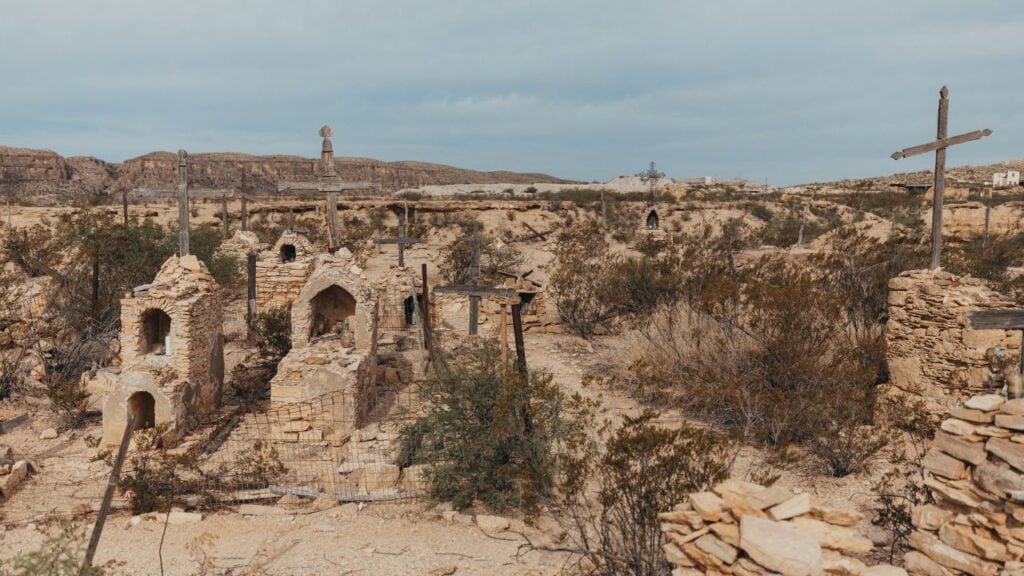
Some Texas towns get along just fine without a tourist crowd, and locals plan to keep it that way.
Locals in a handful of small towns across the state keep the best details to themselves, the kind of local knowledge that never makes it onto a highway welcome sign.
