
5 Indiana Basketball Traditions That Baffle the Rest of the Country

More than 40,000 people flooded into Milan, Indiana, on a March night in 1954. At the time, the town’s population was about 1,150.
The crowds came because the local high school team had just won the state title.
Out-of-staters can’t quite understand why an entire state grinds to a stop for two teams almost nobody outside Indiana has heard of.
These are the Indiana basketball traditions that baffle the rest of the country.
1. A Gym Bigger Than Two Division I Arenas
New Castle, Indiana built a gym in 1959 that still dwarfs several current Division I arenas.
The New Castle Fieldhouse opened with an estimated 9,325 seats.
A later renovation trimmed that number down to today’s 8,424.
That’s still more than Southern Methodist University (SMU) fits into its own arena, and more than Virginia Commonwealth University (VCU) fits into its own.
New Castle itself is a city of about 17,000 people.
That’s not a typo.
Indiana high schools built oversized fieldhouses decades ago to compete for the right to host regional and sectional tournament games.
New Castle still plays home games there every winter, in front of a crowd that rarely fills every seat but always could.
2. 87 Years of One Bracket for Every School
For 87 years, Indiana crammed every high school into one basketball bracket, no matter the size of the school.
That single-class tournament began in 1911 and ran essentially unbroken until 1997.
A school with a few hundred students could draw a school with several thousand, and sometimes it won.
Milan beat Muncie Central 32-30 for the 1954 state title, a run that became the movie Hoosiers.
Indiana finally split into four enrollment-based classes for the 1997-98 season.
The state tried a middle path first.
A short-lived Tournament of Champions matched the four new class winners against each other to crown one true champion.
It lasted two years before the Indiana High School Athletic Association (IHSAA) scrapped it.
Since then, every class has crowned its own champion every year, with no unified bracket to settle who’s best.
Kentucky, next door, still runs one tournament for every school today, in the annual Sweet 16 at Rupp Arena.
Indiana gave that up.
3. The Hoosiers Movie Gym
Knightstown, Indiana is home to the actual gym that appears in the 1986 movie Hoosiers.
The Hoosier Gym served as the home court for the film’s fictional Hickory Huskers.
It never became a roped-off exhibit.
The doors stay open.
The gym still runs as a working community basketball facility and museum, with the movie’s actual bus and car parked inside alongside the props.
Local teams still practice on the same floor.
Visitors from outside Indiana show up expecting a movie set and walk into an active gym instead, complete with squeaking sneakers and a scoreboard that still works.
Psst! How much do you know about Indiana’s basketball history? Take our quiz and see how many you can get right.
Quiz
Indiana Hoops IQ
Answer these questions on Indiana basketball history. See how many you can get right.
Tiny Milan High School beat heavily favored Muncie Central for the 1954 state title. What was the final score?
4. Crawfordsville's Birthplace Claim
Crawfordsville, Indiana calls itself the Cradle of Basketball, right on the state's own tourism website.
The story goes that a secretary at the Crawfordsville Young Men's Christian Association (YMCA) named Nicholas McCay brought the game back from Massachusetts in 1892, about a year after James Naismith invented it.
Historians who've studied the timeline call that story a myth, pointing to no known correspondence between McCay and Naismith and to earlier documented games elsewhere in Indiana.
Indiana keeps telling it anyway.
A state historical marker still stands where the YMCA once did.
The marker doesn't mention the dispute.
Hoosiers passing through Montgomery County still stop for it.
5. The Class Basketball Debate
Class basketball still splits opinion across Indiana, even decades after it replaced the old single-class format.
The debate lives on.
When the Indiana High School Athletic Association (IHSAA) made the change for the 1997-98 season, voices connected to Milan's own 1954 championship team argued publicly against it.
Twenty years later, coaches were still split.
Coach Lance Barker told local reporters it was hard to adapt after playing under the old single-class system.
Coach Griff Roth, who came up through the smaller-school side, said the four classes gave his players a little bit more exposure.
Neither side ever fully won the argument.
Bring it up at a gas station in a small Indiana town.
Just be ready to stay a while.
Hinkle Fieldhouse's Basketball History
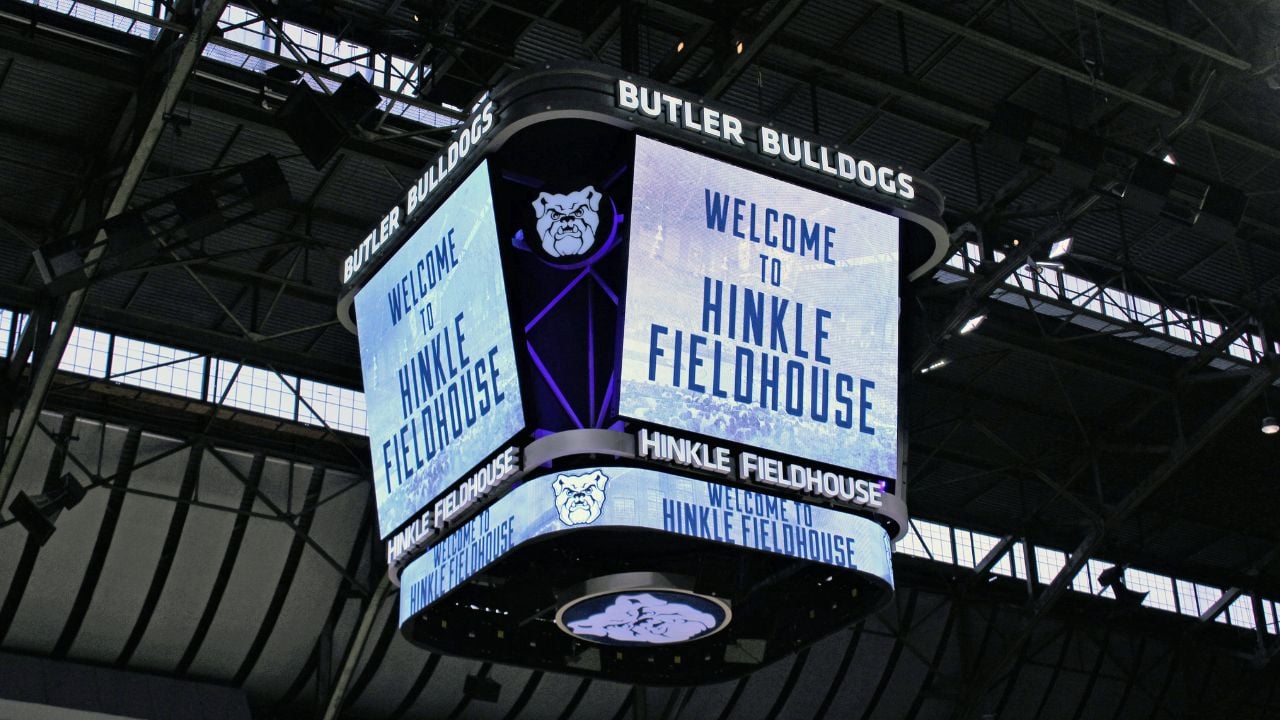
Butler University's Hinkle Fieldhouse opened in Indianapolis in 1928, built to host the state's high school tournament.
A group of 41 Indianapolis businessmen financed the building for that purpose.
It was the largest basketball arena in the country when it opened, a distinction it held until 1950.
The fieldhouse hosted the state finals from 1928 to 1971, with one break.
It served as a military barracks from 1943 to 1945, and the finals moved to the State Fairgrounds Coliseum during those years.
That run still includes the actual 1954 Milan Miracle and Crispus Attucks's 1955 title, the first time an all-Black team won Indiana's tournament.
The 1986 movie Hoosiers filmed its championship scenes on that same floor decades later.
Butler renamed the building for Hall of Fame coach Tony Hinkle in 1965.
The name stuck.
The building still stands on Butler's campus, though the high school tournament moved on decades ago.
The Tournament's Ping-Pong Draw
Indiana's tournament draws its sectional pairings from a machine that blows numbered ping-pong balls into the air, one for each school.
There's no seeding.
A team that won two games all season can still draw a team that won twenty, on the very first night of the tournament.
The bracket then runs through four rounds: sectional, regional, semistate, and state finals.
Semistate is the round that stops out-of-staters.
Many other states jump straight from a regional round to a state semifinal without ever naming a round in between.
Ask a Hoosier what a semistate is, and they'll answer without blinking.
Outside Indiana, that word draws a blank stare.
The Draw Isn't Fully Random
Indiana's blind draw doesn't mean any team in the state can end up facing any other team.
The Indiana High School Athletic Association (IHSAA) already splits schools into four separate classes by enrollment.
The ping-pong balls only pick an opponent from within that same class.
A tiny school can still draw a brutal sectional, but never a school built for a much bigger gym.
New Castle's Basketball Hall of Fame
New Castle, Indiana already has the country's largest high school gym, and the same small city also runs a hall of fame built around the game.
The Indiana Basketball Hall of Fame fills a 14,000-square-foot building with artifacts spanning the game's history in the state, from the 1890s to today.
It honors players at every level, high school, college, and professional, with an emphasis on each inductee's high school roots.
New Castle built its case around teenagers with a jump shot, and kept it going as those players grew up.
It's still open every week.
