
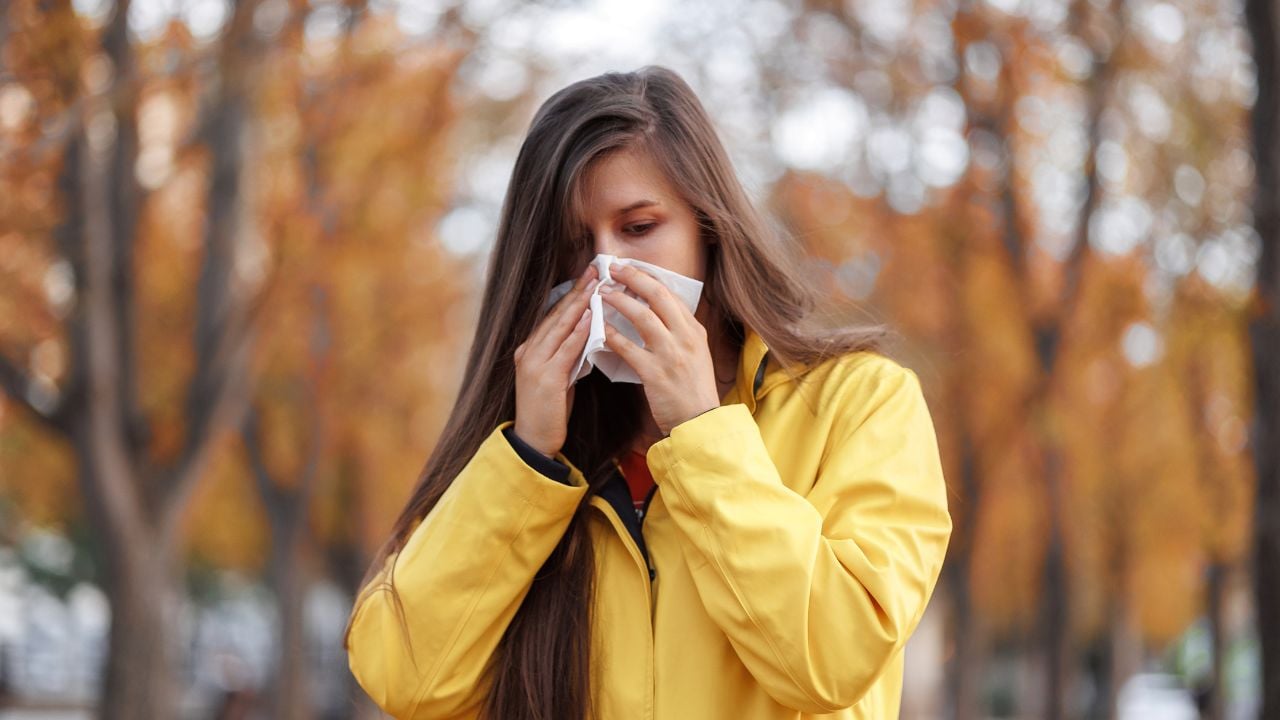
5 Reasons Fall Allergies Hit Iowans So Hard

Des Moines logged worse-than-average pollen days, landing 31st out of the 100 largest U.S. metro areas in the Asthma and Allergy Foundation of America’s newest report.
You don’t need the ranking to know it.
Drive past any Iowa soybean field this time of year, and the sneezing starts before you’re back on the highway.
These are the reasons fall allergies hit Iowans so hard.
Note: This is general information, not medical advice. Pollen levels and guidelines change from year to year, so talk to a doctor about your symptoms.
1. Stretched-Out Frost Line
Iowa’s growing season has stretched by about 20 days over the past few decades, according to Dr. Shane Gailushas, an ear, nose, and throat physician at Mercy in Cedar Rapids.
Ragweed is sensitive to frost, and the plant dies the moment the first hard freeze lands.
A longer frost-free stretch just delays that freeze.
Ragweed used to have a fixed shutoff date.
Not anymore.
The pollen itself typically gets going in August, peaks around mid-September, and keeps releasing until that first hard frost, per the Asthma and Allergy Foundation of America.
Every extra week without a freeze is another week you spend breathing ragweed pollen that should already be gone for the year.
2. Bigger, Stronger Ragweed
Ragweed itself is changing across the state, and not for the better.
Rising heat and higher carbon dioxide levels make the plants grow bigger, according to Peter Thorne, a University of Iowa public health professor.
Bigger plants make more pollen.
The pollen itself is changing too.
Warmer, carbon-dioxide-rich conditions push the plant to pack more protein into each grain, Thorne says, and protein is exactly what triggers an allergic reaction.
That’s more protein landing in your sinuses with every ragweed-heavy breath you take this fall.
Fall Allergies or a Cold?
Ragweed season and the first cold of autumn often hit Iowa within weeks of each other, and the two can feel nearly identical.
A cold sometimes brings a fever, and allergies never do, according to the Mayo Clinic’s cold or allergy comparison.
If your eyes are itchy and watery, that usually points to allergies, not a cold.
Your cold typically clears up in 3 to 10 days.
Ragweed allergies can drag on for the full six to ten weeks the plant stays in bloom, the Asthma and Allergy Foundation of America finds.
3. Built for Ragweed
Allergy-triggering ragweed doesn’t need untouched wilderness to spread across the state.
It needs disturbed soil instead, the kind farming turns up along every field edge, ditch, gravel road, and fence line, according to the Asthma and Allergy Foundation of America.
Farmers worked nearly 30 million of Iowa’s roughly 35.7 million acres, according to the U.S. Department of Agriculture’s latest state farm data.
That’s ground you’re probably driving past every day without a second thought.
A single ragweed plant can release 1 billion grains of pollen in one season.
That’s one plant.
Psst! How allergy-ready is your Iowa fall? Run through this checklist and see where you stand.
4. Harvest’s Mold Spike
Iowa’s fall harvest adds a second irritant right as ragweed pollen peaks.
Crop residue and dying plants break down fastest in the cool, damp weeks of fall, and that decay is exactly the environment mold spores need to multiply, according to Dr. Kranthi Nomula, an ear, nose, and throat specialist with Sanford Health.
With farms covering much of the state’s ground, that decay isn’t confined to a single field.
It’s happening across the same ditches, edges, and fence lines already busy growing ragweed.
That’s a lot of ground breaking down at once.
For the farmers running combines through those fields, the exposure rises from background irritation to a diagnosed illness.
Combines working corn and soybean fields kick up dust and mold spores like Aspergillus, conditions Iowa State University Extension says can trigger a cough, sore throat, or a stuffed-up feeling.
Roughly 1 in 20 farmers develops Farmer’s Lung, a serious inflammatory reaction to moldy organic dust.
That’s not a small share of the people working the state’s fields every harvest.
Organic Dust Toxic Syndrome is the more common of the two, the Extension says, and it’s still enough to knock someone flat for a day or two.
Warning signs include a cough, headache, chest tightness, muscle aches, and fever, and the Extension says those call for medical evaluation, not a shrug.
Aspergillus mold spreads faster in drought years, so a dry stretch before harvest can make the dust worse, not better.
That’s bad timing.
Add that to a fall already thick with ragweed pollen, and you’ve got two allergy triggers peaking in the same weeks instead of one.
5. Pollen-Driven Ranking
Des Moines gives Iowa its only entry on the Asthma and Allergy Foundation of America’s yearly pollen scorecard.
The breakdown behind that entry explains exactly where the city falls short.
The organization ranks the 100 largest U.S. metro areas on three things: Pollen days, allergy-medicine sales, and how many board-certified allergists serve the area.
Des Moines’ medicine use and its allergist supply both came in average.
Pollen alone dragged the ranking down to 31st.
That’s the whole story.
That’s not a doctor-shortage problem or a medicine-cabinet problem you can shop your way around, since Des Moines’ air itself carries more pollen than many of the country’s largest metros.
Boise, Idaho topped this year’s list for the country’s toughest pollen overall, with Tulsa and Wichita rounding out the top six.
Des Moines didn’t crack that top group.
A 31st-place finish out of 100 still puts more than two out of three of the country’s largest metro areas ahead of it for pollen relief this fall.
A Middle-of-the-Pack State
This isn’t only a Des Moines allergy problem.
The whole state ties for 24th place out of 50 on a separate pollen severity index from MediFind.
That index scores every state from 0 to 12 based on combined tree, grass, and weed pollen at the peak of allergy season, and Iowa lands right at 6.15.
Oklahoma tops the list at 10.77.
Vermont sits at the bottom with a 4.09, helped by a shorter, cooler growing season up north.
The state sits in between.
Iowa’s score puts it closer to the country’s worst allergy states than its best ones.
You’re not getting off easy just because Iowa isn’t Oklahoma.
A mid-pack score on a scale that runs to 12 still means sneezing, itchy eyes, and lost sleep for Iowans every fall.
8 Roadside Stops Iowans Send Every Out-of-State Visitor To

A cornfield outside Dyersville hosted a nationally broadcast Major League game on a temporary 8,000-seat ballpark this past August.
The original diamond from the movie still stands a quarter mile away, free to visit from sunrise to sunset.
8 Roadside Stops Iowans Send Every Out-of-State Visitor To
6 Hy-Vee Bakery-Ordering Mistakes Iowans Keep Making

A Hy-Vee quarter sheet cake runs $28.99 and feeds 16 to 24 people, while a full sheet runs $62.99 and feeds up to 96.
That math is the easy part of ordering from the bakery counter, and that’s not where the mistakes start.
