
5 Tennessee Rules That Decide Who Pays When a Neighbor’s Tree Falls on Your House

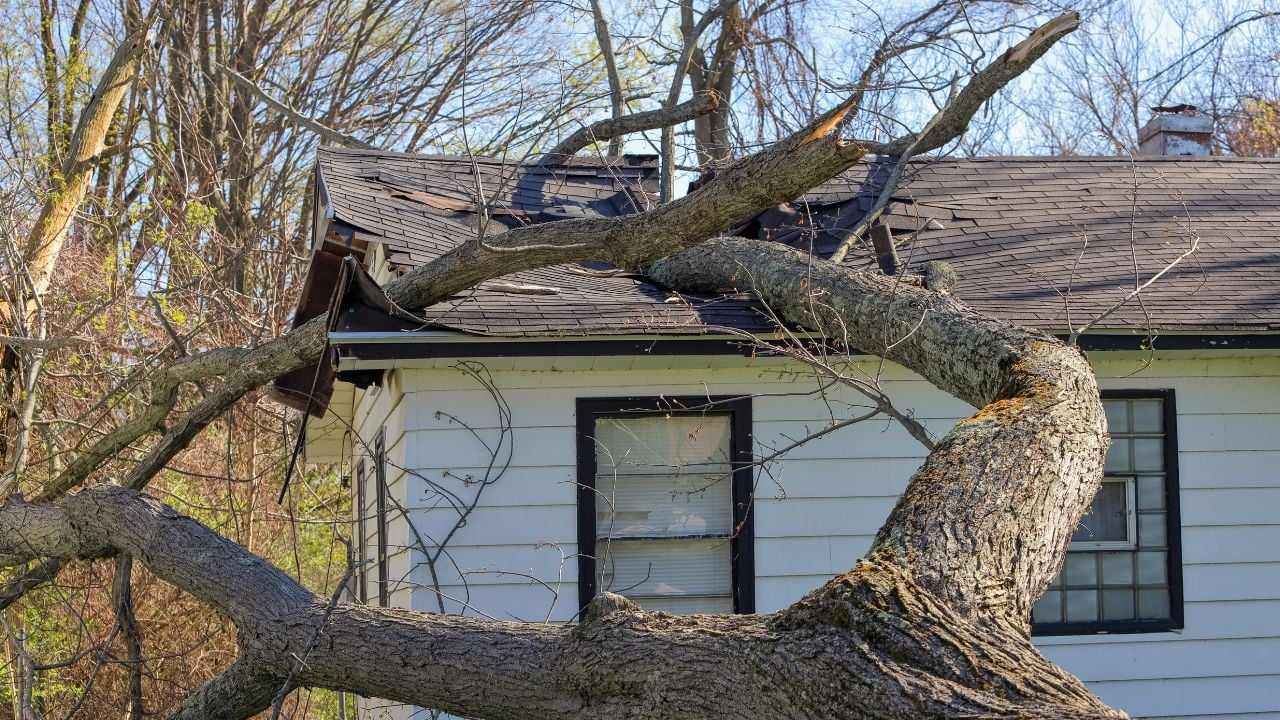
A storm can drop a neighbor’s tree onto your roof in seconds.
Once the shock wears off, Tennesseans are left wondering who pays, and it isn’t always as simple as whose yard the tree grew in.
Here’s how the law may sort it out.
Note: This is general information, not legal or insurance advice. Tree rules and policy terms are subject to change, so check coverage questions with your insurer or agent.
1. Branches and Roots That Cause Harm
A neighbor’s tree can count as a nuisance once its branches or roots cause actual harm to your property.
The Tennessee Supreme Court set that rule in a December 2002 case, Lane v. W.J. Curry & Sons.
In 1997, a large limb from one of the oak trees next door broke off and fell through Gloria Lane’s roof, attic and kitchen ceiling in Memphis.
The oaks were healthy.
Roots from the same trees had clogged her sewer line, too.
Shade, falling leaves and branches that merely cross the property line don’t make a tree a nuisance.
When the harm is actual, you can hold the owner responsible for it and ask a court to make the owner cut back the branches or roots.
Trimming a Neighbor’s Branches Yourself
Lane left in place existing Tennessee law that lets a neighbor cut encroaching branches or roots back to the property line, whether or not they cause harm.
Under that rule, the person doing the cutting pays for it.
A University of Tennessee newsletter from April 2026 adds a limit: The cut can’t damage or destabilize the tree.
2. Dead or Decaying Trees
A dead or decaying tree next door usually leads to a negligence claim, not a nuisance claim, when it falls on your house.
A footnote in Lane says courts typically analyze those cases under negligence concepts.
Liability usually turns on whether the owner lives in an urban or rural area, and whether the owner knew or should have known the tree was dead or decaying.
Lane left dead-tree liability open.
The University of Tennessee newsletter describes a similar notice standard: Owners who knew, or reasonably should have known, a tree was a hazard and failed to address it may be responsible for the damage to your house.
3. Healthy Trees in Storms
When a healthy tree falls during a storm, its owner generally isn’t liable for the damage, according to that newsletter.
If the owner isn’t liable, your homeowners policy is what’s left.
Overhanging branches are the exception.
If branches or roots from a healthy tree are already causing actual harm to your property, the nuisance rule can still make the owner pay.
Psst! How ready are you for a tree coming down on your house? Run through this checklist and see where you stand.
4. Shared Blame
Your share of the blame can sink a claim over a tree that fell on your house.
McIntyre v. Balentine, a 1992 Tennessee Supreme Court decision, set the rule: You can recover damages only if your share of the fault is smaller than your neighbor’s.
If a jury put your share at 40 percent and your neighbor’s at 60 percent, you could recover.
A tie isn’t enough.
The rule applies to a negligence claim, such as a claim over a dead tree your neighbor should have removed.
If you cut roots or branches and the tree later falls, your neighbor could argue the cut weakened it and that part of the blame is yours.
5. Nuisance Damages
Once a court rules a tree next door a nuisance, the owner’s bill can reach past your repair costs.
The court defined a temporary private nuisance as a nuisance that can be corrected.
In those cases, damages may cover the cost of restoring the property to its condition before the nuisance.
Damages can also cover inconvenience and injury to your use and enjoyment of the property.
Emotional distress counts too.
The court sent Lane back to the trial court to decide damages and other relief, such as ordering the trees removed.
Three-Year Deadline
A tree that falls on your house starts a clock for suing your neighbor.
That clock runs three years.
Tennessee Code 28-3-105 sets the deadline for suits over property damage, counted from when the claim arises.
The deadline covers both your roof and a car parked under it.
To be safe, count from the day the tree lands.
Your Homeowners Policy
Your homeowners policy is where a claim over a neighbor’s fallen tree starts.
The Tennessee Department of Commerce and Insurance’s 2024 Hurricane Helene guidance says damage from trees or other falling objects is typically covered under most standard homeowners policies.
After Winter Storm Fern, the department’s January 2026 storm guidance says removing a fallen tree typically isn’t covered when the tree doesn’t land on and damage your home.
The department’s homeowners guide includes a caution about small claims.
Consider skipping claims for smaller amounts to avoid a premium increase.
A higher deductible may make sense if you’re unlikely to file a claim for a loss of less than $500 or $1,000.
If a neighbor’s tree only clips your gutter, a claim might not be worth the premium increase.
Hiring a Tree Crew
The state attorney general’s office tells you to demand three things from any crew hired to clear a fallen tree after a storm.
Ask for proof of general liability insurance, which covers damage to your home if a limb falls the wrong way.
Ask for proof of workers’ compensation coverage, which protects you from being sued if a worker is injured on your property.
Ask for a written contract that includes debris removal.
A handshake won’t protect you.
Tennessee’s Home Improvement law prohibits contractors from asking for a down payment of more than one-third of the total contract.
Payments shouldn’t get ahead of the work, so the last payment can wait until the logs are gone.
9 Gas Station Orders That Give Away a Lifelong Tennessean

Some gas station orders say a lot about where you grew up.
These are the orders that give away a lifelong Tennessean.
9 Gas Station Orders That Give Away a Lifelong Tennessean
5 Club Publix Perks Tennesseans Never Switch On
Signing up for Club Publix is the easy part.
These are the Club Publix perks many Tennesseans haven’t switched on.
