
5 Things Iowans Can’t Legally Put Out With Their Household Trash

Trash day is one of life’s small pleasures. You roll your cart to the curb, and your clutter leaves on a truck.
But not everything in your garage can legally go along for the ride.
These are the things Iowa law bans residents from putting out with their household trash.
Note: This is general information, not legal advice. Disposal rules are subject to change, so confirm the current requirements with the Iowa Department of Natural Resources (DNR).
1. Lead-Acid Batteries
Lead-acid batteries have been barred from Iowa landfills since July 1, 1990, which keeps them out of your trash cart.
Think of the battery from your car.
Iowa’s landfill rule lists lead-acid batteries among the wastes a landfill can’t accept.
Retailers that sell them have to post a written notice saying land disposal of lead-acid batteries is prohibited.
When you swap in a new battery, the old one still needs somewhere other than your cart to go.
If you’ve got a dead one sitting under the workbench, it belongs in that second pile, not the cart.
2. Used Oil
Used oil from an oil change falls under a separate rule: Iowa law bars landfills from accepting it for final disposal.
If you change your oil at home, the drained oil still needs a destination other than your cart.
The DNR treats used oil as a household hazardous material, and it bars dumping it in a public waterway as well.
Stores that sell oil have to post a notice saying it’s unlawful to put used oil in a sanitary landfill.
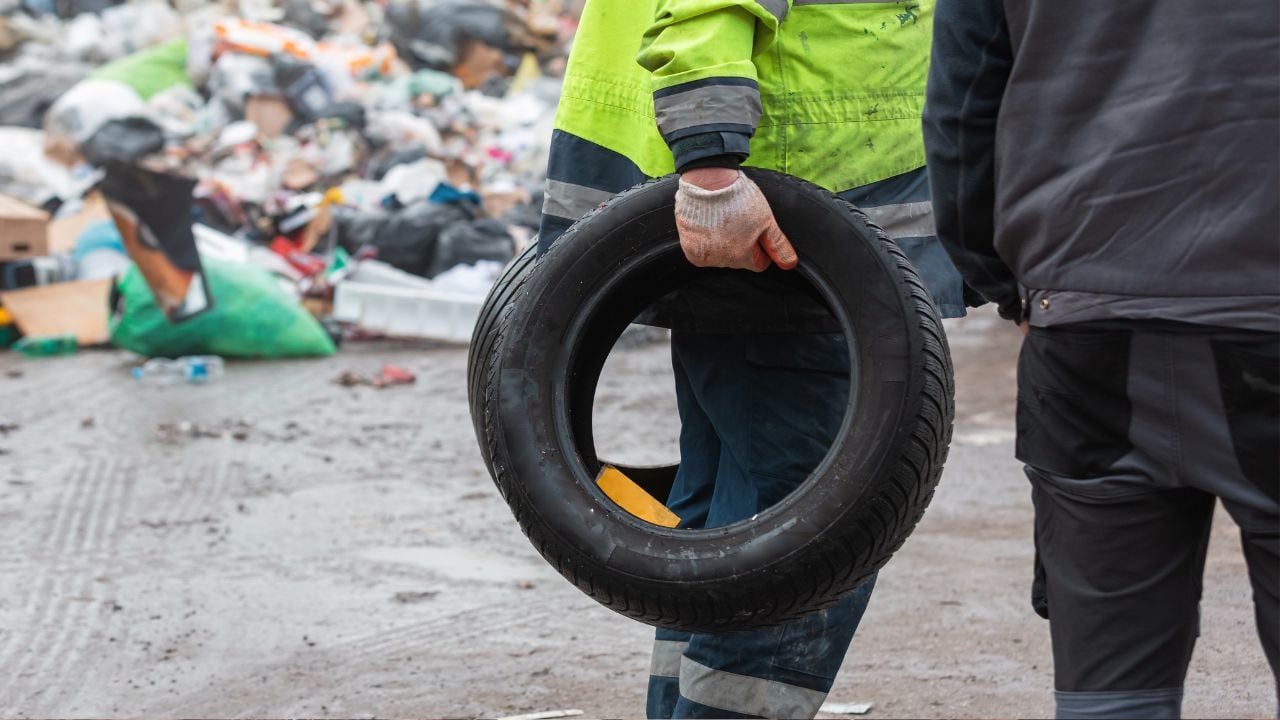
3. Waste Tires
A worn-out tire has had no place in an Iowa landfill since July 1, 1991, when the state barred land disposal of waste tires.
The state defines a waste tire as one that’s no longer suitable for its original purpose because of wear, damage or a defect.
If you’ve got a tire that’s worn out or damaged, it fits that definition.
A landfill can accept a waste tire only after it’s been processed the way the state requires.
Burying or burning waste tires is prohibited as well.
12 Things Only an Iowa Childhood Teaches You

Some traditions only make sense to the people who grew up with them.
Kids learn them early and often assume other places do the same.
12 Things Only an Iowa Childhood Teaches You
4. Appliances
Iowa’s landfill rule says a landfill can’t accept appliances without documentation that they were demanufactured.
Demanufacturing means removing parts such as refrigerants, components containing mercury, and electrical parts containing PCBs before the appliance is disposed of or recycled.
An old freezer or a dryer you’re replacing falls under the same rule.
Appliances in Iowa’s Demanufacturing Rule
Iowa’s demanufacturing rule names refrigerators and freezers, commercial coolers, air-conditioning units and dehumidifiers.
It also names gas water heaters, furnaces, clothes washers and dryers, dishwashers and microwave ovens.
5. Yard Waste
Yard waste is barred from Iowa landfills, so a cart full of bagged leaves runs into state law.
Each city and county has to pass an ordinance that requires you to keep yard waste apart from your other trash.
Before you bag the leaves, check your city’s yard waste pickup rules.
Landfills can still use yard waste as land cover or soil conditioning material, but that’s the landfill’s call, not yours.
Where Banned Items Go
You have legal places to take many of these items.
A retailer that sells lead-acid batteries has to take your old battery free of charge when you buy a new one.
A retailer that sells oil has to take your used oil at the point of sale or post a notice telling you where to take it.
The DNR says unwanted motor oil should be taken to collection sites for recycling and reuse.
Free Regional Collection Centers also take household hazardous materials such as paint, insecticides and electronics.
The DNR also lists tire processors and appliance demanufacturers among Iowa’s solid waste facilities.
Roadside Dumping
Skipping the cart doesn’t dodge the rules: Iowa prohibits dumping an old refrigerator along a roadside or in a ditch.
Open dumping can lead to DNR enforcement, which could include a civil penalty under the Iowa Code.
The DNR notes that many communities offer free spring curbside pickup for larger items, so check with yours before you load the truck.
Psst! How much do you know about Iowa’s trash and recycling laws? Take our quiz and see if you can ace it.
Quiz
Iowa Trash Smarts
Answer nine questions on Iowa’s trash and recycling rules. We bet you can’t get them all right. Prove us wrong?
An Iowa landfill can take a waste tire only after it’s been cut into pieces no longer than how many inches on any side?
Open Burning Rules
Burning isn't a workaround: The DNR's list of things you can't burn includes household garbage, waste tires and oil-based products, and burning anything on it is illegal in Iowa.
Plastic, carpet, furniture and treated wood are on that list as well.
Backyard burning of household trash releases substantial amounts of poisons and toxins.
The burn barrel is out.
Leaves and tree trimmings from your property are the exception. You can burn them there, unless your town's ordinance or a burn ban says otherwise.
You can't haul them to someone else's property to burn, though.
Kwik Trip Is Called Kwik Star in Iowa. 5 Other Things Iowans Know About the Chain
Even a familiar gas station chain can feel different once you're in Iowa.
The name on the sign is only the start.
Kwik Trip Is Called Kwik Star in Iowa. 5 Other Things Iowans Know About the Chain
