
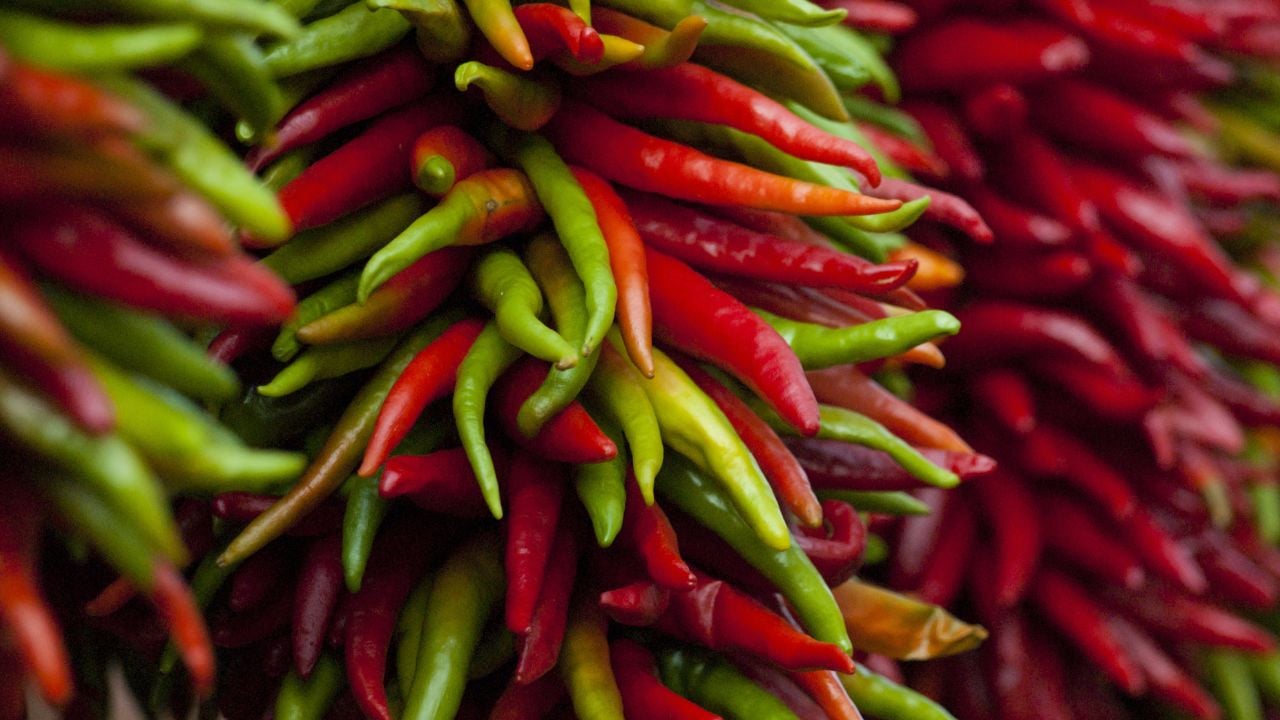
5 Things New Mexicans Do Before Green Chile Season Ends for the Year

New Mexico State University Extension is blunt about how chile season ends: Not gradually, but in one hard freeze that kills the plants.
There’s not much warning.
So growers and home cooks spend the season’s last weeks racing that first freeze.
These are the things New Mexicans do before green chile season ends for the year.
1. One Last Chile Order
Anyone ordering chile from Hatch Valley growers are working against a shorter clock than usual this year.
A curly top virus outbreak and a separate leaf miner infestation cut yields across the valley this year, according to Hatch Chile Store’s 2026 harvest report.
Curly top hit transplanted fields hardest, cutting yields there by roughly 20 to 35 percent.
Leaf miners spread wider across the region, and Hatch Chile Store puts losses on seeded chile at 40 to 50 percent.
Medium chile shipped about a week behind schedule.
Extra-hot varieties ran two weeks behind that.
Behind schedule, not gone.
Every pending fresh order is still going out, just later than planned, which leaves a tighter window before this year’s fresh sacks are gone for good.
The delay reaches past Hatch itself, since growers around Las Cruces and the Mesilla Valley ship on the same slowed timeline.
What “Hatch Chile” Means
Hatch chile is a legal term, not just a brand name.
The Hatch Chile Association has fought in court to protect that name, arguing it should apply only to peppers grown in one stretch of Rio Grande farmland.
That stretch runs about 35 miles from Caballo Dam south through the Hatch and Uvas valleys.
Chile grown anywhere else in New Mexico is New Mexico chile, never Hatch chile, even from the next county over.
New Mexico’s growers harvested about 54,675 tons of chile on 8,100 acres in 2025, and only a slice of that total came from inside that 35-mile stretch.
2. Freezing a Year’s Worth
Many families do their heaviest freezer-stocking in the season’s final weeks, not its first ones.
Many families buy a whole sack, 25 pounds or more, have it roasted, and pack it into the freezer in one long afternoon.
One trip, one year.
Some peel and seed every pod before freezing it, so it’s ready to drop straight into a pot of stew or a pan of enchiladas come January.
Others just bag it whole, skin, seeds, and all, and deal with the peeling once it thaws.
Whole roasted pods get set aside separately for chile rellenos, since a torn pod won’t hold its stuffing.
Either method works, and the rush behind both comes down to the calendar.
Once the season ends, fresh green chile disappears from stores until next summer’s harvest.
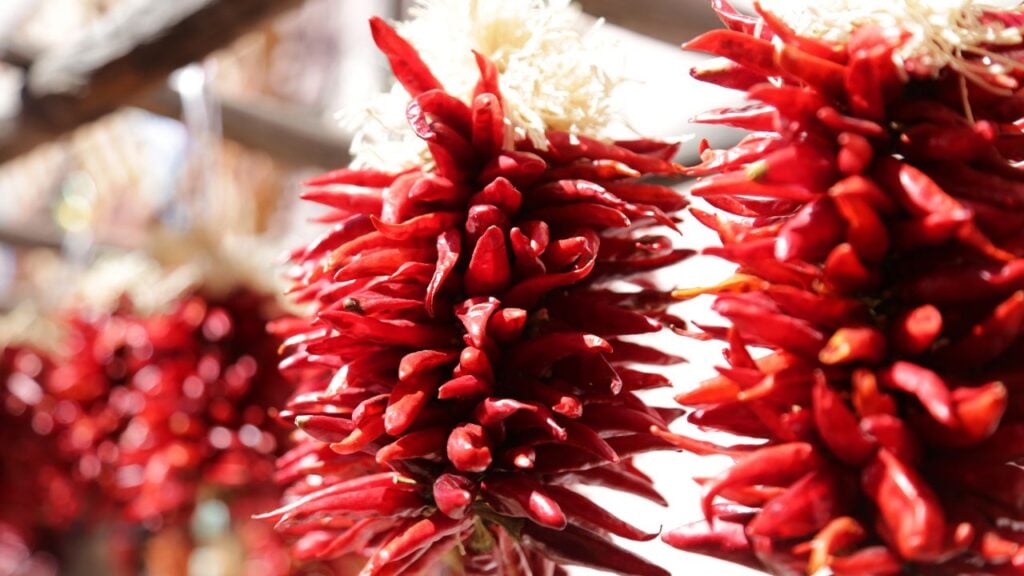
3. Stringing the Last Ristras
People string their ristras only once the season is already closing in, not before.
New Mexico State University Extension says ristras are made from mid-September until frost, using only the ripe red pods that show up as the plants run out of season.
Green chile won’t work for a ristra at all.
It shrivels and turns a dull orange instead of drying into the deep red families hang by the front door.
Extension guidance points growers toward older varieties like Sandia and New Mexico 6-4 for this, since many newer, thicker-walled types rot on the string instead of drying.
Timing is everything.
Wait too long, and frost ends the crop before enough pods have turned red to string.
4. Racing the First Frost
Gardeners with a few chile plants in the backyard spend the season’s last weeks watching the forecast more than the plants themselves.
New Mexico State University Extension calls chile highly vulnerable to freezing.
Its growing guide is blunt about the result: A hard freeze kills the plants outright.
Hatch Chile Store’s season guide tells customers to expect that first hard frost in mid-to-late October.
The National Oceanic and Atmospheric Administration’s 30-year climate averages for Las Cruces put the typical first hard frost later than that, closer to mid-November.
Either way, an early cold snap can beat the average by weeks, and nobody in the valley knows which kind of year they’re getting until it happens.
A hard freeze doesn’t just stop the harvest.
It ruptures the cells inside any pod still on the plant, so a home gardener who waits too long loses whatever’s left in a single night.
No warning shot.
Anyone with plants still standing either picks everything green the evening a freeze warning goes up, or covers the plants and hopes for one more week.
Psst! How much do you know about New Mexico’s chile history? Take our quiz and see how many you can get right.
Quiz
New Mexico Chile IQ
Answer these questions on New Mexico chile history and trivia. We bet you can’t get them all right. Prove us wrong?
New Mexico’s state question, official since 1996, asks diners to choose between which two words?
5. One Last Market Run
Roadside chile stands and grower's markets don't run past the harvest, and several close for the year before the season is technically over.
The state's chile industry describes October as the month the final harvest comes in, right alongside the season's first frost.
That's the same stretch when many of the state's roadside stands and farm markets start shutting their gates, one by one.
Wait too long, and it's next August.
Shoppers who haven't bought enough yet make one deliberate run to whichever stand or market is still open, rather than counting on another weekend.
A sack bought in the season's last days tastes the same as a sack bought in August.
It's the only fresh green chile the state will have until next year's plants come up.
What the Frost Leaves Behind
The fields don't sit idle once frost ends the season for the year.
Farmers disk the dead plants back into the soil within weeks, since a frozen chile plant can't be salvaged and rots fast in the field.
The state's 2025 harvest split out to about 44,575 tons of green chile and 10,100 tons of red, per the U.S. Department of Agriculture.
The split matters because green chile has to sell fresh or freeze fast, while red chile can dry on a ristra or grind into powder that keeps for months.
Grocery stores see their heaviest volume of fresh green chile earlier in the harvest, typically August and September.
Roadside stands and farm markets keep selling fresh chile well past that, right up until the first freeze cuts off the supply for the year.
Once frost hits, grocery stores finish switching their shelves over to jars of red chile powder and dried pods for the winter.
Red chile doesn't work that way: Dried on a ristra or ground into powder, it keeps until next year's green crop is ready to pick.
4 Things Allsup's Does in New Mexico That Other Gas Stations Never Bother With
Allsup's sold more than 24 million fried burritos across its stores in 2025, and the chain never planned on any of it.
The whole category traces back to a kitchen accident in a Clovis fryer in 1974, and New Mexico never looked back.
4 Things Allsup's Does in New Mexico That Other Gas Stations Never Bother With
7 Things New Mexicans Are Tired of Hearing From Texans
A Texas House committee spent part of this year studying whether to annex several eastern New Mexico counties back into Texas.
It wasn't the first time the idea surfaced, and New Mexicans have been fielding versions of it, plus a handful of other remarks from across the state line, for generations.
