
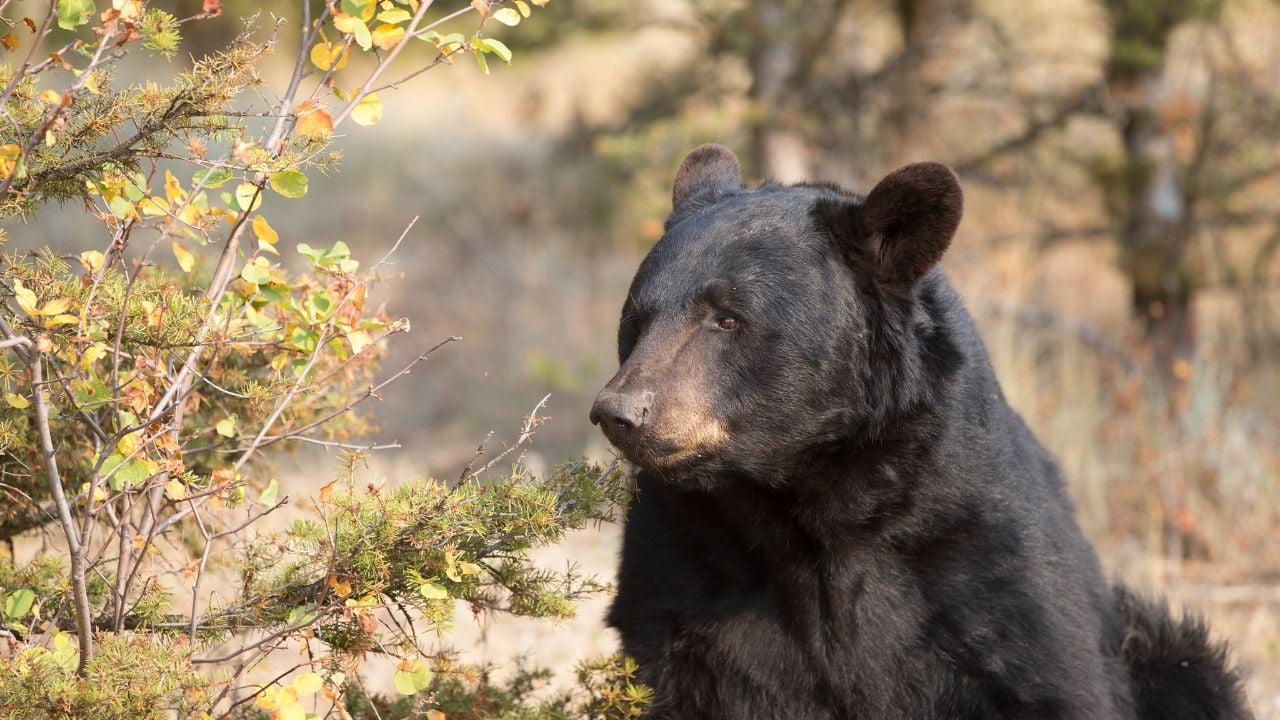
5 Things Pennsylvania’s Black Bears Do Before They Den for Winter

You might figure that the black bears in your part of Pennsylvania are tucked away for winter by now.
But some are still out there, and they have a few things to take care of.
Here’s what Pennsylvania’s black bears do before they den for winter.
1. Eating Heavily
Black bears spend the fall eating heavily to fatten up for winter, says the Pennsylvania Game Commission (PGC).
You might picture a meat eater, but a black bear’s diet is largely vegetarian.
Berries and mast, the acorns, hickory nuts and beechnuts that drop from trees, are common foods.
Insects, small mammals and fish are on the list.
So is garbage.
A bear doesn’t need your yard to eat well in the fall.
2. Raiding Bird Feeders
Black bears that become accustomed to people may wander into your yard for a bird feeder.
Birdseed and grains have lots of calories, so bears find them attractive.
Bears find food mainly by scent, so seed in your feeder can be easy for a bear to find.
3. Visiting Trash Cans and Grills
Black bears also visit garbage cans and backyard grills.
Bears that learn to forage on human-provided foods often become nuisances, causing property damage.
Once a bear finds easy access to food, it’s likely to come back for more.
Your curb and your patio can both draw a bear.
What Else Draws a Black Bear
Food odors attract black bears, so the PGC says to bring pet food containers inside at night.
Your recycle bins belong inside until collection day.
Your car counts too, since fruity air fresheners attract bears.
Odorless or pine-scented air fresheners are the safest bet.
4. Choosing a Winter Den
A black bear’s winter den might be a hollow tree.
It might also be a hole in the ground that looks like a groundhog’s burrow, only much bigger.
Rock crevices work too.
So do cavities under large rocks and nests beneath the roots of fallen trees.
Some bears, including females with newborn cubs, may simply den in an open nest on top of the ground.
Bears line their dens with bark, grasses and leaves.
Females tend to select more sheltered sites than males.
If you hike in the fall, you could walk past a den and never know.
5. Staying Active Into November
Black bears stay out later in the fall than you might expect.
Pregnant females are the first to enter dens, typically during mid to late November.
Males den several weeks later.
That means you may still cross paths with a male bear after the pregnant females have settled in.
Until they den, bears keep taking in as many calories as possible.
If you spot bears traveling in a group in the fall, they’re usually a female and her cubs.
Denning can start earlier in years when fall foods are scarce.
Home Range and Population
The average annual home range for an adult male black bear in Pennsylvania is 20 square miles.
Adult females average 6 to 8 square miles.
Males, called boars, tend to be considerably larger and heavier than females, which are called sows.
Black bears are found in large forested areas statewide.
They currently occupy over three-quarters of the state, though sightings have been confirmed in every county.
Bears seen in large urban centers and farmland, such as the southeastern corner of the state, are mostly transient.
If you’ve wondered how many black bears share the state with you, the estimate is about 19,000.
So your neighborhood may sit inside a bear’s range even if you’ve never spotted one.
Psst! How much do you know about black bears in winter? Tap each card and see how many you can get right.
Inside the Den
Black bears give birth inside the den, with females having their cubs during early January.
Litters range from one to five cubs, with three the most common in Pennsylvania.
Cubs nurse in the den.
The male doesn’t help rear young.
The cubs leave the den when they’re 3 months old.
By fall, the cubs are usually weaned and weigh 60 to 100 pounds.
If you find a den, you’ll want to give it a wide berth.
Keep walking.
Ban on Feeding Bears
Black bears can’t be fed on purpose in Pennsylvania, since it’s illegal to intentionally place food or other attractants that cause bears to gather or become habituated.
Wardens can halt the feeding of other wildlife that attracts conflict bears.
If you feed birds, you’ll want to keep your feeder from pulling bears in.
The advice for spring is to stop putting out birdseed at the first sign that bears are active again.
For migrating birds, switch to hull-less birdseed and bring your feeders inside every night.
Psst! How much do you know about Pennsylvania’s black bears? Take our quiz and see if you can ace it.
Quiz
Pennsylvania Bear IQ
Answer these questions on Pennsylvania’s black bears, their dens and their seasons. We bet you can’t get them all right. Prove us wrong?
How much does a black bear cub weigh at birth?
Hunting Season Dates
Regulated hunting is how Pennsylvania controls bear numbers.
If you're marking your calendar, the 2026-27 hunting schedule sets the regular statewide firearms bear season for Nov. 21-24.
That's a Saturday through Tuesday, ending two days before Thanksgiving on Nov. 26.
Wildlife management units 3C and 3D get a longer archery bear season to respond to bear-human conflicts.
Extended firearms bear seasons start Nov. 28 in some wildlife management units.
They run to Dec. 6 in some units and Dec. 13 in others.
9 Pennsylvania Roads Drivers Love to Hate, and Why the East and West Never Agree

Picture the same slow merge and the same brake lights, with a whole state of drivers grumbling about different ones.
Pennsylvania drivers rarely agree on which road is the worst, and eastern and western drivers pick different winners.
9 Pennsylvania Roads Drivers Love to Hate, and Why the East and West Never Agree
10 Restaurants Pennsylvanians Over 60 Remember That Are Gone for Good

Somewhere in your memory is a booth, a menu and a first bite you can't order anymore.
Here are the old Pennsylvania favorites on that list.
10 Restaurants Pennsylvanians Over 60 Remember That Are Gone for Good
