
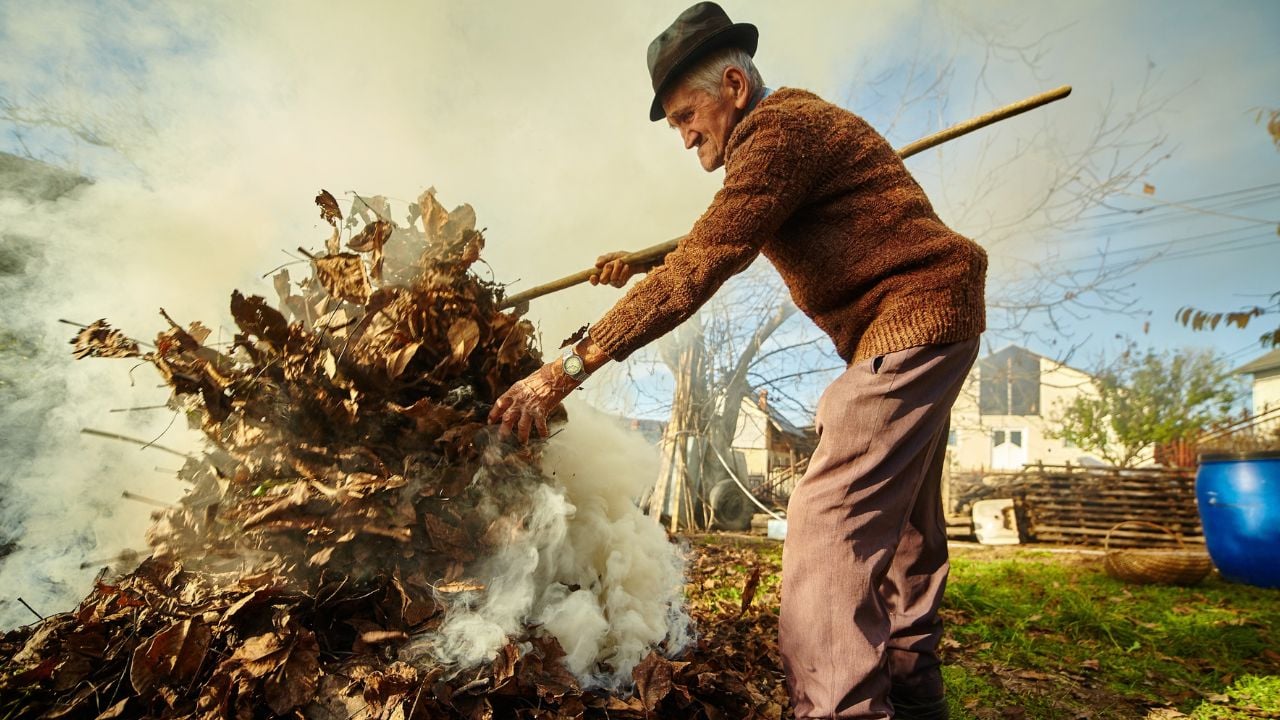
6 Alabama Fall Burn Rules Homeowners Break in Their Backyard

Fall cleanup piles up fast, and a backyard fire can seem like the easy fix.
But in Alabama, even a stray plastic bag tossed on the pile can put you on the wrong side of the law.
These are the Alabama fall burn rules homeowners break in their own backyard.
Note: This is general information, not legal advice. Burn permit rules and open-burning bans vary by county and are subject to change, so confirm the current requirements with the Alabama Forestry Commission.
1. Household Trash in the Pile
Because fall yard cleanup piles up more debris than any other Alabama season, a stray grocery bag ends up in the pile more often too.
Household garbage has no legal place in a backyard burn pile anywhere in the state, no matter the season.
State law calls burning household trash and rubbish a public health law violation.
It’s not a gray area.
The Alabama Forestry Commission says the same thing on its FAQ page.
Toss food scraps, packaging, junk mail, or plastic wrap into the pile, and all of it counts as trash the moment it lands there.
Mixing in a few grocery bags with the yard waste starts a different, illegal kind of fire.
The one carve-out is a self-disposal certificate.
Getting one takes a written application, a $10 household fee, a filed disposal plan, and approval in writing from the county commission or municipal governing body.
2. 25-Foot Trigger
Fall’s raking season pushes far more Alabama piles right up against a tree line or tall grass than any other time of year.
If a pile sits within 25 feet of woods or tall grass, a Forestry Commission burn permit becomes mandatory.
It’s free.
Same trigger applies to any pile bigger than a quarter acre.
Getting one takes a phone call or a few clicks online, and staying with the fire until it’s out is part of the deal.
Whoever’s staying with it needs a rake, a hose, or enough people close by to stop the fire before it spreads.
3. 12-County Burn Ban
Twelve counties carry that same burn ban, not just Shelby.
Baldwin, DeKalb, Etowah, Jefferson, Lawrence, Madison, Mobile, Montgomery, Morgan, Russell, and Talladega round out the list.
The ban starts each May 1 and doesn’t lift until October 31.
By mid-October, that ban has already been running for more than five months.
Falling leaves don’t exempt anyone.
A homeowner burning yard clippings in one of these counties on October 13 is breaking a rule that’s already been running since spring.
What a Violation Costs
Alabama grades a burn-law violation two ways: How careless it was, and whether the fire reached someone else’s land.
Letting a fire on your land escape through inadequate precautions onto a neighbor’s property is a Class B misdemeanor.
Someone who burns another person’s land or vegetation recklessly, without permission, faces a Class A misdemeanor.
Doing that same thing on purpose or out of malice is the Class C felony version.
4. 500-Foot Gap
Because fall brings more backyard debris fires in Alabama than any other stretch of the year, far more homeowners run up against the required distance to a neighbor’s house.
A legal debris fire has to sit at least 500 feet from the nearest occupied house other than the homeowner’s.
Many suburban lots don’t stretch that far in any direction.
It isn’t close.
A quarter-acre yard runs about 105 feet across if it’s roughly square, nowhere near the required gap.
Keeping that gap in place keeps smoke and embers away from a house that has nothing to do with the fire.
5. Burning Past 3 P.M.
Shorter fall daylight pushes a lot of after-work burning past Alabama’s legal window, right when leaf piles are at their biggest.
What time can a legal backyard burn even start?
Only between 8 a.m. and 3 p.m., under the same Alabama Department of Environmental Management (ADEM) rule that sets the 500-foot gap.
No new material goes on the pile after 3 p.m. until 8 a.m. the next morning.
Beyond the clock, state rule also expects good ventilation and a wind blowing away from nearby homes.
This timing rule applies in all 67 counties, every month of the year, not just the twelve under the seasonal ban.
It’s not on anyone’s radar.
The result: Almost nobody checks it in October.
A homeowner who tosses another armload of leaves on the coals after work breaks this rule without ever meaning to.
6. Jefferson County’s Longer Calendar
Jefferson County’s health department runs stricter burn rules than the state’s 12-county ban.
Open burning is banned outright from April through October, a month earlier than the state’s May-to-October window.
The rest of the year isn’t a free pass either.
Anyone burning between November and March needs prior approval from the county health department first.
Jefferson County operates a delegated air-quality program separate from the state’s, which is why its calendar runs longer than the standard ban.
The department also offers a site evaluation for anyone planning ahead before the ban closes each spring.
Skipping that call is common.
It’s still illegal.
Psst! Nine quick checks separate a legal fall burn from a citation. See how many already apply to your pile.
The No-Burn Order Threshold
A Drought Emergency, known as a no-burn order, cancels every burn permit and every legal fire at once.
When the Keetch-Byram Drought Index rises past 600 across a wide area and wildfires keep breaking containment, the Alabama Forestry Commission declares one.
Soil and leaf litter drying out across the top eight inches is exactly the fuel a small backyard fire can jump from.
At that point, campfires, trash fires, and prescribed burns all stop, with only a narrow exception for certain enclosed grills.
The commission posts the current status on its website and passes word to local fire departments and news outlets, county by county.
Even a permit stops working.
A permit pulled back in September carries no warning label if a freeze kicks in later.
Before striking a match, a call to the Forestry Commission’s wildfire line costs nothing but a few minutes.
7 Old Alabama Expressions Younger Alabamians Rarely Use Anymore

Every generation changes the way Alabama sounds, and some old phrases now survive only in a grandparent’s story.
This list tracks down seven old Alabama sayings still hanging on in a few kitchens and front porches before they disappear for good.
7 Old Alabama Expressions Younger Alabamians Rarely Use Anymore
8 Things Alabama School Bus Drivers Want Parents to Know
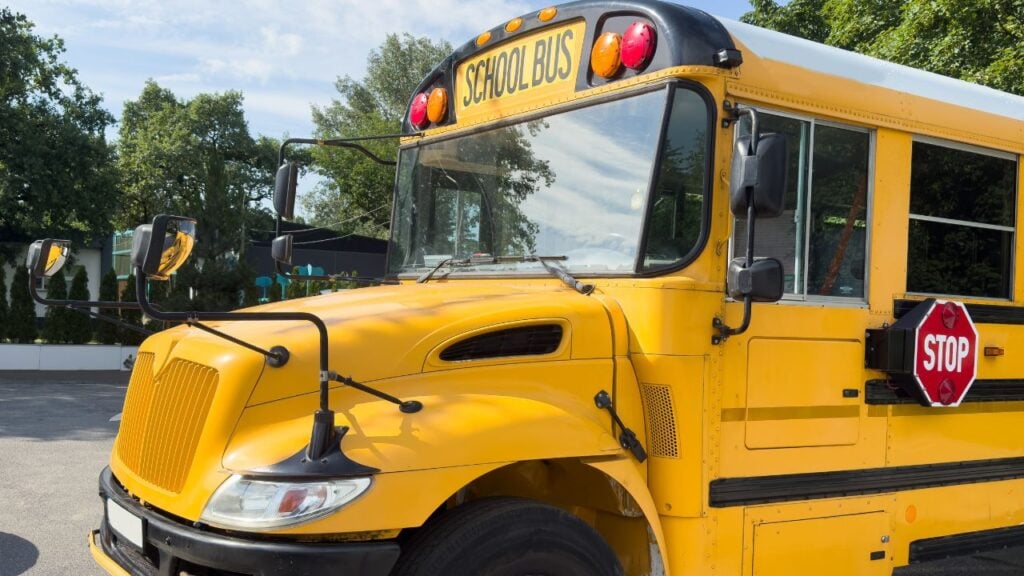
Alabama’s school buses carry roughly 350,000 students on a typical school day, and Jefferson County alone runs more than 500 routes with dozens of driver seats still empty.
The drivers behind the wheel keep a running list of small habits that make their mornings easier. Many parents have never heard a single one of them.
