
6 Burning Rules That Can Cost Kentucky Homeowners a Fine

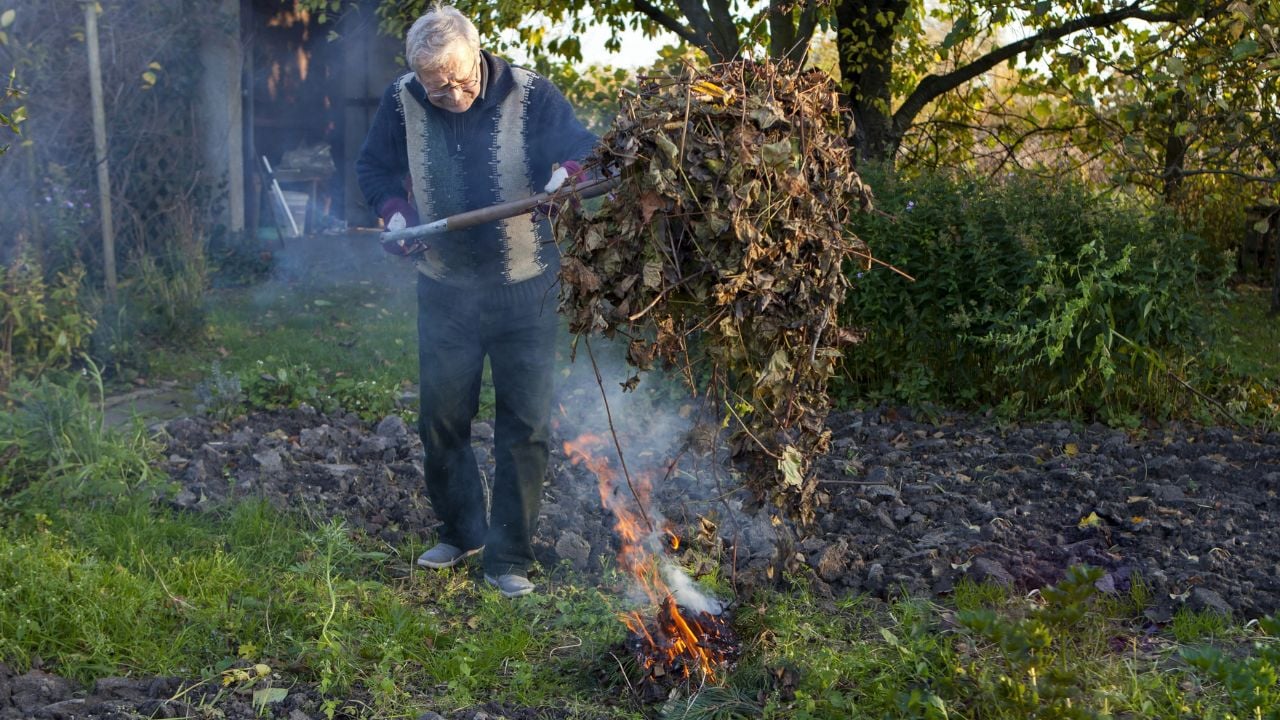
After a few weekends of raking, a pile of leaves can make a match look like the quickest fix.
But Kentucky has rules about what you can burn and when, and breaking them can lead to a fine.
Take a minute with these burning rules before you strike a match this fall.
Note: This is general information, not legal advice. Burning rules and penalties are subject to change.
1. Burning Household Trash
Kentucky’s air quality page says plastics, food scraps, treated or painted wood, tires and many other household trash items are illegal to burn.
Your fine could reach $25,000 a day if you violate the state’s air quality regulations.
That’s not something you want to mess with.
2. Daytime Fires Near Woods
If you burn near woods from October 1-December 15 each fall, Kentucky’s forest fire law bars daytime burning unless an exception applies.
During that stretch, it’s illegal to burn within 150 feet of any woodland or brushland between 6 a.m. and 6 p.m.
Breaking the limit can bring you a fine of $100 to $500, up to six months in jail, or both, under Kentucky Revised Statutes 149.991(1).
What Kentucky’s Fire Law Counts as Flammable Material
Kentucky’s forest fire law defines flammable material to include refuse, debris, waste forest material, brush, stumps, logs, rubbish, fallen timber, grass, stubble, leaves, slash and grain.
The definition isn’t limited to those items.
Your raked leaves and cut grass fall under that definition.
If you burn either pile near woods, the daytime limit can apply to it the same way it applies to brush.
3. Leaving a Fire Unattended
An unattended fire near timberland breaks the state’s rule that every fire stay attended until it’s out.
You also need to clear around the flammable material first, as necessary to keep the fire off land you don’t own or lease.
The Division of Forestry recommends a firebreak of at least 10 feet of cleared vegetation around your burn pile.
Breaking this rule can bring the same $100 to $500 fine, up to six months in jail, or both, under Kentucky Revised Statutes 149.991(1).
Timberland is land with enough timber or woody brush to be a fire menace to itself or neighboring land.
Your wooded backyard can qualify.
4. Ignoring a County Burn Ban
Ignoring a county burn ban can cost you up to $500, depending on the local ordinance.
Violating a burn ban is a misdemeanor punishable by law.
Kentucky Revised Statutes 149.401 lets a city or county ban all open burning during periods of extraordinary forest fire hazard.
The penalty in that ordinance can’t exceed the fine in Kentucky Revised Statutes 149.990(2).
According to the Division of Forestry, a burn ban prohibits most or all outdoor burning to address immediate wildfire danger.
The list of banned activities includes burning leaves or debris, campfires, bonfires and charcoal grilling.
The division isn’t always notified when a burn ban is issued.
It’s always best to check with your local fire department or your county judge-executive’s office.
5. Escaped Fires
Under the forest fire law, it’s a crime to willfully, maliciously or wantonly let a fire escape your land and burn another person’s land or property.
A conviction under Kentucky Revised Statutes 149.991(2) can bring you a fine of $1,000 to $10,000, up to five years in prison, or both.
Kentucky Revised Statutes 149.991(1) sets a lower fine for violating the daytime burning limit or the attended-fire rule.
6. Ashes Near Timberland
The forest fire law has a rule on ashes, and it bars you from disposing of them within or adjacent to timberland.
The law lists ashes alongside lighted matches, cigarettes, cigars and other flaming or glowing substances.
If you’re cited for it, your penalty under Kentucky Revised Statutes 149.991(1) can include up to six months in jail.
Small Wood Fires
Kentucky’s burning rules generally permit small wood fires for warmth, cooking and camping, according to the state’s air quality page.
During hazard season, burning within 150 feet of any woodland or brushland is generally allowed only between 6 p.m. and 6 a.m.
Local ordinances can be more stringent than state rules, so check yours before your first fire of the season.
Psst! Think you know the burning rules? Flip through these cards and see how many you get right.
Permits in Daviess County
Daviess County requires a burn permit from the Daviess County Fire Department for any burning other than leaves on less than an acre.
If you need a permit, it’s free and the fire department may issue it for two weeks.
Banned items include grass clippings, wood mulch, pallets, fence posts, shingles and painted, stained or pressure-treated wood.
Burning those materials as a way to dispose of them is illegal in Daviess County.
8 Habits That Give Away a First-Time Kentucky Pet Owner

A brand-new leash is stiff in one hand, and the puppy on the other end has other plans.
Some habits give away a first-time Kentucky pet owner before the dog leaves the driveway.
8 Habits That Give Away a First-Time Kentucky Pet Owner
7 Kentucky Roadside Foods Worth Pulling Over For

The best food in Kentucky rarely comes with a corporate logo on the roof.
Some of the state’s memorable plates come from a walk-up window that never got remodeled.
