
6 California Driving Habits That Give Away Which Half of the State You’re From

California runs nearly 770 miles from the Oregon border to Mexico, longer than the distance between Chicago and New York City.
Hand a Los Angeles driver and a Sacramento driver the same set of car keys, and the two of them will treat that stretch of road differently.
Some of it comes down to geography. The rest comes down to habit.
These are the driving habits that give away which half of the state a driver calls home.
Note: This is general information, not legal advice. Chain-control requirements and carpool lane rules are subject to change, so confirm current conditions with the California Department of Transportation (Caltrans).
1. Navigating by Freeway, Not by Compass Direction
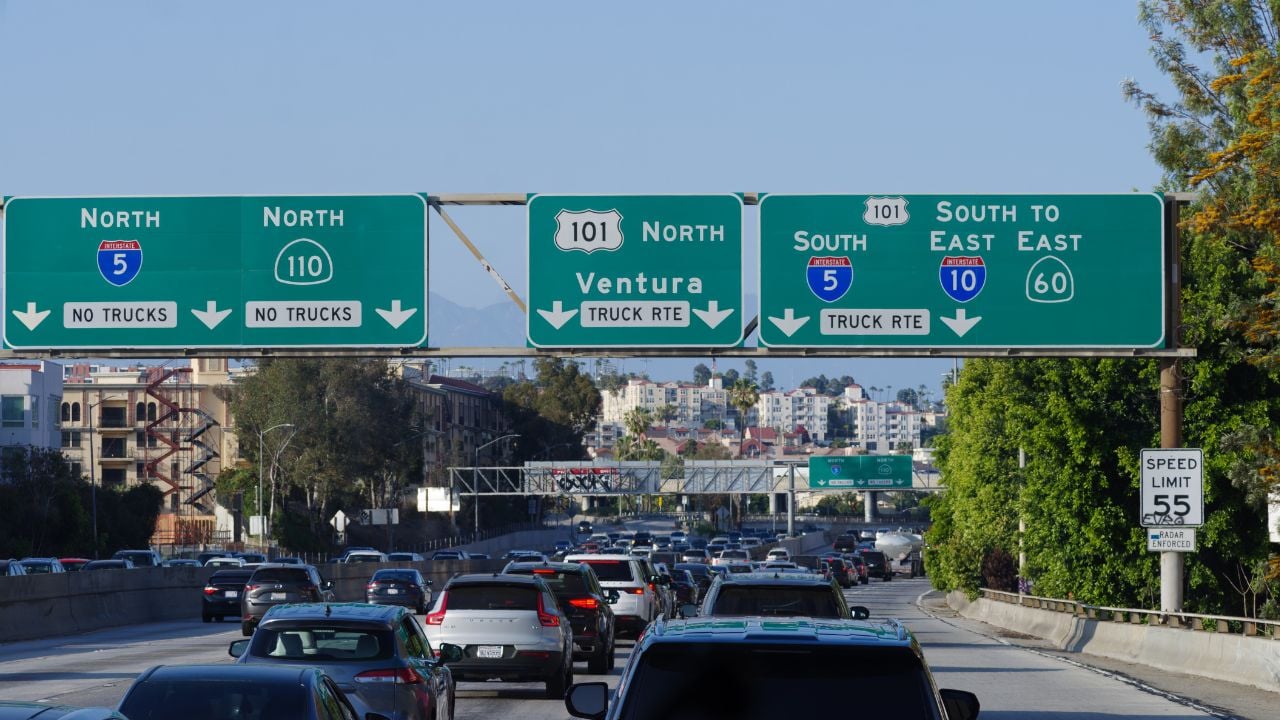
Southern California drivers navigate by chaining together freeway names, stringing routes together the way someone else might string together turns.
Stringing together the 10, the 110, and the 101 makes for a complete set of directions in Los Angeles, each number treated like a place name with “the” in front of it.
Head north, and that navigating style changes.
Northern California drivers lean on cardinal directions and landmarks instead, a route-versus-survey split documented by UC Santa Barbara geography research into how Californians give and follow directions.
Both work.
The habit dates back to when Los Angeles freeways carried names before they carried numbers, and locals never dropped the article once the numbers took over, according to PBS SoCal’s Lost LA history team.
Tell a Sacramento driver to “take the 5 to the 80” and they’ll get there just fine, but the way they navigate on the drive back gives away exactly where they learned to drive.
2. Packing Chains Before a Storm
Northern California drivers keep a set of tire chains in the trunk all winter, whether they touch snow that year or not.
Interstate 80 climbs over Donner Pass at more than 7,000 feet, and Caltrans posts chain controls there many winters.
Not down south.
Interstate 5’s Grapevine section climbs the Tejon Pass too, but Caltrans doesn’t allow chains on that stretch at all.
So when ice hits, the California Highway Patrol closes the freeway instead of chaining anyone up.
There’s no compromise.
Why Chains Work on Donner Pass but Not the Grapevine
California’s Grapevine icy patch covers only the final few miles of the climb over Tejon Pass, not the whole route.
Tens of thousands of cars and trucks cross that stretch on an average day.
There’s no shoulder built wide enough to pull that much traffic over safely.
Chaining up or taking chains off means a driver needs somewhere to stop.
That stretch of I-5 doesn’t have it.
Donner Pass carries far less daily traffic, so Caltrans can run chain checkpoints there instead of shutting the highway down.
3. Panicking at the First Rain
Southern California’s freeways see a well-documented crash spike the moment the season’s first rain falls.
Crashes reported to the California Highway Patrol typically jump on rainy days compared with dry days that same week, according to CBS News.
Northern California barely reacts.
Months of dry pavement trap oil and rubber that turn slick the instant rain hits, and many Southern California drivers lose the habit fast in a place that sees rain only a few dozen days a year.
San Francisco logs 71 rainy days a year on average, more than double Los Angeles’s 34, according to National Oceanic and Atmospheric Administration (NOAA) climate data.
Practice matters.
4. Riding With a Total Stranger
Northern Californians in the Bay Area have been climbing into strangers’ cars for a faster commute since the 1970s, a system called casual carpool.
The pandemic nearly ended the tradition.
Organizers only started reviving pickup spots one at a time in August 2025, according to Bay Area public broadcaster KQED.
Riders line up at set curbside spots in Oakland, Berkeley, and other East Bay cities each morning.
Nobody says much.
A driver pulls up, takes exactly as many riders as needed to qualify for the carpool lane, and heads for downtown San Francisco.
There’s no app, no fee, and usually no names exchanged.
Southern California has nothing similar.
Los Angeles commuters share ride-hailing apps and freeway carpool lanes of their own, but nobody lines up on a street corner and climbs into a stranger’s car.
5. Paying a Toll Just to Drive the Freeway
Southern California drivers in Orange County pay a toll for the entire freeway, not just a single crossing.
State Routes 73, 133, 241, and 261 make up California’s largest toll road network, according to Caltrans.
San Diego County’s State Route 125 runs the same way.
FasTrak bills the account automatically every time a driver merges on.
Northern California has nothing built like it.
Caltrans splits the state’s tolls into two separate lists.
A driver pays a Bay Area bridge toll once, at the crossing.
A driver pays a Southern California toll road every single time they use it.
The toll never stops.
Psst! How much do you know about California’s highway history? Take our quiz and see how many you can get right.
Quiz
California Highway IQ
Answer these questions on California’s highway history and road trivia. We bet you can’t get them all right. Prove us wrong?
Which California freeway is considered the first freeway in the western United States?
6. Checking Sigalert Before Merging Onto the Freeway
Southern California drivers pull up Sigalert.com or its app before a drive, a real-time traffic tool built around Los Angeles freeway conditions.
The name traces back to 1955, when Los Angeles Police Department radio engineer Loyd Sigmon built a system of automated broadcasts warning drivers about freeway tie-ups, according to LAist.
The California Highway Patrol didn't take over Los Angeles freeway duty, and the SigAlert system along with it, until October 1, 1969.
The habit outlived the handoff.
Southern California drivers still open Sigalert.com by name before merging onto the 405 or the 101.
Bay Area drivers reach for a different tool entirely: 511.org, the traffic and transit service run jointly by the Metropolitan Transportation Commission, the California Highway Patrol, and Caltrans.
Ask a Sacramento driver to pull up Sigalert before a drive, and they'll open a site built for someone else's commute.
Where the Dividing Line Sits
California has never drawn an official line between its northern and southern halves.
Many residents point to the Tehachapi Mountains, the same range Interstate 5 climbs through the Grapevine, as the rough divider.
Others push the boundary as far south as Point Conception, more than 100 miles below the Tehachapis.
Nobody agrees.
California runs nearly 770 miles from the Oregon border to Mexico, longer than the distance between Chicago and New York City.
The state's Department of Motor Vehicles counts more than 35 million registered vehicles, more than any other state in the country, according to its own published statistics.
Kern County anchors the southern tip of the Central Valley, its almond orchards and oil fields part of the same agricultural belt that runs north through Fresno, according to Britannica.
Culturally, inland Kern County leans toward the desert counties of Southern California, a place whose politics and climate bear little resemblance to the coastal Bay Area's.
Bakersfield built its own identity around the twangy, electrified country sound that Buck Owens and Merle Haggard carried onto national radio, a genre historians still call the Bakersfield Sound.
9 Things Californians Do That Instantly Give Them Away in Another State
Regular gas in California runs about a dollar and a half more a gallon than the national average, one of the widest gaps of any state, according to AAA.
That kind of math changes a person, and the habits follow them to whichever state they land in next.
9 Things Californians Do That Instantly Give Them Away in Another State
7 In-N-Out Mistakes That Instantly Mark You as a First-Timer in California
In-N-Out keeps six items on what it calls its "not so secret" menu, and the order board out front lists none of them.
A first-timer who never checked the menu online orders a plain burger and fries, then wonders what everyone else in line already knew.
7 In-N-Out Mistakes That Instantly Mark You as a First-Timer in California
