
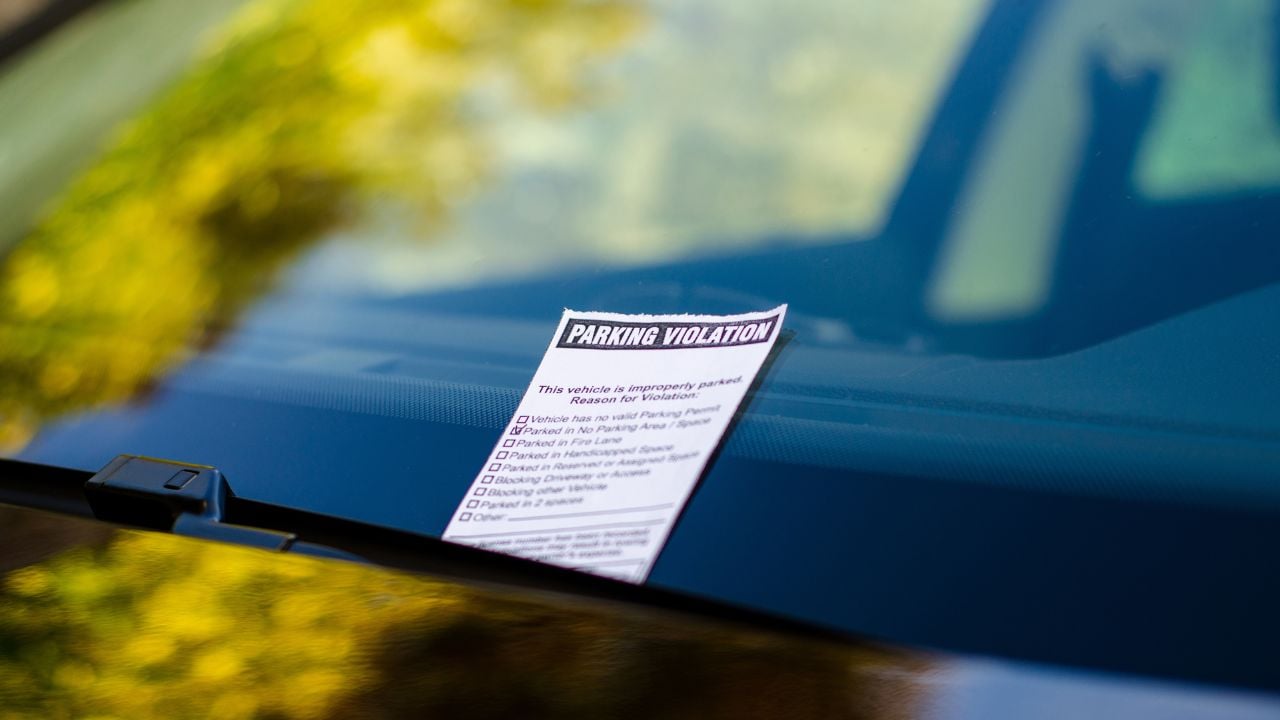
6 Fees That Turn a $50 Ohio Traffic Ticket Into $156

A $50 speeding ticket in Ohio rarely stays $50.
Ask anyone who’s been there.
Ohio law lets courts stack a list of separate costs on top of a fine, each cost authorized by its own line in the Ohio Revised Code.
These are the fees that turn a small Ohio traffic ticket into a total many drivers never expect.
Note: This is general information, not legal advice. Court costs vary by county and are subject to change, so confirm current amounts with your county municipal court’s clerk of courts, and check reinstatement fees with the Ohio Bureau of Motor Vehicles.
1. Local Court Costs
Ohio courts start with the fine itself, and for a driver caught 1 to 10 mph over the limit outside a school zone, that fine is $50.
At Stow Municipal Court in Summit County, that same ticket carries a $156 waiver total.
The court’s own published fine schedule shows $106 of that total is court costs, not the fine.
Subtract the costs, and the fine underneath comes to $50.
The court takes its biggest single bite of that $106 through local court costs, a combined $34 covering Stow’s base local cost and its docket control fee, both authorized under Ohio Revised Code 1901.26’s cost-setting rule for municipal courts.
Steep.
Why Ohio’s $150 Fine Cap Doesn’t Cap the Bill
Ohio law caps the fine for a minor misdemeanor ticket at $150, and it’s easy to read that number as the most a small ticket can cost.
That cap covers only the ticket’s fine.
Ohio courts add every court cost on top of that fine completely outside the $150 cap, so the total ends up well past it.
That’s the reason a $50 fine turns into a $156 total instead of stopping anywhere near $150.
2. Indigent Defense Fund Fee
Ohio law adds a $20 indigent defense fund fee to the ticket next, and it applies the same way in every county in the state.
The money funds public defenders for Ohioans who can’t afford their own lawyer, and state law requires the court to collect it on nearly every misdemeanor conviction, moving violations included.
The driver never hires a lawyer for an eight-over ticket.
Ohio still collects the fee.
3. Special Projects Fund Fee
Ohio’s Stow Municipal Court tacks on a $20 special projects fund fee to the ticket next, money the court can spend on equipment, staff training, or building upgrades.
Municipal courts can create this fee on their own under Ohio Revised Code 1901.26(B)(1), so the exact amount shifts from courthouse to courthouse.
This driver’s ticket just helps pay for it.
No exceptions.
4. Moving-Violation Surcharge
Ohio adds a separate $10 moving-violation surcharge next, a flat cost that applies only because the offense counted as a moving violation and not, say, an expired plate.
State law splits that $10 three ways.
Half of it lands in the same indigent defense fund as fee number two.
The rest splits between a drug law enforcement fund and an alcohol treatment fund.
Every time.
5. Computer Fund Fee
Stow Municipal Court also bills a $13 computer fund fee, money set aside to keep the case-management software running that tracks a ticket from the traffic stop to the final payment.
Ohio Revised Code 1901.261 caps this kind of charge at $3 for computerizing the court itself, plus up to $20 more for computerizing the clerk’s office, a combined $23 ceiling.
Stow’s $13 fee sits well under that combined cap.
Not glamorous, but necessary.
6. Victims of Crime Reparations Fee
Ohio law closes out the cost stack with a $9 reparations fund fee, required statewide on every misdemeanor conviction.
That $9 has nothing to do with this driver’s own case.
It funds the state’s victim compensation program for crime victims elsewhere in Ohio.
Not a cent less.
Add the fine and all six costs together, and the receipt at Stow Municipal Court comes to $156.
How the Total Shifts by County
Ohio’s six-fee structure repeats in nearly every county, though the exact dollar figures move around depending on the courthouse that writes the ticket.
Three of the six fees stay fixed everywhere in Ohio: The state sets the Indigent Defense Fund Fee at $20, the Moving-Violation Surcharge at $10, and the Victims of Crime Reparations Fee at $9, a combined $39 no municipality can raise or lower.
The rest is each courthouse’s own call. Ohio Revised Code 1901.26(B)(1) lets a municipal court set its own Special Projects Fund Fee with no statewide cap, and Ohio Revised Code 1901.261 lets a court charge up to $23 combined for computerizing its own operations.
Same statute, different bill.
A driver’s actual total always depends on which courthouse writes the ticket.
When Points Push the Cost Further
Ohio tracks a separate running total for every driver, points instead of dollars, and it follows the ticket long after the driver pays the $156.
A single moving violation typically adds two points to an Ohio driver’s record.
Rack up 12 points within any two-year period, and Ohio law forces an automatic six-month license suspension, no matter how small the ticket that pushed the count over.
Getting that license back costs another $40, a flat reinstatement fee the Ohio Bureau of Motor Vehicles charges on top of everything the court already collected.
A second bill, months later.
What Happens After a Missed Deadline
Ohio doesn’t let an unpaid ticket just disappear.
Miss the deadline, and many Ohio municipal courts add their own late fee on top of the $156, separate from anything already charged.
Let the debt sit long enough, and the court can refer it to the Ohio Attorney General’s collections division, which adds its own collection cost on top of the balance.
Ohio law leaves that collection cost up to the attorney general’s office to set, not a fixed formula printed on the ticket.
No cap on that collection cost.
The original $156 stops being the final number.
Once a case reaches the Ohio Attorney General’s collections division, that office pursues it the same way it pursues any other unpaid debt owed to the state.
That office can agree to spread the balance across monthly payments instead of demanding it all at once, an arrangement Ohio Revised Code 131.02 leaves to its discretion case by case.
If the attorney general’s office decides a balance isn’t worth chasing directly, state law also lets it sell the claim to a private collection agency, which then pursues the driver on the state’s behalf.
Psst! How much do you know about Ohio’s rules of the road? Take our quiz and see how many you can get right.
Quiz
Ohio Traffic IQ
Answer these questions on Ohio’s driving history and point system. We bet you can’t get them all right. Prove us wrong?
Which Ohio city required drivers to display government-issued registration numbers back in 1902, years before the state got involved?
8 Lease Mistakes Costing Ohio Renters Hundreds of Dollars

Ohio law hands renters money-saving rights, the kind that only pay off if a tenant knows the deadline before it passes.
Miss the right window, and a lease clause that should have saved hundreds of dollars just becomes fine print nobody used.
8 Lease Mistakes Costing Ohio Renters Hundreds of Dollars
9 HOA Surprises That Leave Ohio Homeowners Powerless
An Ohio homeowners' association (HOA) can enforce rules many homeowners assume are just suggestions, right down to fence height and paint color.
The board doesn't need a court order to make a violation notice stick, and many Ohio homeowners find that out the hard way.
