
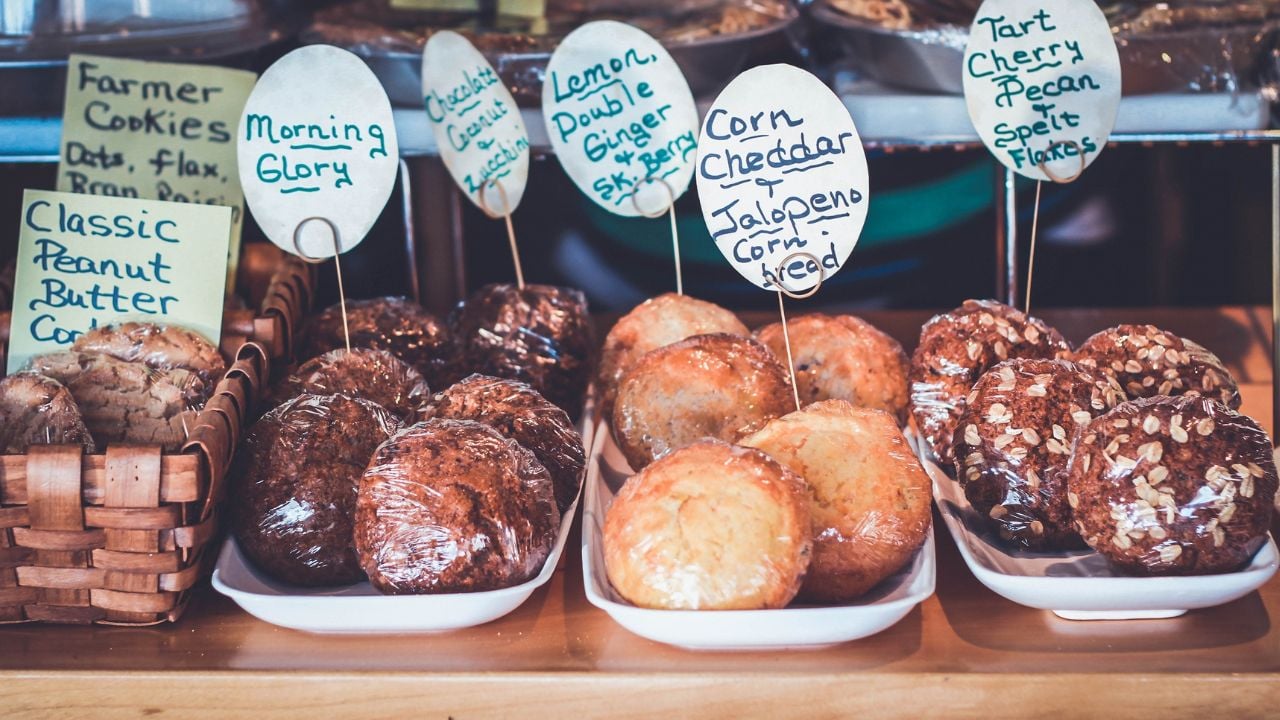
6 Florida Cottage Food Rules Holiday Bakers Break Without Realizing

Every cottage food item you sell in Florida needs a label on it before it changes hands.
Holiday orders can help cover gifts, but it’s easy to cross a line without meaning to.
Here are the Florida cottage food rules holiday bakers break without realizing.
Note: This is general information, not legal advice. Cottage food rules are subject to change, so confirm the current requirements with the Florida Department of Agriculture and Consumer Services.
1. Selling Foods That Need Refrigeration
A cottage food product is food that isn’t time or temperature controlled for safety.
The University of Florida Extension guide lists baked goods that need any refrigeration among the foods you can’t sell.
Examples include custard and cream cheese icing or filling.
That puts a custard pie, or a cake under cream cheese frosting, on the wrong side of the line.
Pumpkin butter lands there too, since it’s low in acid.
Homemade syrups (elderberry included), canned fruits and vegetables, salsa and barbecue sauce are prohibited too.
Even focaccia-style bread with cheese or vegetables makes the list.
Cookies, cakes, pastries, candies and biscuits stay on the allowed side, as long as nothing in them needs your fridge.
2. Going Past the Sales Cap
Cottage food operations are exempt from the state food permit, but only up to $250,000 in annual gross sales.
If your sales pass that amount, the permit exemption no longer covers you.
A 2021 law raised that cap from $50,000.
At $30 a tin, the cap works out to about 8,300 tins.
The cottage food section doesn’t apply to a baker who already operates under a food permit.
What Counts Toward the Sales Cap
Cottage food sales at any location all count toward the cap.
A holiday market table and a driveway pickup land in the same total.
The department can ask you for written documentation to verify your annual gross sales.
Track every order, including the small ones.
3. Using a Borrowed Kitchen
A cottage food operation, as the law defines it, makes or packages its food at the residence of the baker or of a business owner.
The guide describes that setup as your primary home kitchen.
A batch baked in a friend’s kitchen or a church hall may fall outside that definition.
Storage follows the same logic, since you can sell only products you store on the premises of your operation.
4. Incomplete Labels
A cottage food product has to be prepackaged with a label affixed before you sell it.
That label shows your operation’s name and address, the product’s name, and the ingredients in descending order of predominance by weight.
Net weight or net volume goes on it too, along with allergen information as federal labeling requirements specify.
One required statement says the food was made in a cottage food operation that isn’t subject to Florida’s food safety regulations.
It has to be printed in at least 10-point type, in a color that clearly contrasts with the label’s background.
Psst! How much do you know about Florida food facts? Take our quiz and see if you can ace it.
Quiz
Florida Food Law IQ
Answer these questions on Florida food laws and food trivia. We bet you can’t get them all right. Prove us wrong?
Right before the 2021 law, how much could a Florida cottage food operation gross in a year?
5. Selling Wholesale
Wholesale is closed to a cottage food operation, which may not sell, offer for sale or deliver its products that way.
The guide adds consignment to the ban.
So a boutique that buys your tins to resell them is out, and so is a coffee shop that sells them for you on consignment.
6. Hiring Extra Helpers
The cottage food statute makes every operation follow the conditions Florida sets for a home-based business.
Those conditions say employees who work at your home must live there too.
The exception covers up to two employees or independent contractors who live elsewhere.
If you bring in a third helper who lives elsewhere to bake or pack at your house, you're past that limit.
Additional remote employees who don't work at your home are allowed.
Where You Can Sell
As a cottage food seller, you can take orders and payment over the Internet or by mail order.
In-person handoffs work, and so do deliveries to an event venue.
Shipping goes through the U.S. Postal Service or a commercial mail delivery service.
You can sell at pop-up markets, flea markets, farmers markets and roadside stands too.
A roadside stand works as long as no other food at the stand requires a food permit.
The statute reserves regulation of cottage food operations to the state, so local governments can't ban your business.
State Inspections
Florida's agriculture department can investigate a complaint that your cottage food operation broke a food law or rule that applies to it.
An authorized officer can enter and inspect your premises only after the department receives a complaint.
If you refuse an authorized officer entry, the department has grounds to discipline your operation, which can include an administrative fine.
10 Things Florida Neighbors Can Report You For That Are Perfectly Legal

A neighbor spots your clothesline and reaches for their phone.
But in Florida, that complaint may go nowhere.
10 Things Florida Neighbors Can Report You For That Are Perfectly Legal
9 Waffle House Rules Most Non-Floridians Have No Idea Exist
Order hash browns at a Florida Waffle House, and your order may come back in a kind of shorthand.
Then the check may head to a register up front, not to your table.
