
6 Georgia Rules That Decide Who Pays When a Pothole Wrecks Your Car

Your tire blows out on a pothole, and your first call is to the city.
You may be calling the wrong office.
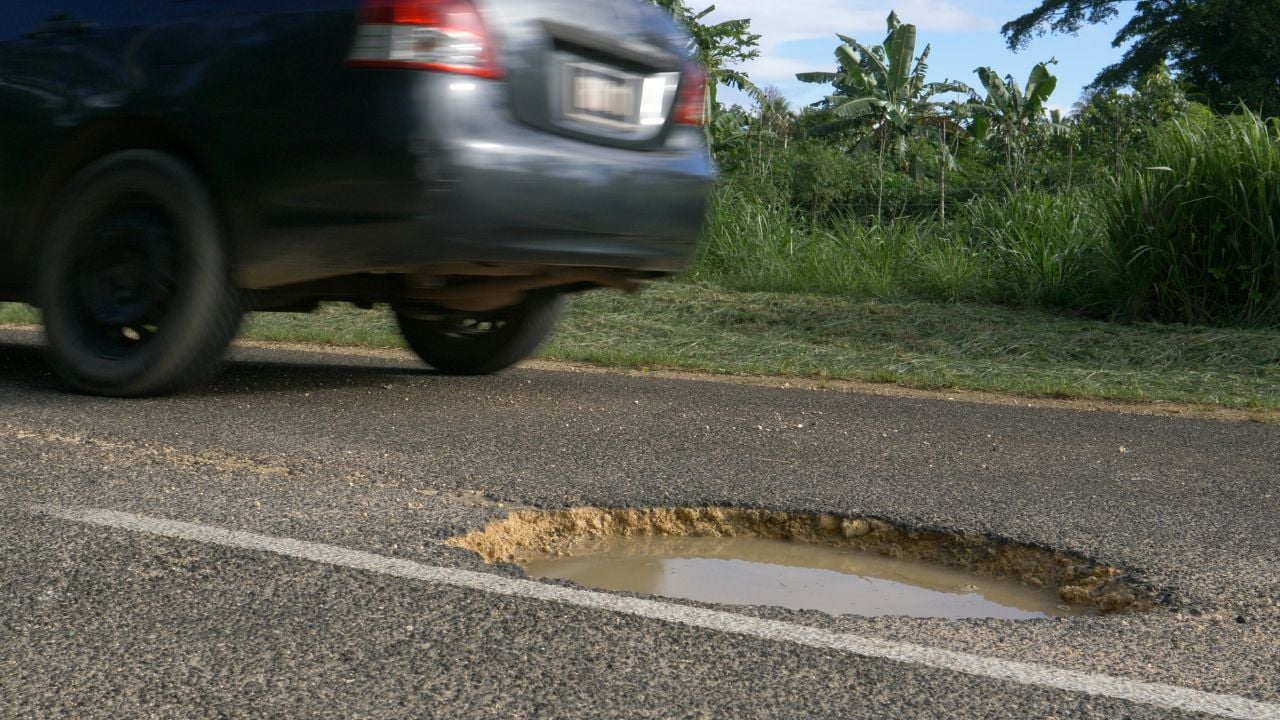
Here are the Georgia rules that decide who pays when a pothole wrecks your car.
Note: This is general information, not legal advice. Claim deadlines and notice rules are subject to change.
Who Owns the Road
The state road code sorts public roads into three systems, so the pothole you hit belongs to a state highway, a county road or a city street.
Every interstate belongs to the state highway system.
That includes I-285, the perimeter highway around Atlanta, so a hole there points your claim toward the state.
A city street belongs to the municipal street system, which covers public roads inside city limits that no other system claims.
1. City Immunity Waiver
Your pothole claim against a city starts with immunity, and the Georgia Supreme Court ruled in March 2026 that a state law on ministerial duties can waive it.
That law holds cities liable for neglecting their ministerial duties.
The court has long treated keeping city streets and sidewalks safe for travel as one of those duties.
The court said that duty has limits, though, and doesn’t extend to keeping property outside the lanes of travel safe.
In that ruling, a car left the road and struck a concrete planter off the pavement.
The court held the ministerial-duty law didn’t waive the city’s immunity for that claim.
If you hit a pothole inside a lane of travel, that is the part of the street the court said the duty covers.
2. City Notice Deadline
If a pothole on a city street damaged your car, your claim has to reach the mayor or the chair of the city council within six months, in writing.
The claim can be delivered to that official in person or sent by certified mail or statutory overnight delivery.
A court won’t entertain a suit against the city until that claim has first been presented.
Under the city-claim statute, the city then has 30 days to consider and act on the claim.
The city’s action is no bar to a later lawsuit unless it results in a settlement.
The statute of limitations is suspended while the demand is pending before the city without action on its part.
What a Pothole Notice to a City Must Say
A pothole notice to a city has to state the time, place and extent of the damage as nearly as practicable.
It has to describe the negligence that caused the damage.
It has to include the dollar amount you’re seeking.
The statute treats that amount as an offer of compromise, and it isn’t binding on you if the claim is litigated.
3. City Notice Standard
Under the state’s road-defect statute, a city is relieved of liability for a pothole it had no actual notice of.
The same relief applies when the hole hasn’t been there long enough for notice to be inferred.
The Court of Appeals applied that statute in a 2025 case over a fall on a Vidalia sidewalk.
If you can show other people were hurt by the same defect over a period of years, the court said, that evidence can show the city had notice.
The court added that notice can be imputed to the city from what its employees knew.
The plaintiff’s only proof of how long the defect had existed was photographs taken months after the fall.
The photographs weren’t enough.
4. County Claim Deadline
If you hit a pothole on a county road, the county can’t be sued unless a statute makes it liable to suit.
State law gives you 12 months to present a claim against a county, or the claim is barred.
That’s twice the city’s window.
Psst! How much do you know about roads and the rules behind them? Take our quiz and see if you can ace it.
Quiz
Road Rules IQ
Answer these questions on roads, counties and claim deadlines. We bet you can’t get them all right. Prove us wrong?
Georgia has more counties than every state except one. How many counties does it have?
5. State Notice Deadline
Pothole damage on a state road calls for written notice, due within 12 months of the day you discovered the loss, or should have.
Under the Georgia Tort Claims Act, that notice goes to the Risk Management Division of the Department of Administrative Services (DOAS).
It can be sent by certified mail or statutory overnight delivery, return receipt requested, or delivered personally.
The state government entity behind the claim gets a copy too, delivered personally or sent by first-class mail.
The notice has to state, as far as you know it, the amount of the loss and the acts or omissions that caused it.
DOAS's claim page lists a Liability Incident Report Form, and it says to keep receipts, repair estimates or invoices and to photograph or video the damage.
6. State Liability Caps
The Georgia Tort Claims Act limits what you can recover from the state for pothole damage.
No person can collect more than $1 million for loss from a single occurrence.
Across everyone who claims for that occurrence, the state's liability can't top $3 million.
Denied State Claims
In a 2023 review of pothole damage claims, the Atlanta television station WSB-TV found the state paid in only 378 of 1,261 closed claims about Georgia roads.
In those complaints, drivers mentioned potholes nearly 700 times.
According to 11Alive, you can report a pothole by calling 511 or through the website of the Georgia Department of Transportation (GDOT).
Two drivers whose cars were damaged on I-285 near Camp Creek Parkway were told GDOT had no prior notice of the road hazard.
State records showed a customer had reported a three-foot pothole two days before the damage.
The state reversed denials for a total of 13 people who hit that same pothole.
State officials said the case exposed gaps in the claims process.
12 Things Georgians Can't Legally Do on Their Own Land

You own your land, so you can do what you like with it, right?
Not quite in Georgia, where state and local rules can reach well past your property line.
12 Things Georgians Can't Legally Do on Their Own Land
7 Trees Georgia Homeowners Should Never Plant Within Twenty Feet of Their House

That cute little tree at the garden center won't stay little for long.
Some popular picks may belong farther from the house than you think.
7 Trees Georgia Homeowners Should Never Plant Within Twenty Feet of Their House
