

6 Georgia Speed Trap Towns Drivers Learn About the Hard Way

Slowing down for a small town can feel like a hassle, until you see the ticket.
Some Georgia towns have drawn attention for how much money tickets bring in, though the records don’t tell the same story everywhere.
Here’s what the records show, so you know where to ease off the gas.
Note: This is general information, not legal advice. Traffic laws and local enforcement details are subject to change.
1. Lenox
Lenox sits along Interstate 75 in South Georgia, and the Atlanta Journal-Constitution ranked it third in the state for 2014 ticket revenue per resident.
Atlanta News First reported in July 2024 that the town collected $1.3 million from citations in 2022, nearly 73 percent of its budget.
The Georgia Department of Public Safety suspended the town’s speed detection permits for 180 days in July 2024.
In October 2024, the department’s investigation found the town had consistently altered tickets.
The department’s letter said the alterations had the effect of excluding the fines and forfeitures for speeding citations from the speeding total.
Officers often changed speeding citations to unsafe driving.
The department’s audit found Lenox generated nearly 40 percent from speeding citations in 2023, above the 35 percent line.
City records had originally shown $477,685 from speeding fines, and investigators recalculated the altered tickets to $514,456.
Police Chief Shane Daughtrey called it an honest mistake at the department’s hearing.
Georgia’s law puts the line at 35 percent, but it counts only speeding fines from speed detection devices.
How Georgia’s 35 Percent Line Works
If you’re comparing a town’s numbers with the law, the test is its speeding fines from speed detection devices against its law enforcement agency’s budget.
Atlanta News First’s 73 percent figure for Lenox compares all citation revenue with the town’s budget, so it isn’t the measure the statute uses.
Fines for speeding more than 20 miles per hour over the limit don’t count toward the total.
Civil penalties issued under Code Section 40-14-18 don’t count either.
A town can still try to answer the presumption because the law calls it rebuttable.
2. Warwick
Warwick, population 411, topped the state in 2014 ticket revenue per resident for the second year running, according to the Atlanta Journal-Constitution.
South Georgia television station WALB reported in December 2023 that Warwick’s police department generated nearly $1,000 per resident in 2022.
The state average was just over $100 per Georgia resident.
A former Warwick police chief was fired in 2014 on allegations of setting a ticket quota for officers and stacking fines.
Asked whether the Warwick and Poulan departments meet the 35 percent threshold, Warwick’s police chief answered no, WALB reported.
Warwick’s city attorney, Tommy Coleman, said in July 2024 that speeding ticket revenue made up 22 percent of the police budget in 2023-24.
If you’re comparing Warwick with the 35 percent line, the city attorney’s 22 percent figure covers 2023-24, while the per-resident figure covers 2022.
3. Oliver
A state investigation found that the city of Oliver issued 132 speeding citations on Kildare Road between January 2018 and November 2019.
Only State Routes 17 and 24 were on the city’s approved list.
The Oliver Municipal Court collected $40,415 in fines.
The Department of Public Safety suspended the permit, then agreed in April 2020 to reinstate it on the condition that the city use it correctly.
If you want the figures, AllOnGeorgia’s story on the state report lists the citations, the dates and the fines.
4. Ludowici
Ludowici drew national attention in the mid-twentieth century as a speed trap that snared tourists traveling to and from Florida, according to the New Georgia Encyclopedia.
Time magazine reported in April 1970 that the town had become known in the 1950s for a stoplight that changed from green to red without warning.
Travelers were then ticketed by a waiting policeman.
After the light was replaced in 1960, the town’s speed traps brought in a rumored $100,000 a year from motorists.
Interstate 95 was due to bypass Long County by 1974.
If you’re wondering about Ludowici today, both sources describe the past and say nothing about current enforcement.
Psst! How much do you know about Georgia’s road rules? Take our quiz and see how many you can get right.
Quiz
Georgia Road Rules IQ
Answer these questions on Georgia points, phones, and headlights. We bet you can’t get them all right. Prove us wrong?
Georgia adds no points for a speeding conviction less than how many miles per hour over the limit?
5. Jonesboro
None of these reports calls Jonesboro a speed trap; they document ticket revenue and a camera error.
The Atlanta Journal-Constitution found in 2015 that Jonesboro took in $1.8 million in 2014 ticket revenue, nearly $400 for every resident.
The metro Atlanta average was $70.82 per resident.
A 2014 McClatchy report published by Governing said Jonesboro netted $3 million in traffic fines between 2008 and 2012.
Police Chief Franklin Allen told the reporters his department's job is to enforce the state's traffic laws and reduce crashes.
Both totals count traffic tickets in general.
Georgia's 35 percent cap covers only speeding-related fines, according to Augusta television station WRDW, so these totals don't show how much came from speeding.
The police department's audit of its school zone speed cameras in 2023 found 1,244 citations that required a refund or dismissal.
Fox 5 Atlanta's initial I-Team finding of 456 tickets involved two schools, where the cameras ticketed drivers based on a 25-mile-per-hour limit when the signs' lights weren't scheduled to flash.
The signs near one school give 35 when not flashing.
The city said it would refund a total of $76,400, with automatic refunds to the card if you paid by credit card.
6. Poulan
WALB framed its December 2023 investigation around a question it said it gets from viewers: Are Warwick and Poulan speed traps?
Worth County Sheriff Don Whitaker said the area has several state routes and sees travelers from across Georgia and out of state every day.
In 2022, Poulan's police department generated about $500 in funds for each resident.
Poulan police declined to comment when asked directly whether the departments meet the 35 percent threshold.
If you want speeding-only figures for either town, WALB reported that neither would hand over documents showing speeding ticket revenue alone.
The Proposed Cap
House Bill 140, the End Local Taxation by Citation Act, would cap traffic fine revenue at 10 percent of a city's annual budget.
South Georgia television station WALB reported the proposal in February 2025.
The excess would go to a state fund.
The Georgia Municipal Association supports the idea but wants a 25 percent cap.
A House subcommittee advanced the bill in February 2025.
If you're wondering whether it passed, LegiScan lists the bill as having died in chamber.
Dillard and Official Responses
Dillard collected more than $315,000 from fines and forfeitures in 2022, about 44 percent of the city's budget, Atlanta News First reported in 2024.
The state cleared Dillard of wrongdoing after a 2019 investigation that followed a complaint about excessive tickets.
That clearance came before the 2022 figures reported here.
Warwick's city attorney told WALB the city doesn't run a court to produce revenue.
Butch Ayers, executive director of the Georgia Association of Chiefs of Police, told WRDW that the state should target bad actors rather than restrict every department.
6 Gas Station Habits That Give Away Which Part of Georgia Someone Is From
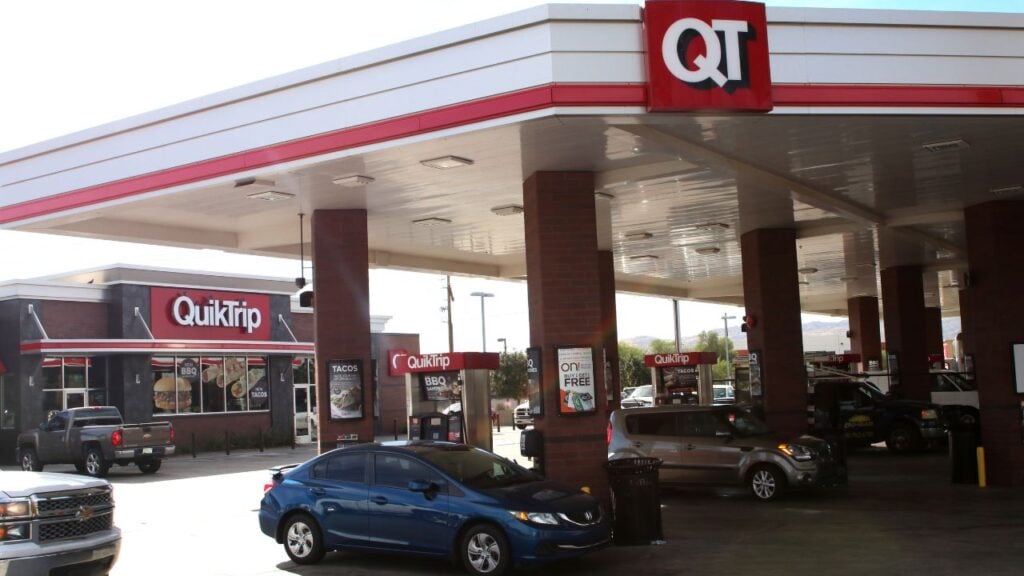
Your gas station habits can say a lot about which part of Georgia you're from.
Ask a Georgian where they fuel up on a road trip, and the answer points to where they grew up.
6 Gas Station Habits That Give Away Which Part of Georgia Someone Is From
7 North Georgia Towns That Aren't Worth the Leaf Season Traffic

North Georgia gets busy during leaf season.
Not every town is worth sitting in that traffic.
7 North Georgia Towns That Aren't Worth the Leaf Season Traffic
