
6 Holiday Return Rules New Yorkers Learn Too Late

Black Friday is a week away, and you’re about to buy a stack of gifts without reading a single return policy.
That’s a mistake.
Here are the holiday return rules New Yorkers often learn too late.
Note: This is general information, not legal advice. Refund rules are subject to change, so confirm the current requirements with the New York State Division of Consumer Protection.
1. Thirty-Day Default
New York’s return rules start with a safety net for shoppers whose store never posted a refund policy.
If the store posted no policy, you can bring back unused, undamaged merchandise within 30 days of buying it.
In that case, you’ll need proof of purchase, and the refund comes as cash or credit, at your option.
Buy something the day after Thanksgiving in 2026, and the 30 days run out around December 27, two days after Christmas.
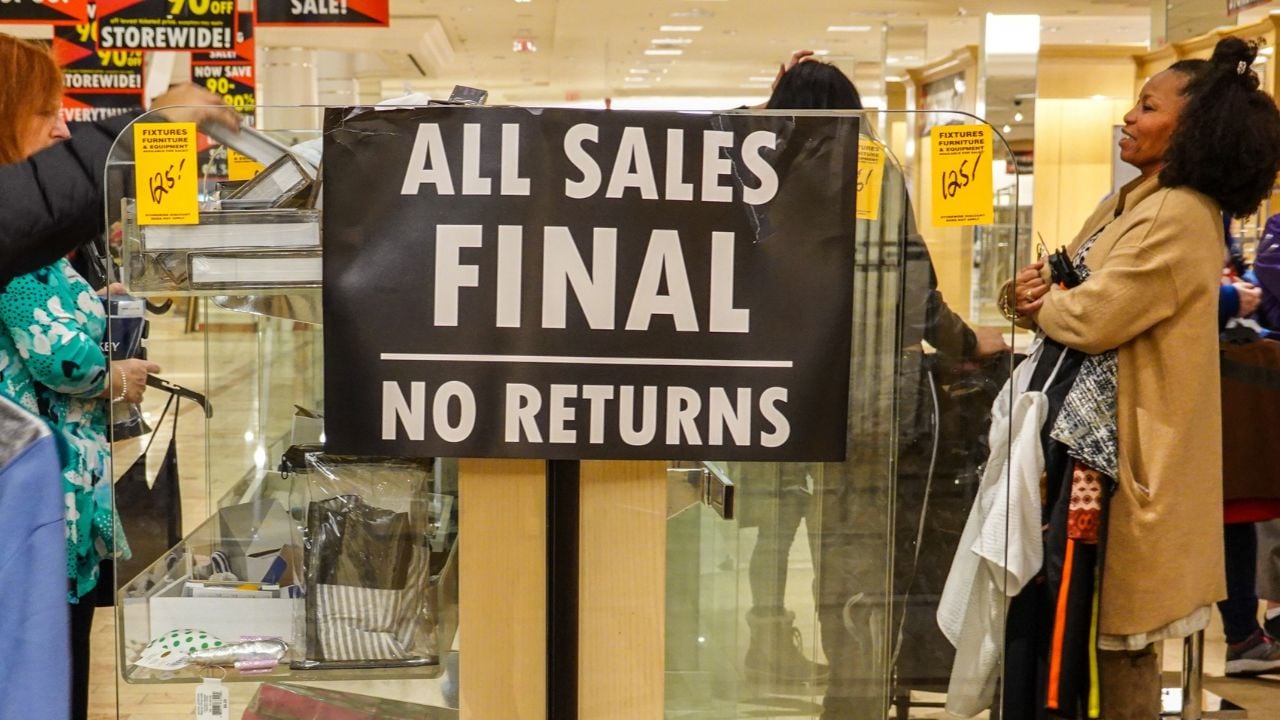
2. No-Returns Signs
New York law doesn’t require a store to accept returns.
A store that refuses returns altogether has to post a notice before the sale saying so.
What a Posted Refund Policy Must Say
New York’s refund-policy law requires a posted policy to cover more than whether the store allows returns, according to the statute.
The policy has to say whether you can return sale items and anything marked “as is.”
It has to say whether an item without proof of purchase qualifies.
It has to say whether returns end after a set date.
You’re entitled to a written copy of the policy on request.
3. Store Credit Policies
Does a store have to give you cash for a returned gift?
For retailers that allow returns, New York law doesn’t pick the form of the refund.
It does require the store to disclose that form, whether cash, credit or an exchange, before you buy.
Store credit or an exchange can be all a store offers, if the posted policy says so before the sale.
So the posted policy decides whether your returned gift becomes cash or store credit.
4. Restocking Fees
A restocking fee can shrink your holiday refund, and New York’s refund law makes the store disclose it.
The posted policy has to name each fee, including a restocking fee, with the dollar or percentage amount.
Say a sign lists a 15% fee on a $300 television.
You’d lose $45.
If no fee is listed, ask about restocking fees before you buy.
Shipping charges on returned merchandise belong on your list of questions, according to the Division of Consumer Protection.
5. Online Refund Policies
New York’s refund rules reach online holiday orders.
An online store has to show its refund policy, or link to it, before it asks for your billing information.
That gives you a chance to read the return terms before you pay.
The state’s holiday consumer alert says an email address or inbox dedicated to online shopping can help you keep your receipts in one place.
6. New York City Rules
New York City’s return rules are stricter than the state’s on where a refund policy goes.
A New York City business has to post its refund policy near the register, where you can easily read it.
State law keeps local posting rules in force.
A business has to give you a receipt automatically for a purchase over $20.
For a purchase between $5 and $20, you get a receipt on request.
A receipt counts as your proof of purchase for a return.
The city’s Department of Consumer and Worker Protection (DCWP) says you need a receipt to file a complaint.
Late Shipping Refunds
A federal refund rule covers the holiday order that ships late.
The Federal Trade Commission (FTC) rule covers goods you order by mail, telephone, fax or on the Internet.
If a seller can’t ship by the promised date, it has to offer you a choice.
You can accept the delay or cancel for a refund.
A seller that states no shipping time needs a reasonable basis to believe it can ship within 30 days.
If you cancel, the seller has seven working days to refund a cash, check or bank-issued credit card payment.
When the new ship date is 30 days or less, the notice tells you that your silence counts as consent to the delay.
The FTC says a seller can’t substitute credit toward future purchases for a refund the rule requires.
Credit Card Disputes
Federal credit card rules give you a second route to a refund when a holiday order never arrives.
The Fair Credit Billing Act covers charges for items you didn’t accept or that weren’t delivered as agreed.
You have to dispute the charge in writing within 60 days of the first statement that shows it.
The FTC says some credit card issuers may extend the 60-day dispute period when a shipment is delayed.
Debit card charges follow different protections, so call your bank right away.
Gift Receipts
The Department of State says holiday shoppers should ask for a gift receipt when they buy a gift.
It adds that you should keep the item’s packaging and its confirmation number.
Psst! Before you head back to the store, take our quiz and see how you score.
Quiz
Returns and Refunds Quiz
Answer these questions on returns, gift cards and refunds. We bet you can’t get them all right. Prove us wrong?
A company mails you a sweater you never ordered, then bills you for it. Under federal law, what do you have to do?
Filing a Complaint
If a store won't honor New York's refund rules, you can file a complaint with the Division of Consumer Protection.
The division asks you to try to resolve the problem with the company before you file.
The division offers voluntary mediation between you and the business.
Its Consumer Assistance Helpline is 1-800-697-1220.
9 Heirlooms New York Families Fight Over More Than Money

New York's Division of Cemeteries says a family burial plot passes automatically to a person's descendants, no will required, unless somebody wrote different instructions.
Few people plan for the family arguments that can follow.
9 Heirlooms New York Families Fight Over More Than Money
3 Parts of New York City That Only Come Alive After Midnight

It's well past midnight, and you're hungry and wide awake.
New York City has corners that run on a different clock than the daytime crowd.
3 Parts of New York City That Only Come Alive After Midnight
