

6 Indiana Rules for Selling Baked Goods From Home That Surprise Bakers

If friends keep asking for your cookies, selling them can seem like the next step.
Hoosiers can sell some home-baked foods, but the law requires more than a good recipe.
Here’s what to sort out before your first paying customer.
Note: This is general information, not legal advice. Food rules are subject to change, so confirm the current requirements with the Indiana Department of Health.
1. Your Primary Residence Only
Home-baked goods sold under Indiana’s home-based vendor law have to come from your primary residence.
The statute also counts any permanent structure on the same property as that residence.
A second home doesn’t qualify.
But where you bake isn’t the only test.
You also need proper sanitary procedures, including proper hand washing, sanitizing your packaging, and cleaning and sanitizing your surfaces.
2. Food Handler Certificates
A food handler certificate is required if you sell home-baked goods under Indiana’s home-based vendor law.
The statute requires the certificate to come from an issuer accredited by the American National Standards Institute.
Your county’s local health department gets a copy.
If the state health department or a customer asks, you hand over a copy as well.
So keep copies handy.
3. Home-Based Vendor Label Statement
Under Indiana’s home-based vendor law, your home-baked goods have to carry a label statement.
The wording says the product is home produced and processed.
It also says the Indiana Department of Health hasn’t inspected the production area.
The statement ends with a warning in capital letters that the goods aren’t for resale.
The warning is blunt.
You print the statement in at least 10-point type.
If you sell unpackaged goods, you post a sign instead of a label.
You also post each product’s label on your website.
What Goes on a Home Baker’s Label
Besides the statement, your label needs your name and address, the product’s common name, its ingredients, its net weight, volume or count and the date you processed it.
You list the ingredients in descending order by weight.
The Indiana Department of Health’s Home-Based Vendor Handbook says a post office box address doesn’t meet the requirement.
Allergen labeling isn’t required but is encouraged.
4. Cheesecake and Cream Pie Limits
Indiana’s home-based vendor law doesn’t let you sell foods that need time or temperature control for safety.
The handbook lists cheesecake as one of those foods.
Porter County’s health department also lists dairy products as prohibited, with an exception for commercial dairy products used only as an ingredient.
Pies get trickier.
Approved pies include those with high-acid fruits or fillings and those with pecans.
If you bake cream or custard pies, they may exceed the allowed pH and water activity values and require additional testing.
pH is a measure of acidity and alkalinity, and water activity is the measure of water in a food available for metabolic processes such as bacterial growth.
Cream pie takes extra work.
5. No Resale or Out-of-State Shipping
You can sell home-baked goods under the home-based vendor law only to an end consumer, not to someone who plans to resell them.
The handbook says you can’t sell to a warehouse, retailer or wholesaler that plans to distribute the product further.
You can take orders in person, by phone or online.
You can also deliver in person, by mail or through a third-party carrier.
But the home-based vendor law bars you from shipping or delivering to an end consumer located outside Indiana.
Even Ohio is off-limits.
6. Homestead Shipping and Delivery Certificates
Indiana’s homestead vendor law asks for a food handler certificate only if you ship or deliver your home-baked goods.
The governor signed House Enrolled Act 1424, which created the homestead vendor law, on March 12, 2026.
It took effect July 1, 2026.
A homestead vendor sells food from property or at a farmers market and takes in no more than $1.5 million in gross sales in a year.
The Indiana Department of Health’s guidance lists baked goods among the allowed foods, along with candy, produce and fruit spreads.
Like the home-based vendor law, the homestead vendor law bars you from shipping or delivering to an end consumer outside Indiana.
All home-based vendor statutes, which sit in Indiana Code chapter 16-42-5.3, remain in force alongside the new act.
By contrast, the home-based vendor law makes a food handler certificate a requirement for home-based vendors, not a condition of shipping.
Shipping is the trigger.
Inspections and Local Licensing
Under Indiana’s home-based vendor law, your city and county can’t require licensure, certification or inspection of your home-baked goods by ordinance or resolution.
The state health department can still sample and inspect your product after a consumer complaint.
It can also step in when a product is misbranded, such as when a label is false or misleading.
The same applies to adulterated food, such as food with a substance that may injure health.
If the department has reason to believe an imminent health hazard exists, it can order you to stop producing and selling the product.
For homestead vendors, House Enrolled Act 1424 bars the state, local governments and local health departments from imposing rules that federal law doesn’t require.
The act still lets them investigate a complaint about a foodborne illness.
Farmers markets are owner-operated and can be more restrictive than state law, according to the department’s homestead vendor guidance.
In Porter County, the health department says home-based vendors at farmers markets register with the Market Master.
Your market can say no.
Psst! Think you’re ready to sell your home-baked goods? Run through this checklist and see where you stand.
Homestead Labels and Allergens
Your label has to meet the label requirements that House Enrolled Act 1424 sets for homestead vendors.
It lists your name, your address, the ingredients in descending order by weight and a description of the product.
It also has to describe any allergens that might have come in contact with the food.
That’s a requirement.
The required statement, in at least 10-point type, says the product came from a homestead vendor or the owner of a small farm exempt from government licensing and inspection.
5 Ways Hoosiers Get Money Back From Meijer After They’ve Already Paid
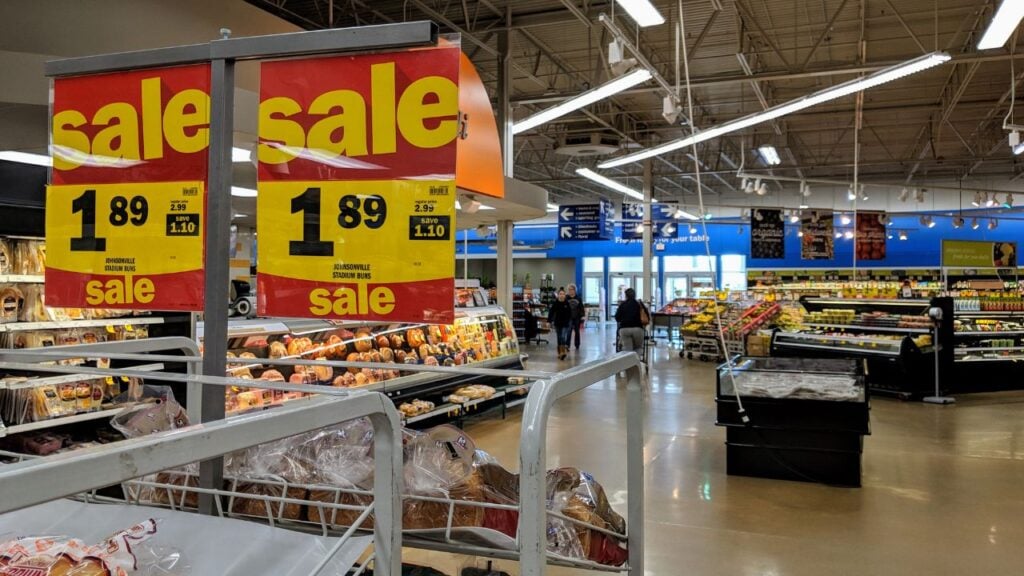
Checkout isn’t final.
These are the ways many Hoosiers get money back from Meijer after they’ve paid.
5 Ways Hoosiers Get Money Back From Meijer After They’ve Already Paid
