
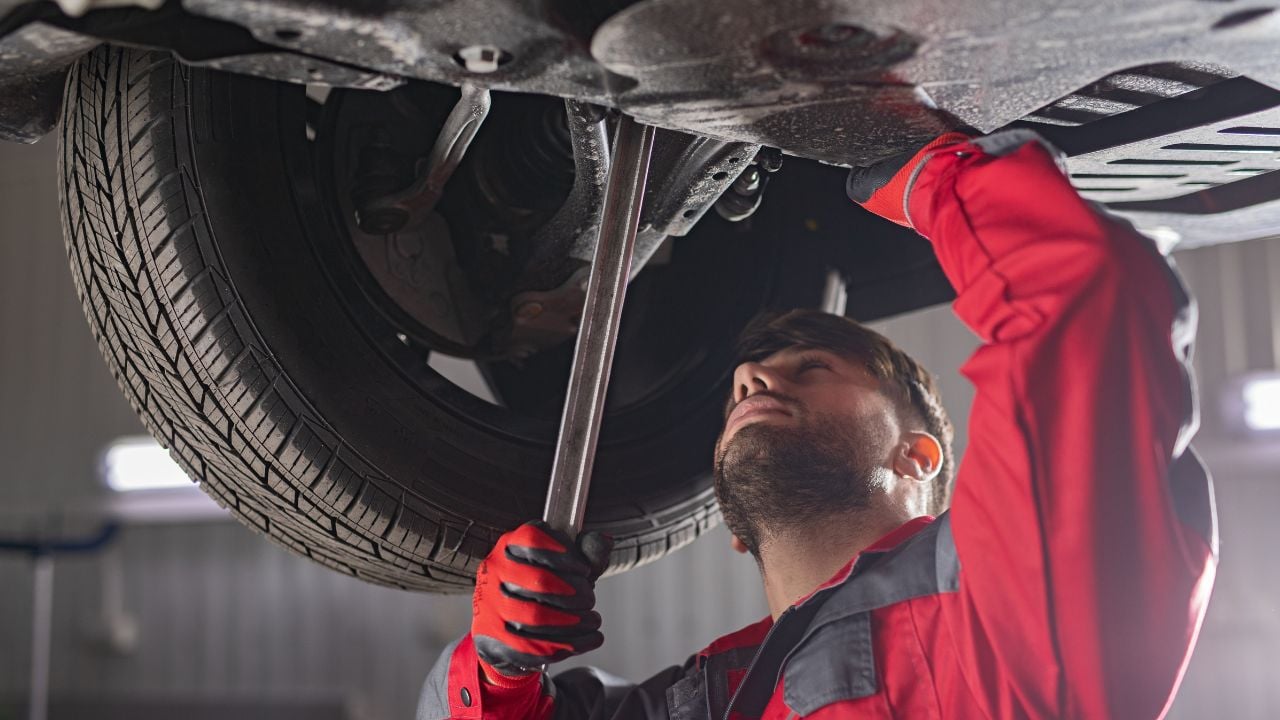
6 Pennsylvania Vehicle Inspection Failures Drivers Never See Coming

A small crack near the edge of your windshield might sail through a Pennsylvania inspection without a second look.
Move that same crack a few inches toward the steering wheel, and a PennDOT inspector sees a completely different problem.
These are the Pennsylvania inspection failures drivers never see coming.
Note: This is general information, not legal advice. Inspection criteria and procedures are subject to change, so confirm the current requirements with the Pennsylvania Department of Transportation (PennDOT).
1. Underglow and Accent Lights
Extra lighting that has nothing to do with headlights or brake lights can still sink a Pennsylvania inspection.
PennDOT’s equipment rules single out an entire category called ornamental lamps: Any light that isn’t required equipment and wasn’t part of the car when it left the factory.
Underglow kits count.
Light strips inside the grille, lit door handles, and glowing running boards count too.
It doesn’t matter if every bulb works.
A mechanic flags it as an unapproved add-on, and taking it off clears the rejection.
Tint brings up the same question.
Does Tint Fail Pennsylvania Inspection?
Pennsylvania law still sets a 70% minimum light transmission for the windshield and every window on cars built in 1998 or later.
PennDOT no longer checks tint at inspection, so a dark back window alone won’t fail your car anymore.
That doesn’t make illegally dark tint legal to drive with.
An officer can still ticket it on the road, sticker or not.
2. Missing Catalytic Converter
Pennsylvania’s inspection can fail a car over a missing catalytic converter or a straight-piped exhaust, even in a county that never tests what comes out of the tailpipe.
In the state’s 42 counties outside the dedicated emissions-testing regions, inspection stations still run what PennDOT calls a Visual Anti-Tampering Check.
A mechanic looks for the parts, not the pollution.
Every original emission control component that came on the car at the factory has to still be there and still work, the catalytic converter included.
Swap the exhaust for a straight pipe, or delete a component to save weight, and the check catches it just the same.
A mechanic just looks.
The check uses no sensor, no tailpipe hose, and no machine at all.
3. Where Your Crack Sits
State inspectors in Pennsylvania treat the exact same crack differently depending on where it sits on your windshield.
Regulators define what they call an acute area: A zone directly in front of the driver, 8.5 inches wide and 5.5 inches tall.
A chip or a crack inside that zone fails far more easily than the same damage near a corner or along the edge.
PennDOT inspectors treat that placement as the deciding factor.
Two cars can carry an identical inch-long crack.
The car with the crack near the edge passes; the car with the crack over the driver’s sightline doesn’t.
Shattered glass, exposed sharp edges, and discoloration anywhere on the windshield fail on their own, acute area or not.
Psst! How ready is your car for a Pennsylvania inspection? Run through this checklist and see where you stand.
4. Swapped Odometer
A swapped odometer can fail a Pennsylvania inspection, even when the replacement part works fine.
State rules require a shop that installs a replacement odometer unable to show the vehicle’s original mileage to reset the odometer to zero.
A written notice then has to go on the driver’s door frame, spelling out the swap.
Checking for that notice is part of what an inspector reviews, and a car missing it can be turned away.
A rebuilt speedometer cluster from a salvage title, or a swapped instrument panel on an older project car, both fall under this rule.
The paperwork matters as much as the wiring.
5. Dropped Frame or Suspension
PennDOT fails a modified Pennsylvania vehicle when its frame or suspension drops below a line regulators call the scrub line.
Inspectors check street rods, specially constructed vehicles, and reconstructed vehicles against a chart that plots that line off the bottom of the wheel rims.
Drop the frame, the suspension, or any other chassis component below it, and PennDOT rejects the car regardless of how solid the build is.
PennDOT measures a show-quality build and a backyard rebuild by the exact same chart.
6. Relocated Fuel Tank
State rules give Pennsylvania’s inspectors a hard line on where a fuel tank can sit.
They reject a fuel tank or line that intrudes into the driver’s, passenger’s, or cargo space, including a racing-style fuel cell mounted the same way.
The exception is a car built that way from the factory.
Trunk mods count too.
A weekend track car with a fuel cell bolted into the trunk is exactly the kind of build this rule was written for.
The tank might be rated for racing.
It still has to sit outside the space where people ride.
The Requirement Other States Dropped
Pennsylvania has kept its annual inspection requirement even as other states let theirs go.
Texas lawmakers voted to end that state’s program in 2023.
Inspections there didn’t stop until January 2025.
Pennsylvania lawmakers have proposed dropping the requirement too, arguing modern cars need less oversight.
Not yet.
Every vehicle registered in Pennsylvania still needs a fresh inspection sticker every twelve months, with one exception: Antique-plated vehicles are exempt.
The Windshield Swap’s Extra Days
A windshield swap buys a few extra days under Pennsylvania’s inspection rules before the new glass needs its own fresh inspection.
State rules allow a car to stay on the road for up to 5 days by holding onto the piece of the old windshield that still shows the inspection certificate.
That’s five days only.
After that window closes, the car needs its inspection redone on the new glass.
Until that happens, it isn’t legal to drive.
9 Things Pennsylvania Utility Crews Can Legally Do in Your Yard Without Asking First
A fence around a Pennsylvania yard feels like the final word on who can walk through it.
A utility company crossing that same yard doesn’t always need permission first.
9 Things Pennsylvania Utility Crews Can Legally Do in Your Yard Without Asking First
7 Pennsylvania Diner Rules Regulars Follow Without Being Told

The same regulars walk into a Pennsylvania diner every morning and sit in the same seats without a word.
Nobody posted these rules anywhere, and every regular still knows every one of them.
7 Pennsylvania Diner Rules Regulars Follow Without Being Told
