
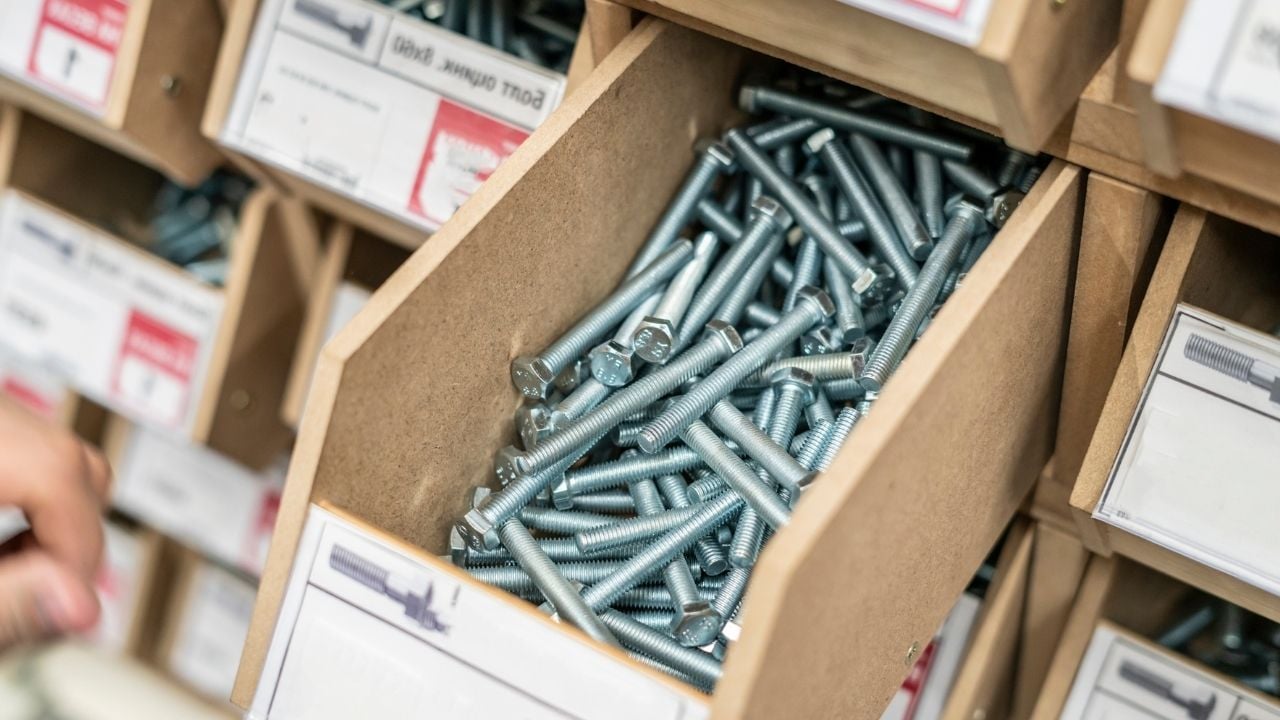
6 Reasons Virginians Skip the Big Box and Drive to the Small-Town Hardware Store

Virginia sits deep in hurricane season this week.
We’re in the stretch that the National Oceanic and Atmospheric Administration (NOAA) marks as the Atlantic’s statistical peak every year around September 10.
That’s exactly when a torn window screen stops being an annoyance and turns into a repair job.
These are the situations when many Virginians prefer small-town hardware stores over the big box names like Lowe’s and The Home Depot.
1. Blade Sharpening
Ace Hardware’s independently owned Virginia stores keep a mower blade sharpener running at the counter, and neither Home Depot nor Lowe’s does the same job in-store.
Neither big-box chain sharpens a lawn mower blade at all.
They sell the sharpening kits instead, a grinder or a manual file a shopper takes home and runs themselves.
Not everyone wants that job.
Ace’s independently owned stores set their own service lists, so availability shifts from Winchester to Wytheville.
A working blade grinder behind the counter is common enough that Virginians know which local shop keeps one running.
A dull blade also rips grass instead of cutting it.
A sharp blade usually costs somewhere between $10 and $50 to sharpen, depending on the shop and the job.
2. Someone Behind the Key Counter
A small-town hardware counter in Virginia still has somebody standing there for an odd key, someone who can pick the closest blank by hand and cut it while the customer waits.
Home Depot’s key counter runs through a self-service kiosk in many Virginia locations now, the kind that scans an original key and cuts a copy in under a minute.
It handles standard house and padlock keys well.
A mailbox key, a cabinet key, or an older profile the kiosk doesn’t recognize is a different story.
Many modern car keys with a security chip need a dealership or a locksmith either way.
That’s the whole difference.
True Value stores across Virginia offer that same staffed setup, a person cutting keys by hand for homes, businesses, and some cars, instead of a machine deciding what it will and won’t attempt.
3. Screen and Storm Window Repair
Small-town hardware stores in Virginia will rescreen a torn window while a customer runs the rest of their errands.
No appointment needed.
Ace and True Value locations take the old screen, or just the measurements, pick a mesh color and type at the counter, and hand back a repaired screen the same day in many cases.
Home Depot handles a torn screen differently.
Its Pro Referral program matches a shopper with an outside contractor instead, who schedules a home visit that typically runs $65 to $150 before the per-window repair cost even starts.
That’s a lot of waiting for a hole a raccoon punched through last Tuesday.
With hurricane season pushing wind and rain across Virginia through mid-October, a same-visit fix at the small-town counter beats a scheduled contractor callback by weeks.
4. Small Engine Tune-Ups
Many Ace Hardware stores across Virginia run a small-engine service counter for chainsaws and mowers, tuning them up before the season starts.
Spark plug swaps, air and fuel filter changes, and carburetor cleaning all happen in-house.
Home Depot and Lowe’s stock the replacement parts for the same jobs, spark plugs, filters, carburetor kits, right on the shelf.
Neither chain runs a standard in-store counter that does the actual tune-up for a customer.
The parts are there.
The mechanic isn’t.
A Virginian who’d rather hand over a balky chainsaw than diagnose it themselves still has somewhere to take it, just not the big-box aisle where the parts live.
Psst! How much do you know about the history behind America’s hardware stores? Take our quiz and see if you can ace it.
Quiz
Hardware Store History IQ
Answer these questions on the people and products behind America’s hardware stores. We bet you can’t get them all right. Prove us wrong?
In what year and city did five independent store owners found Ace Hardware?
5. Chain, Rope, and Wire Cut to the Foot
Ace Hardware's independently owned Virginia stores solve a problem Home Depot and Lowe's leave to the shopper: They'll cut bulk chain, rope, or wire to the exact length a project needs.
Home Depot and Lowe's sell chain and rope off similar by-the-foot spools, but the racks are self-service.
A shopper measures the length, threads it through the rack's own cutter, and does the job alone.
At the Ace counter, an employee measures and cuts it instead, at no extra charge.
Nothing wasted.
Availability shifts store to store since each Ace location buys its own bulk stock, but the cut-to-length counter itself is common enough across Ace's Virginia locations that a shopper can usually find one nearby.
6. Propane Filled by the Gallon
Many Ace and True Value hardware stores in Virginia refill a propane tank on-site and charge only for the propane that goes back in.
Pay for what you use.
Lowe's runs almost entirely on tank-exchange partners like Blue Rhino and AmeriGas, swapping a customer's empty tank for a filled one at a flat price.
The Math Behind a Small-Town Hardware Store's Propane Refill
A small-town hardware store's gallon-by-gallon refill tops a 20-pound propane tank off much closer to its full weight than a tank-exchange swap does.
Exchange racks commonly fill a swapped tank to only around 15 pounds, not a full 20.
The Federal Trade Commission has scrutinized that fill-to-15 practice in past action against exchange operators.
That's five pounds of propane a Virginia shopper pays a flat exchange price for without ever receiving.
True Value's Roots
True Value's hardware cooperative traces part of its lineage to a meeting few shoppers have ever heard of.
In 1910, twenty independent hardware store owners from western Pennsylvania, West Virginia, and Virginia met in Pittsburgh.
They formed a nonprofit cooperative called the American Hardware & Supply Company, so member stores could buy inventory together and compete with bigger wholesalers.
Twenty owners, one vote each.
The first stockholders' meeting ran out of a Pittsburgh warehouse.
That company later folded into the network of mergers that eventually became True Value.
A separate Chicago business, Cotter & Company, joined that same lineage decades later after John Cotter founded it in 1948, and the two histories merged into one company in 1997.
Virginia hardware owners had a seat at the table before either name existed.
What Big-Box Stores Still Do Better
Big-box stores still carry the deeper inventory and the longer hours a full renovation needs, and no small-town counter competes with that on a whole-house remodel.
No argument there.
Home Depot's Pro Xtra and Lowe's Pro Rewards programs typically unlock volume pricing once a material order crosses a couple thousand dollars, the kind of bulk discount a one-location hardware store can't match.
9 Virginia Antique Shop Finds Worth More Than the Price Tag

A seven-inch record that sells for three dollars in a used bin has sold at auction for more than $15,000, all because of one detail almost nobody thinks to check.
Virginia's antique shops are full of ordinary-looking pieces still priced like ordinary finds, from cast iron skillets to coin jars nobody's sorted through in years.
9 Virginia Antique Shop Finds Worth More Than the Price Tag
7 Virginia Roadside Stops Locals Pull Over for That Tourists Drive Past
A pickup truck taps its brakes on an old two-lane outside a small Virginia town, then eases onto the gravel shoulder and parks.
The out-of-state SUV behind it never even slows down, headed for the interstate exit and missing the stop that's kept locals coming back for decades.
7 Virginia Roadside Stops Locals Pull Over for That Tourists Drive Past
