
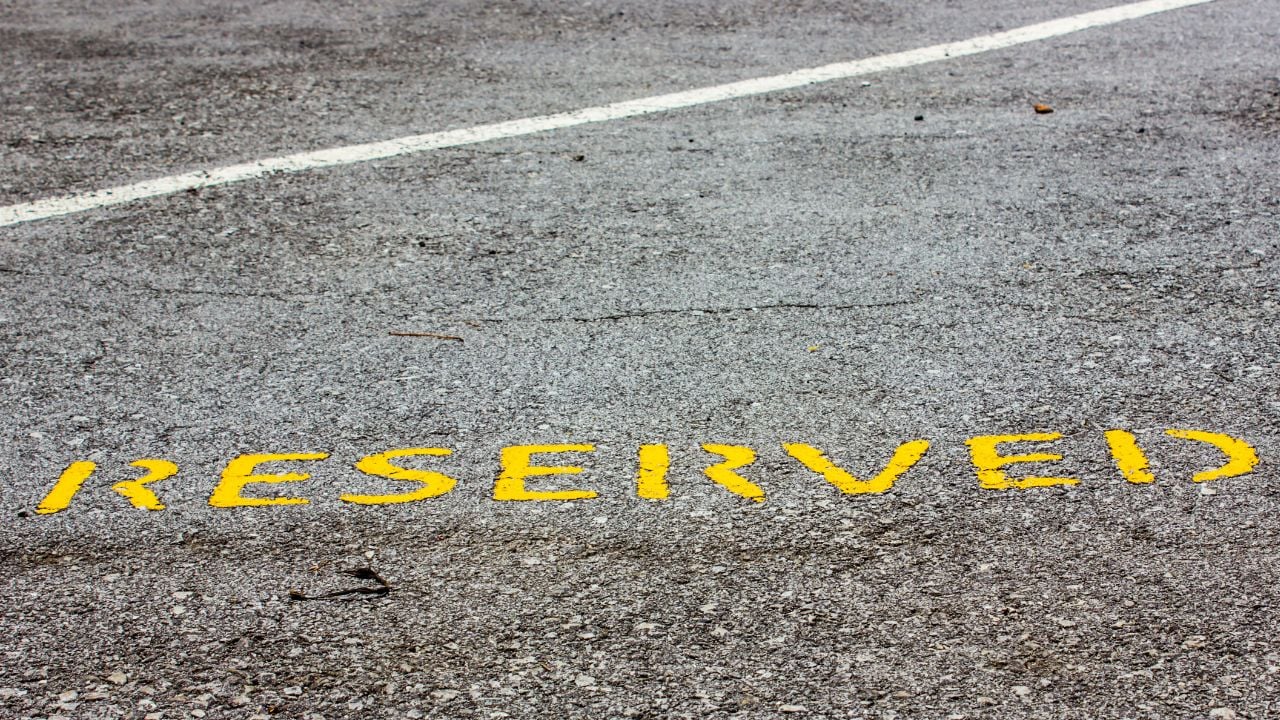
6 Snowbird Parking Habits That Frustrate Year-Round Floridians

A Florida State University study for the state’s transportation department found Florida’s parking lots turn measurably more dangerous every winter.
That timing isn’t a coincidence.
Hundreds of thousands of seasonal residents drive their cars to condos and parking lots built for a smaller crowd. The friction shows up before anyone unpacks.
These are the snowbird parking habits that frustrate year-round Floridians.
Note: This is general information, not legal advice. Parking rules set by cities, counties, and homeowner or condo associations vary by community and are subject to change.
1. A Second Car in the Guest Spot
Snowbirds who split the year between two states often keep a second vehicle in Florida year-round.
The easiest place to leave it is a marked guest spot instead of the numbered space assigned to their unit.
Florida condo and homeowner association (HOA) attorneys call parking a limited commodity in nearly every community.
Those same attorneys name guest spaces as one of the flashpoints boards deal with regularly.
Nobody checks the plate.
A full-time resident whose family flies in for the holidays is the one who finds nothing open in the guest row.
A snowbird’s second car has been sitting in that spot since November.
Many buildings without a decal system have no clean way to prove whose car belongs where, either.
A board member who lives in the building year-round is usually the one fielding that neighbor’s complaint.
Sorting it out often means personally tracking down whose car is parked where.
A board that finally cracks down usually starts by requiring a photo ID or a lease copy before handing over a guest pass.
That paperwork alone clears out cars that had no business sitting there, freeing the spot back up for the neighbor who needed it.
2. Letting the Extra Car Spill Onto the Grass
Snowbird season brings more cars to a Florida driveway than many driveways were built to hold, especially once family flies in for a few weeks at a time.
The overflow usually lands on the swale, the grass strip between the sidewalk and the street, and many Florida cities ban parking there outright.
Hollywood allows a vehicle on the swale for up to 24 hours before it has to move.
The vehicle also has to stay in movable condition, tires inflated, the whole time.
Other cities give no grace period at all.
It’s ticketed fast in Hollywood.
Hollywood’s code compliance officers patrol assigned zones on a schedule, and the city says routine patrol accounts for about 95 percent of what gets caught, not phoned-in complaints.
A car camped on the grass for days is exactly the kind of thing that patrol is built to catch.
The remaining reports still start with whoever lives next door and has stared at the tire tracks all week.
Longtime residents on a block without that extra car know exactly why the grass strip looks different every winter.
3. Skipping the Resident Beach Pass
Florida’s coastal towns often save their best beach parking rate for property owners and full-time residents.
The exact way they draw that line is what leaves a year-round resident’s guests stuck.
Palm Beach Shores defines a resident as an owner or someone on a full one-year lease.
Each household in town gets one parking sticker per vehicle it owns, plus exactly one guest pass, no matter how many visitors show up that season.
One pass covers one visitor’s car at a time.
That’s the whole allotment.
A full-time resident hosting out-of-town family for a week, plus a friend who drops by separately, runs out of passes fast.
Any car beyond that one guest pass pays the $350 non-resident sticker, the same as a stranger’s would.
Naples takes a different approach that lands on residents the same way.
The city hands a free annual permit to any property owner or full-time resident.
That permit is non-transferable, though, and the city no longer sells a non-resident pass of any kind.
A resident’s visiting guest can’t borrow the pass and can’t buy one either, so the meter is the only option left.
Winter’s short-lease renters land in that same non-resident pool, since a lease under a year never qualifies them as residents no matter how many months they stay.
A full-time resident’s guests end up circling the same crowded lot as that seasonal crowd every winter.
Both are locked out of the pass reserved for people who live there all year.
4. The Visible Boat or RV
A neighbor who lives in the community year-round is usually the first to notice a boat or travel trailer parked where it’s easy to see from the street.
That neighbor is also the one who calls it in to the board, sometimes more than once in a season.
Snowbirds who tow a boat or a travel trailer down for the season need somewhere to keep it.
A board can’t simply order it removed, either.
Florida Statute 720.3045 says a homeowners association can’t stop an owner from storing a boat, flag, or recreational vehicle (RV) on the property.
That protection only holds if the item stays out of view from the street, a neighbor’s yard, or a community golf course.
Visible changes everything.
A trailer backed halfway into the driveway because the garage is already full of luggage and beach chairs is easy to spot from the street.
That’s exactly the kind of parking spot Florida’s law still lets a board challenge.
The same visible trailer also draws a repeat complaint from whoever lives next door all year.
Florida’s Two Different Parking Protections
Florida homeowners associations can’t stop an owner from parking a personal vehicle, including a pickup truck, in the owner’s driveway, under Florida Statute 720.3075(3)(d), a 2024 law.
A separate law, Florida Statute 720.3045, covers what can be stored out of view.
That list runs wider than boats and RVs, and also covers flags, artificial turf, vegetable gardens, and clotheslines.
That second law took effect in 2023 and was expanded in 2024.
Neither one says anything about a shared guest lot, a common driveway, or a space assigned to someone else.
5. Never Registering the Car With the Front Office
Florida condo and homeowner association (HOA) offices increasingly require every resident’s car to carry a numbered decal or an online registration.
An owner who’s only around part of the year is often the one who misses that step.
A rental car for the season, a swapped vehicle, or a visiting relative’s car often shows up with nothing in the system to match it.
The system doesn’t care why.
When that unmatched car lands in a numbered space, the resident assigned to that space is the one who finds a stranger’s bumper where their car belongs.
Coronado at Doral, a Miami-Dade condominium association, spells out what happens next in its posted rules.
A car sitting in a resident’s assigned spot without a decal or guest registration gets one written warning before it can be towed.
A car sitting there without that resident’s authorization at all can be towed immediately, no warning required.
Either way, the resident still has to notice the unmatched car in their space and report it.
Only then does the process run its course, before they can park in their spot again.
6. Claiming a Second Decal
Many Florida condo and HOA rules cap each unit at one guaranteed parking space and hand out a second decal only when one opens up, first-come, first-served.
Coronado at Doral’s rules work exactly that way: One space per unit, and the second is up for grabs on availability alone.
First-come, first-served plays out differently once snowbird season starts.
The math never lies.
Thousands of part-year owners return to their units within the same few weeks every fall.
Each one checks whether a second space has opened up the moment they unpack.
A year-round resident who has lived in the building since spring and never asked for a second space often finds it already claimed.
That space went to whichever returning snowbird checked first.
The rule itself never changes between seasons.
Only the number of people racing for the same handful of open spaces does, and that number rises every November.
Psst! How much do you know about Florida’s snowbird history? Take our quiz and see how many you get right.
Quiz
Florida Snowbird IQ
Answer these questions on Florida’s seasonal residents and see how many you get right.
A University of Florida study found Florida’s snowbird population hits its peak during which month?
Florida's Increasingly Dangerous Lots
Florida's parking lots don't just get more crowded once snowbird season peaks, they get riskier for anyone walking through them.
A 2012 Florida State University study for the state's transportation department analyzed pedestrian crashes in West Central Florida's parking lots.
The study found the crash rate rises hardest in winter and spring, the same months tied to the region's seasonal population increase.
Smaller lots saw it worse.
The study found both younger and older drivers and pedestrians were disproportionately involved, not one age group alone.
Florida's seasonal population skews older, which means more of one of those higher-risk groups is filling smaller lots at exactly the time of year the study found riskiest.
The Trade-Off Behind the Traffic
Florida's snowbirds don't only crowd parking lots.
That's half the story.
They also spend money at the same stores, marinas, and restaurants that share those lots.
Restaurants and marinas see the same swing, filling tables and slips for months at a time instead of running half-empty through summer.
Some park systems have already priced that seasonal swing into their rules.
Pinellas County sells an annual boat ramp and beach parking pass for $110, with a $55 rate for anyone 65 or older.
That's exactly the age range that fills its lots hardest each winter.
The senior rate only requires a photocopy of a valid driver's license, the same paperwork the county asks of every applicant, regardless of what state issued it.
A senior who buys that $55 annual pass instead of paying by the visit comes out ahead after just a handful of trips to the ramp.
9 Florida Flea Market Mistakes That Mark You as a First-Timer
One of Florida's largest weekly flea markets packs an entire week's worth of business into a single morning. It only opens one day a week.
Show up on the wrong day, and the lot sits nearly empty except for a confused first-timer circling the gravel with a phone out.
9 Florida Flea Market Mistakes That Mark You as a First-Timer
7 Storm Season Scams That Target Florida Homeowners Every Year
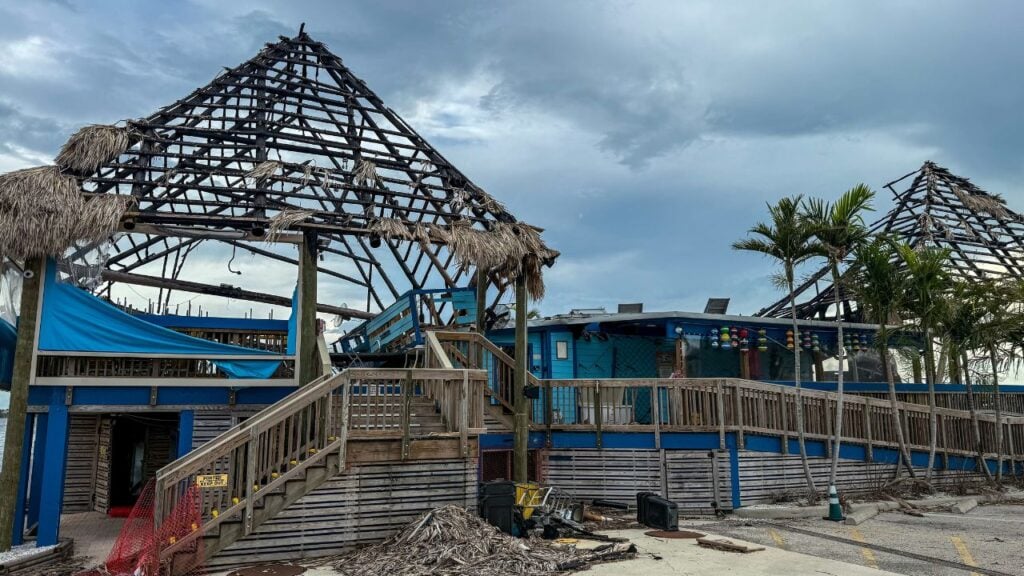
The federal hotline for reporting disaster fraud shut down for good in March 2026, right as Florida headed into another hurricane season. The scams didn't stop.
These are the scams that keep coming back to target Florida homeowners every year.
7 Storm Season Scams That Target Florida Homeowners Every Year
