
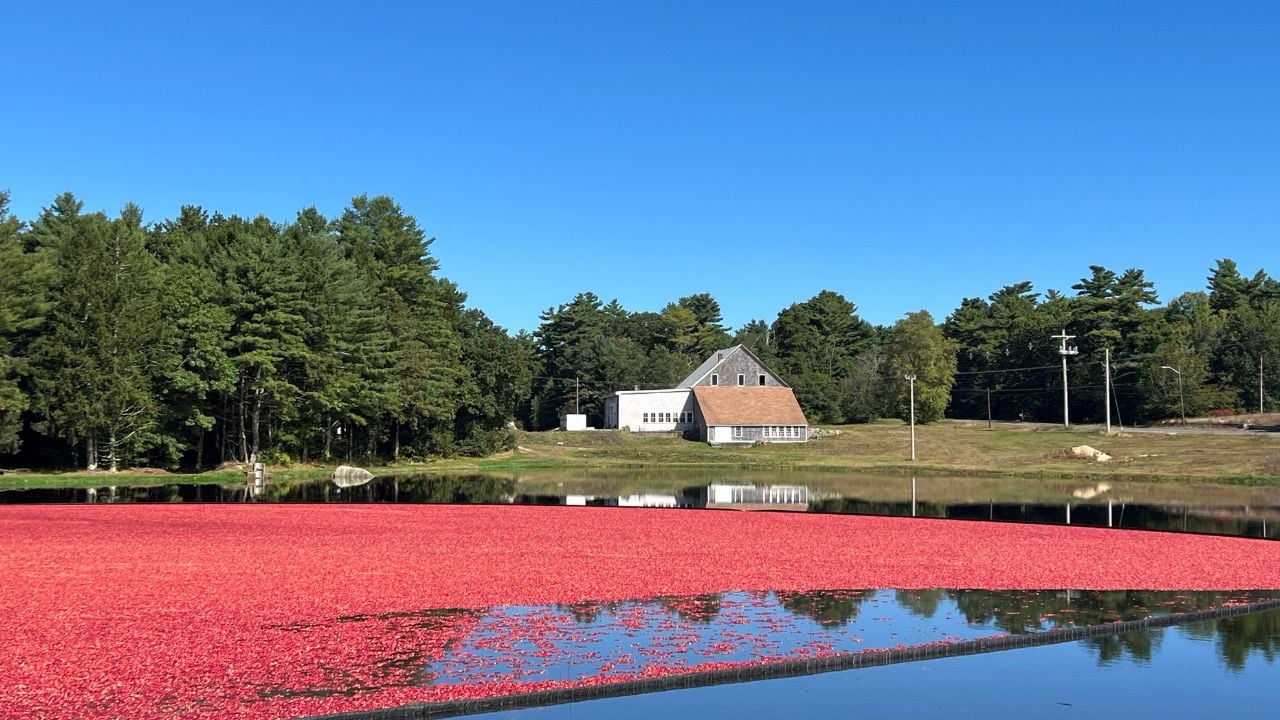
6 Things a Massachusetts Cranberry Bog Does During Harvest That Surprise Visitors

About 5% of Massachusetts’s cranberry crop still gets combed straight off the vine by a self-propelled machine with a name like Darlington or Furford.
The other 95% gets shaken loose underwater.
A visitor pulling over in October expects workers picking berries one at a time. That isn’t what’s happening.
These are the things a Massachusetts cranberry bog does during harvest that surprise visitors.
1. Flooding the Bog on Purpose
A Massachusetts cranberry bog gets flooded on purpose before a single berry gets picked.
Cranberries carry tiny pockets of air inside the fruit.
That’s the whole trick.
Once the harvest window opens, sometime between mid-September and early November, growers let reservoir and canal water rise up over the vines.
More than 90% of the state’s crop gets picked this way, according to the Cape Cod Cranberry Growers’ Association.
A field that looked like an ordinary patch of low vines the day before turns into a shallow pond overnight.
Growers flood a bog with up to a foot of water, just enough to lift the fruit off the vines, according to the Cape Cod Cranberry Growers’ Association.
That water doesn’t just disappear once the berries are gone, either.
Growers recycle it across several other bog sections before it ever leaves the system.
2. Turning on the Egg Beaters
The water on a flooded Massachusetts cranberry bog doesn’t stay calm for long.
Growers drive machines called water reels straight through the flooded rows to loosen the crop.
Everybody just calls them egg beaters.
The spinning paddles churn the water hard enough to knock ripe berries loose from the vines underneath.
It’s not gentle, either.
That churning motion is exactly what earned the machine its nickname.
The water goes from calm to a churning, foamy red in a matter of minutes.
3. Corralling the Floating Crop
Massachusetts cranberry bog crews wade into the flooded rows in chest waders as soon as the berries float free.
They push wooden or plastic booms across the water to keep the drifting crop together.
It’s basically a cattle drive.
The booms pen the floating berries into one corner of the bog, tight enough for a pump or conveyor to reach every last one.
That corner is exactly where the next machine picks up the load.
4. Pumping the Crop Onto Trucks
A Massachusetts cranberry bog’s corralled crop gets pumped onto a conveyor or suction line next.
Either machine lifts the floating berries straight out of the water and drops them into a waiting truck bed.
No baskets are in sight.
The trucks haul the wet crop to a receiving station nearby, where workers clean and sort it before it heads off toward juice, sauce, and dried-cranberry lines.
5. Picking a Slice Bone Dry
Not every Massachusetts cranberry bog gets flooded during harvest.
About 5% of the state’s crop still gets combed straight off the vine by a self-propelled machine with a name like Darlington, Furford, or Western.
No water is involved.
The machine stuffs the berries into burlap bags or wooden boxes as it rolls along, and workers swap in empty ones once each bag fills up.
Some growers then stack three of those bins at a time and send them out by helicopter to a waiting flatbed truck.
That fruit is what ends up loose in a bag at the grocery store, not blended into juice.
Psst! How much do you know about the industry behind Massachusetts’s cranberry bogs? Take our quiz and see how many you can get right.
Quiz
Massachusetts Cranberry IQ
Answer these questions on Massachusetts cranberry history and the industry behind the bogs. We bet you can’t get them all right. Prove us wrong?
European settlers named the fruit “craneberry” because its blossom reminded them of the head of which bird?
6. Flooding for Frost, Not Fruit
A Massachusetts cranberry bog can get flooded a second time during the same harvest, and it has nothing to do with picking.
Cranberry fruit grows more cold-tolerant as it ripens from green toward deep red, according to UMass Amherst's Cranberry Station.
That protection only fades again once berries sit well past their peak color.
An early frost can still wreck a crop that's just days from being picked.
So growers watch the overnight forecast like hawks through the whole harvest window.
A cold snap complicates things once a bog's frost sprinklers have already been pulled to make way for the wet harvest.
A grower can flood that section a day or so early instead, just to keep the fruit safe until picking day.
It's the same red water a visitor already drove past once that week, showing up again for a completely different reason.
9 Things People From Massachusetts Miss Most After They Leave

Somewhere outside Massachusetts, an office keeps right on humming on the third Monday of April like it's any other Monday.
Back home, that same Monday means a marathon past Fenway Park and an early dismissal from school, just one of the things people miss once they've left.
9 Things People From Massachusetts Miss Most After They Leave
6 Market Basket Changes Massachusetts Shoppers Still Aren't Over
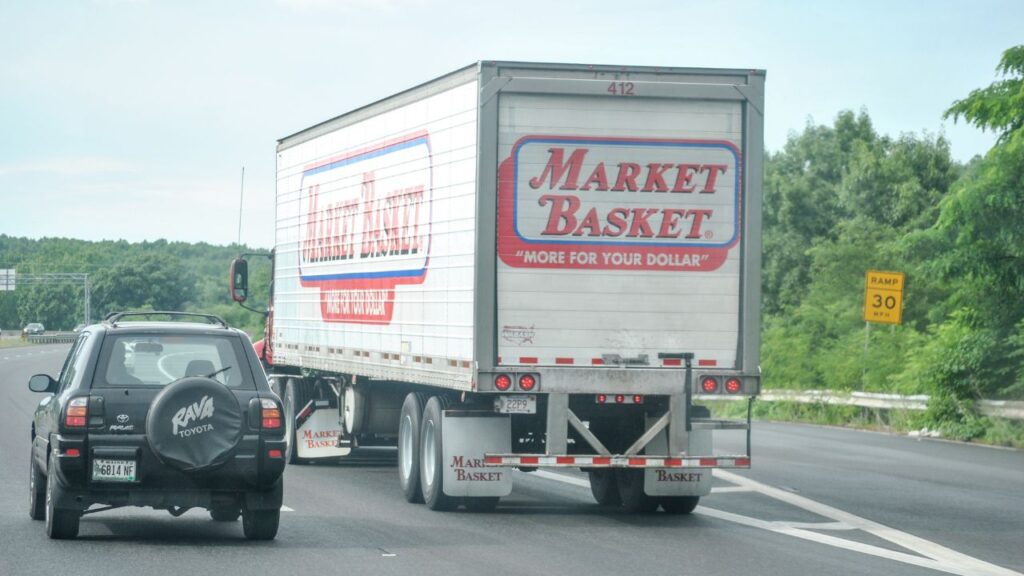
Some Market Basket changes still sting, and others just make longtime shoppers feel old, in a good way.
Market Basket customers still bring up June 23, 2014, the day the board fired Arthur T. Demoulas as president, and the changes since then are changes shoppers still aren't over.
6 Market Basket Changes Massachusetts Shoppers Still Aren't Over
