

6 Things an Alabama Neighbor Can’t Legally Do at Your Property Line

Being a good neighbor isn’t complicated. You wave, you share your extra tomatoes and you return the casserole dish.
But it gets complicated when the person next door does something along the edge of your yard that doesn’t seem right.
Here are the things an Alabama neighbor can’t legally do at your property line.
Note: This is general information, not legal advice. Property rules and court rulings are subject to change.
1. A Tree on the Line
A tree on the line between your yards is usually shared property, so your neighbor generally can’t take it down alone.
In a 2009 case from Randolph County, Alabama, one owner asked a court to let her take down a boundary pine she said threatened her house.
That sounds fair until you remember the neighbors owned the pine as much as she did.
A trial judge sided with her.
The appeals court disagreed.
It reversed because owners of a boundary-line tree generally share it as co-owners, so neither can remove it over the other’s objection.
One judge noted in a separate opinion that some courts make an exception for a tree that’s a nuisance, but that question wasn’t decided in this case.
If a storm has you eyeing a tree on the line, the conversation with your neighbor comes before the saw.
Trimming Isn’t Cutting Down
A tree on the property line generally isn’t yours to take a chainsaw to alone, but you have more say over the roots and limbs that cross onto your yard.
The Alabama Supreme Court held in a 1989 ruling that a landowner may remove tree roots that reach onto their property.
The court built that on an older right to cut limbs that hang over your land.
Courts in other states limit the right to what crosses the line, not what stays on your neighbor’s side.
2. Roaming Livestock
Who has to keep a neighbor’s cows out of your garden?
The neighbor does, since Alabama’s stock law makes it unlawful for an owner to let livestock run at large on another person’s land.
Cows don’t read property lines.
An owner who knowingly lets livestock roam commits a misdemeanor, and a judge can add up to six months in county jail.
The statute’s one stated exception is the landowner’s written consent.
So unless you’ve signed off in writing, an owner who knowingly lets cows into your garden is breaking the law.
3. Spite Fences
Your neighbor can’t build a useless fence or wall just to hurt you.
The state’s Supreme Court took up a 1912 case over a plank wall 20 feet high and 30 feet long, built three or four feet from a neighbor’s house.
That wall, the homeowner said, nearly blocked the air and light in the rooms on that side.
Picture that outside your window.
The court held that a structure built only to injure a neighbor, with no benefit to the builder, can count as a nuisance.
The catch?
You’d have to show the structure is useless to the builder and that the builder put it up to injure you.
A 1922 case shows how high that bar is, since the same court lifted an injunction against a planned fence that would deaden noise and give its owner privacy.
The owner also wanted to get back at the neighbor, but the court wouldn’t measure how much good the fence did.
6 Things Alabama Law Lets a Landowner Do When Hunters Cross the Property Line
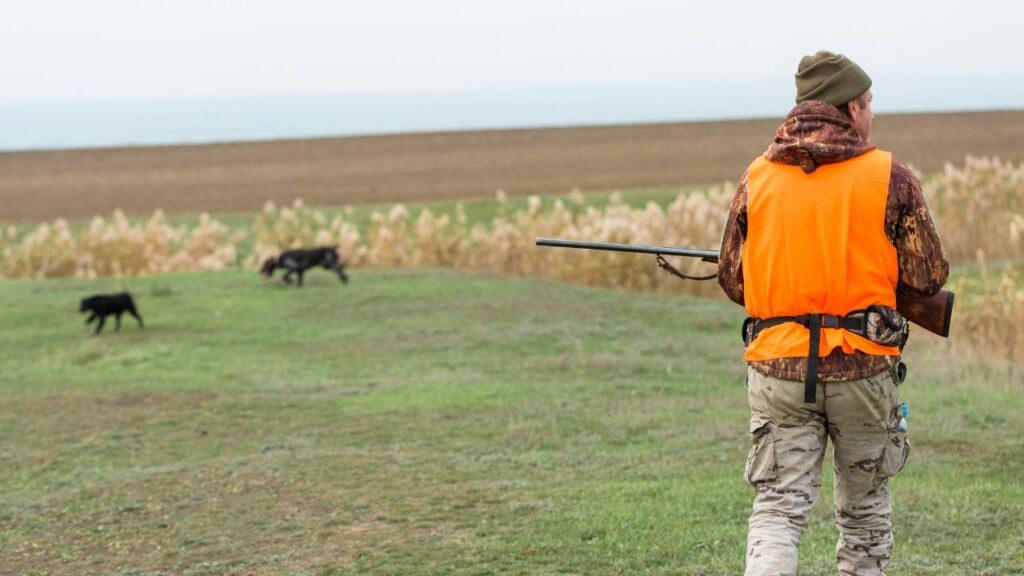
Finding strangers hunting on your land can leave you frustrated and stuck.
Landowners have a few moves beyond a shrug, and some are easy.
6 Things Alabama Law Lets a Landowner Do When Hunters Cross the Property Line
4. Cutting Trees on Your Side
When a neighbor crosses your line and knowingly fells your oak without your okay, Alabama’s tree-cutting law makes the neighbor pay you.
The price is $20 for each oak, pecan, pine or other tree the law names, and $10 for any other tree.
That’s per tree.
A sapling costs the neighbor the same as a full-grown tree of the same kind, so your young pecan counts for the full $20.
The same law lets you add a trespass lawsuit over the cut timber to your claim.
Psst! How much do you know about Alabama property law? Take our quiz and see if you can ace it.
Quiz
Alabama Land Law IQ
Answer these questions on Alabama property, boundary and trespass law. We bet you can’t get them all right. Prove us wrong?
For the basic crime of criminal surveillance in Alabama, a person secretly watching someone must also be doing what?
5. Redirecting Runoff
Rain runs downhill, but a neighbor can't redirect it onto your land in a way that damages it.
The Alabama Supreme Court ruled in 1985 that an owner on higher ground can't channel water that would have scattered onto the land below and damage it.
A neighbor who pours a new driveway or digs a ditch that sends a stream into your yard is making the kind of change a court may look at.
But there's some wiggle room.
A 1979 ruling over land outside a city says an owner uphill may sometimes redistribute the water, but never increase the total amount flowing down.
6. Building Across Your Boundary
A neighbor who builds across your line can be ordered to tear it out.
In a 1983 case, a woman's concrete driveway crossed onto the lot next door by about 12 feet, and part of her house sat over the line too.
That lot was only 80 feet wide, and the court reasoned the encroachment could leave it unsuitable for a home.
Then came the lawsuit.
After the lot's owners sued for trespass, the trial court sided with them, and the state's top court upheld its order.
If a neighbor's slab, shed or fence crosses your line, that case shows you may not be stuck with it.
The driveway's owner had argued the strip became hers through adverse possession, but the court found she hadn't established it.
The owner had to tear out the driveway and restore the ground.
6 Alabama Town Ordinances That Carry a Fine Nobody Expects

Your town may have an ordinance with a fine you've never heard of.
Dog walks, yard signs and parked boats are just the start.
