
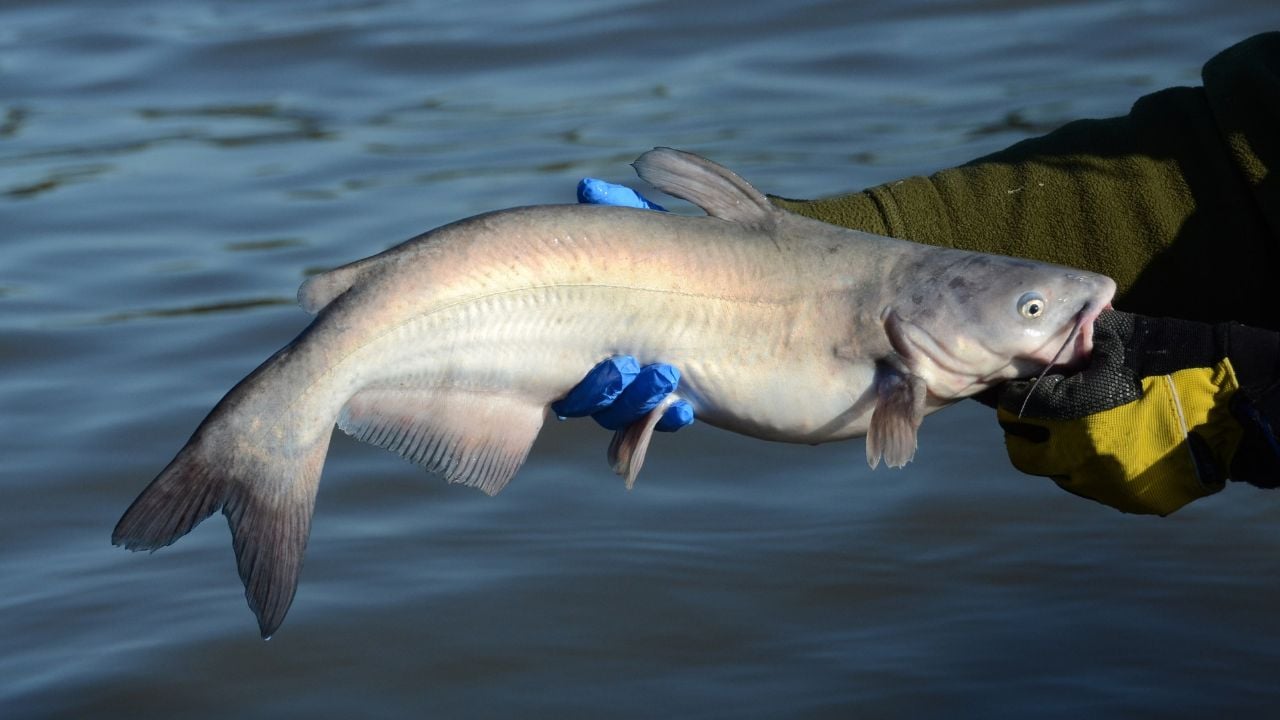
6 Things Mississippians Know About Catfish That Out-of-Staters Never Learn

To a visitor, catfish may be nothing more than dinner.
Mississippians can tell you there’s a lot more to it than what ends up on the plate.
This is what locals know about catfish that most visitors don’t.
Note: This is general information, not legal advice. Fishing regulations and labeling laws are subject to change. Confirm the current fishing rules with the Mississippi Department of Wildlife, Fisheries, and Parks and the current labeling rules with the Mississippi Department of Agriculture and Commerce.
1. Hand-Grabbing Season
Mississippi’s hand-grabbing season for catfish and other non-game fish runs from May 1 to July 15.
The Mississippi Department of Wildlife, Fisheries, and Parks defines it as fishing for non-game fish, most notably catfish, with your hands or with rope and no attachments.
You can use a container as long as it’s wooden.
Plastic is out.
It’s illegal to place or take fish from plastic or metal barrels, hot water tanks, concrete pipe or tires in any public waters of the state.
On the Tennessee-Tombigbee Waterway, you can’t place any cavity-type structure meant for hand-grabbing in Mississippi’s water.
2. Menu Origin Law
In 2008, Mississippi’s governor signed a bill requiring restaurants to disclose the origin of the catfish they serve.
Section 69-7-607 of the Mississippi Code says a restaurant serving imported catfish has to list the origin next to the item on your menu.
The listing has to match the item’s font style and size.
No small print.
Under the same law, a restaurant that serves only U.S. catfish can post a general notice in a prominent place instead.
Retailers also have to inform you of the catfish’s country of origin at the final point of sale.
What Earns a U.S. Origin Label for Catfish
To label farm-raised catfish as U.S. origin, Mississippi law requires the fish to be hatched, raised, harvested and processed in the United States.
River or lake catfish follows a different test.
River or lake catfish has to be harvested in waters of the United States, a U.S. territory or a state.
That fish also has to be processed in the United States, a U.S. territory or a state.
When you order or buy catfish, the restaurant or retailer has to make its origin notice distinguish between those two categories.
3. Slat Baskets
A slat basket is a wooden trap used to catch almost exclusively catfish, according to Mississippi’s wildlife department.
You need a Slat Basket License for each slat basket you fish.
Each basket also needs a tag permanently attached to its front end.
The rules also require you to place slat baskets at least 100 yards apart.
That’s a football field’s length.
The state lists a separate Slat Basket License beside its freshwater commercial fishing licenses.
For commercial fishers, there’s no daily limit on channel or blue catfish, only a 12-inch minimum size.
4. Delta Clay Ponds
As of its 2018 update, the Mississippi Encyclopedia puts 85 percent of the state’s catfish acreage in the Delta.
When you drive through the Delta, you’re in the part of the state where most catfish acreage sits.
The clay in the soil lets ponds hold water.
Mississippi production ponds had shrunk from between 20 and 40 acres to between 10 and 15 acres as of 2018.
That’s a big shift.
Over 95% of the channel catfish produced in the United States are grown in ponds, according to Mississippi State University Extension.
5. Off-Flavor Testing
A channel catfish takes roughly 18 to 36 months to grow from an egg to food size, according to Mississippi State University Extension.
So a farm-raised fillet on your plate started as an egg one and a half to three years earlier.
Then comes the taste test.
Fish typically face 3 to 4 flavor checks before that fillet reaches you, starting two weeks before harvest.
A processor refuses any catfish that test positive for off-flavors, and the fish stay off the schedule until the condition improves.
Once a processor calls a pond “on-flavor”, the farmer can start scheduling the harvest.
Catfish come off feed 2 to 3 days before harvest to purge the gut and reduce stress.
6. Stoneville Research
Catfish breeding research has a base in Stoneville, Mississippi, at the Thad Cochran National Warmwater Aquaculture Center.
In 1987, the U.S. Department of Agriculture’s Agricultural Research Service established the Catfish Genetics Research Unit to conduct genetics and breeding research.
The unit was later renamed the Warmwater Aquaculture Research Unit to better reflect its expanded research mission.
You can read the unit’s mission on its Agricultural Research Service page, which lists developing improved fish strains and hybrids.
If you wonder which hybrid farmers produce most, Mississippi State University Extension says it pairs a female channel catfish with a male blue catfish.
The Stoneville unit describes hybrids of that cross as very aggressive feeders.
That’s a hungry fish.
Pond Acreage
The National Agricultural Statistics Service reports 28,500 acres of water surface in Mississippi’s catfish production in 2026.
You can see the shrinking in that report, which shows Mississippi down about 5% from 29,900 acres in 2025.
The Mississippi Encyclopedia reports 112,000 acres devoted to catfish in 2001 and 37,000 acres in 2015.
That’s a long slide.
Psst! How much do you know about catfish farming? Take our quiz and see if you can ace it.
Quiz
Catfish Farm IQ
Answer these questions on catfish ponds, hatcheries and farm numbers. We bet you can’t get them all right. Prove us wrong?
What average price per pound did Mississippi catfish growers receive for food-size fish in 2024?
Oxygen at Dawn
You can't see dissolved oxygen from the bank, but Mississippi State University Extension says its supply often becomes limiting to catfish.
In mid-summer, low oxygen at night usually lasts 3 to 6 hours a day.
Farmers run aerators, which add oxygen to the water, once levels fall to a critical point, usually around 3 to 4 milligrams per liter.
Then comes dawn.
You'd nearly always find less than 2 milligrams of oxygen per liter in a catfish pond tested at dawn in mid-summer, under current production practices.
Seine Crews
Catfish farmers harvest a pond with a seine, a long net that gathers the fish.
If you were seining a commercial pond, you'd typically need at least five people, the university says.
That's a lot of hands.
A farmer marketing fish to a large processor typically won't schedule a harvest until the net will hold 20,000 to 25,000 pounds of graded fish.
The fish are weighed before they're released into the tank through the trap door in the lift net.
8 Things Mississippians Are Tired of Explaining to the Rest of the Country

Ask a Mississippian about their home state, and there's a good chance they'll have to correct at least one assumption.
Some things shouldn't have to be explained this many times.
8 Things Mississippians Are Tired of Explaining to the Rest of the Country
8 Directions That Make Perfect Sense to Mississippians and Nobody Else
Some directions only work if you already know the way.
These are the directions that make perfect sense to Mississippians and nobody else.
8 Directions That Make Perfect Sense to Mississippians and Nobody Else
