
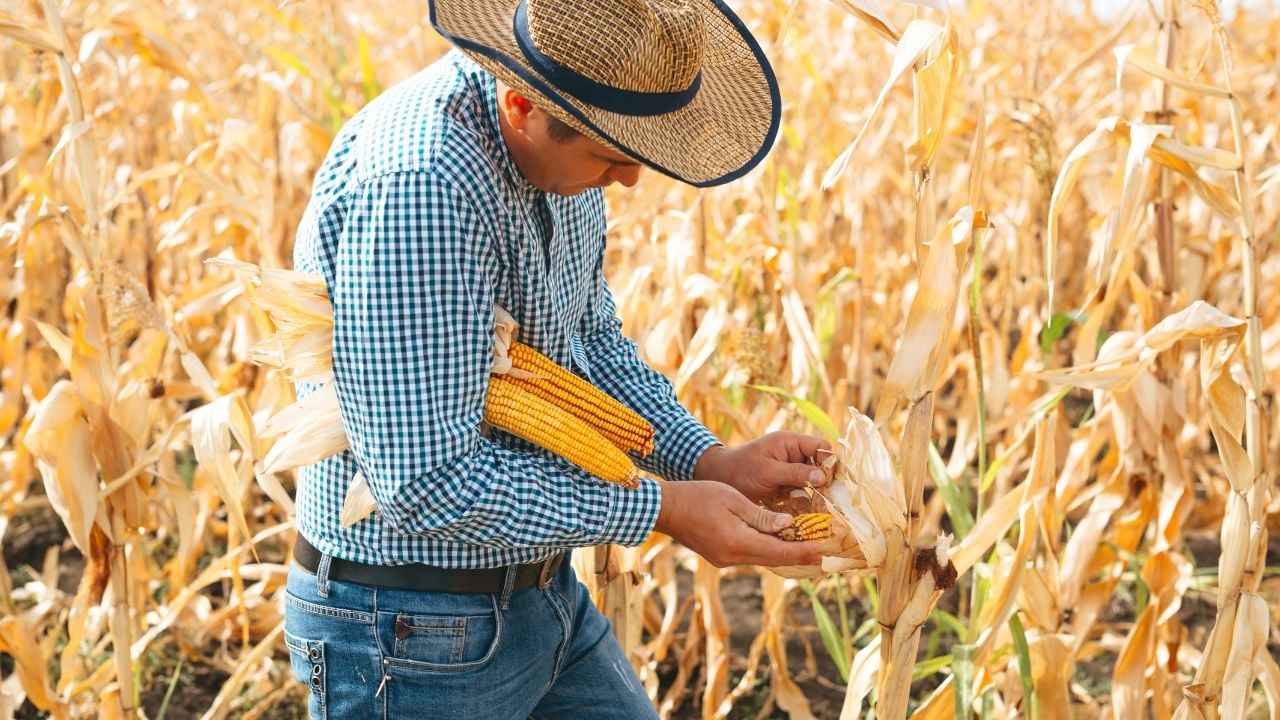
6 Things Nebraska Farmers Do Before Corn Harvest Wraps Up

Drive past a Nebraska cornfield in mid-October, and it may look like nothing is happening.
But you can bet farmers are busy.
These are the things Nebraska farmers do before corn harvest wraps up.
1. The Stalk Push Test
Farmers walk a field before the combine ever starts, pushing on cornstalks one after another to find out which acres need to come off first.
You grab the top of a stalk and push it about 30 degrees off vertical, the same check University of Nebraska Extension walks growers through.
A stalk that snaps back stays standing.
Weak stalks can’t wait.
One that stays bent, or crushes when you pinch it lower down, points to stalk rot.
If more than 10% of a field’s stalks fail the test, Extension guidance says to cut that field first.
Wait too long, and weak stalks can lodge or break, which makes harvest harder.
2. Watching the Moisture Meter
Moisture is one of the numbers farmers watch closely before a field gets cut.
That number decides how much of the crop’s value the dryer or the elevator’s scale eats up.
Corn has to come in at or under 15% moisture to skip the standard discount many elevators charge, according to the University of Nebraska’s Center for Agricultural Profitability.
Cut too early, and you pay for drying.
Wait too long chasing a lower number, and the risk of yield loss in the field goes up.
There’s no clean answer, only a trade-off you weigh field by field, day by day.
3. Checking Behind the Combine
Checking behind the combine tells you things about your corn that the yield monitor can’t.
Partway through a field, you can stop the combine and walk back to see what the ground gave up.
University of Nebraska researchers sampled fields after harvest and counted an average of 6.3 kernels per square foot left behind in 2020, and 3.1 in 2021.
A few kernels per square foot doesn’t sound like much.
It adds up fast.
Every kernel that hits the dirt instead of the tank either rots or comes back next spring as volunteer corn.
That’s a weed you’re fighting in next year’s soybean field.
So farmers check now, while there’s still time to tighten the combine, not after the whole field is already cut.
That week’s 45% figure meant that more than half of Nebraska’s corn was still in the field.
4. Keeping the Bins Cool
A farmer’s job with the corn isn’t done once it’s out of the field, and keeping it cool in the bin is a big part of what’s left.
Before it ever goes in, you scrub out the bin, the augers, and the combine.
A few kernels of old grain left behind can carry mold or bugs into whatever you just hauled in.
Once grain is sitting in the bin, the job isn’t finished.
A bin of corn at 19% moisture and 75 degrees can lose a full market grade in about five days if the aeration fans quit running.
That’s according to University of Nebraska Extension.
That’s why aeration matters once the bin is full.
Cool corn holds its grade.
Warm, wet corn turns fast, sometimes within days.
The Number Behind Safe Corn Storage
Storing your corn safely comes down to two numbers, moisture and temperature.
Corn can be stored through winter at 15% to 18% moisture if the bin stays near or below 30 degrees.
Corn headed into spring and early summer should be at 14% or lower, according to Nebraska Extension.
That same guidance says to cool the grain to near or below 30 degrees for winter storage in the northern states.
Insects are cold-blooded, so they’re barely active below 50 degrees, which is one more reason to get the bin that cold for the winter.
Keep those numbers in mind before you fill the bin this fall.
5. Firing Up the Dryer
Whether a wetter load is worth running through the propane dryer isn’t a decision a farmer makes once for the whole farm.
Corn left standing in warm, breezy weather dries down about 0.25% a day in the field, according to University of Nebraska Extension.
Push more heat through the dryer, and you can cut that wait in half.
Adding 20 degrees to the air moving through the bin roughly halves the drying time, per that same guidance.
Running the dryer harder also burns through more propane and more electricity.
That’s the cost of speed.
So you watch the moisture, watch the weather, and decide which fields are worth the extra fuel.
6. Racing the Freeze
A farmer never fully controls when the first freeze hits.
Standing corn left too long can run into trouble before it’s ever cut.
The freeze date is one reason farmers feel the pressure to keep the combine rolling in October.
In the northwest corner of the state, the median first freeze lands in late September, per University of Nebraska climate data for 1981 to 2010.
Head southeast, and you’ll find that same freeze tends to land in early October instead, per the same University of Nebraska data.
That gap means much of the state has usually seen its first freeze by mid-October.
Cold stalks don’t get stronger.
That’s why farmers push to finish the fields they already flagged during the stalk test.
A hard freeze can undo weeks of careful timing.
Psst! How does Nebraska’s corn harvest pace stack up against Iowa, Kansas, and the rest of the Corn Belt? Sort the table below to find out.
Why the Finish Line Keeps Moving
A farm’s fields don’t all ripen on the same schedule, so you won’t find one clean finish line for the whole operation.
That’s why one farmer’s harvest window rarely matches another’s.
You might drive past one farm and see a dryer running hard on one field.
The combine works dry corn in the very next field, untouched by propane at all.
A farm’s calendar rarely lines up with the county’s, or with the five-year average anybody quotes on the radio.
5 Grain Bin Dangers Nebraska Farm Families Underestimate Every Harvest
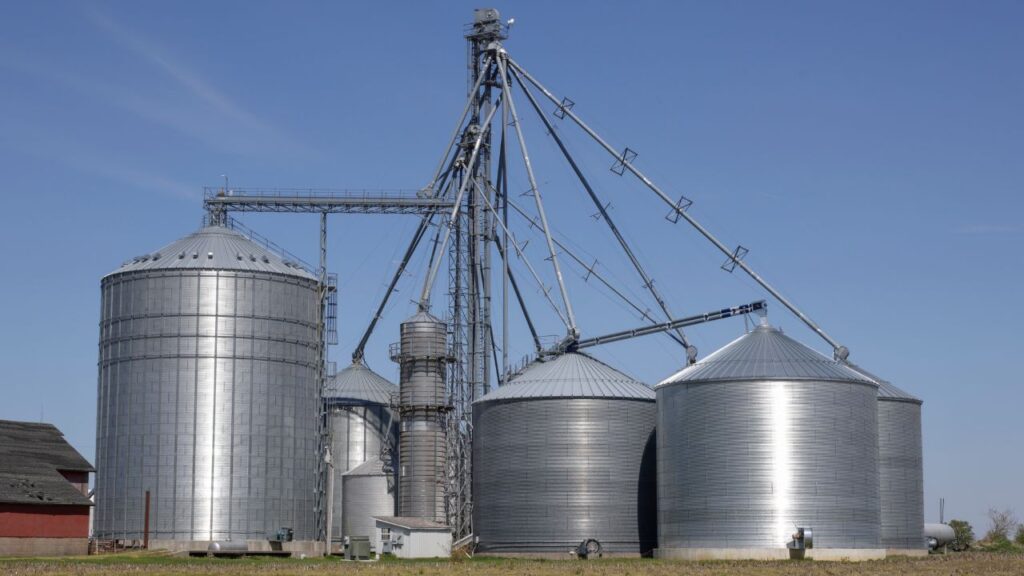
Grain doesn’t act like solid ground once a person is caught in it, and a rescuer’s strength alone isn’t likely to be enough to free them, according to OSHA.
It happens fast, since OSHA says a 6-foot-tall worker can be covered in 11 seconds.
5 Grain Bin Dangers Nebraska Farm Families Underestimate Every Harvest
6 Things Nebraskans Do Every Autumn That Tourists Find Puzzling

Memorial Stadium in Lincoln holds more than 85,000 fans on Nebraska football Saturdays.
Football is only the start of what makes a Nebraska autumn feel different to visitors.
6 Things Nebraskans Do Every Autumn That Tourists Find Puzzling
