
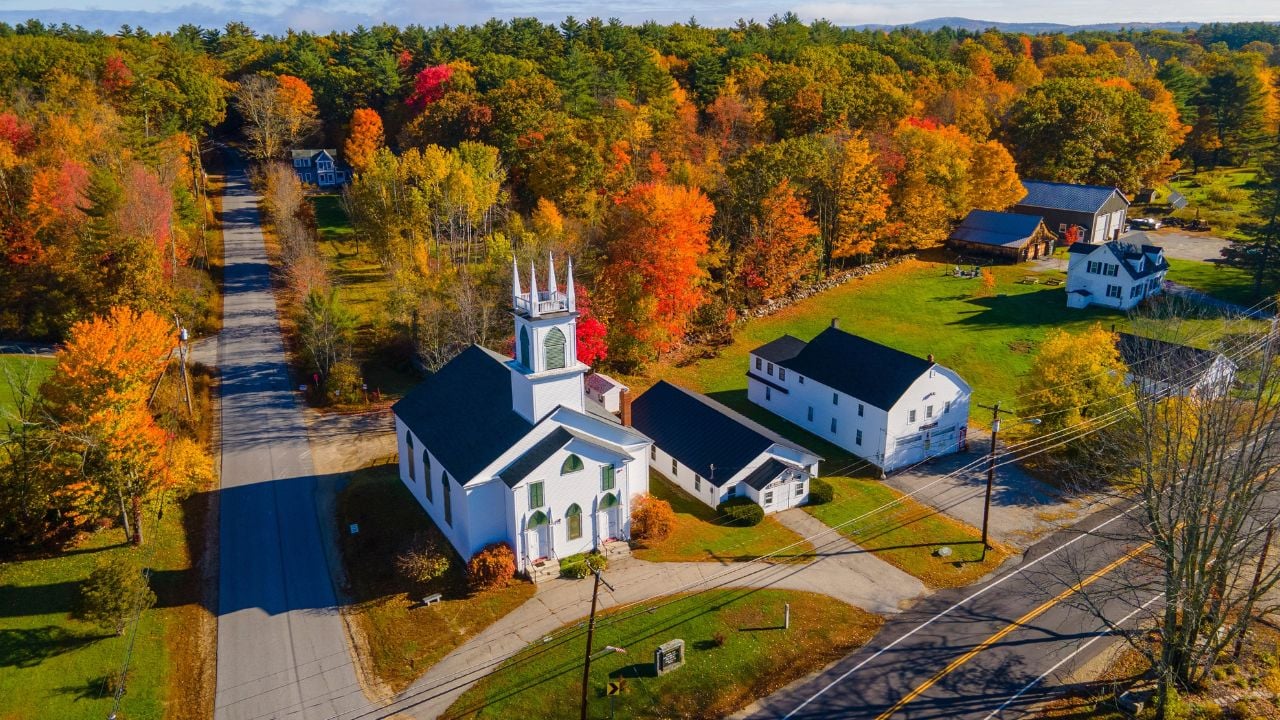
6 Things New Hampshire Towns Do Every Foliage Season

Your leaves may be glowing orange while the next town over is still green.
New Hampshire color arrives in waves, and its towns have learned to plan around that.
Here’s how those towns spend the season, so you can plan a weekend that fits the leaves.
1. Warner’s Fall Foliage Festival
Warner turns Main Street over to a volunteer festival every Columbus Day weekend.
Volunteers have run it since 1947, with no one drawing a paycheck for the work, then or now.
A crew of them pulls off a craft fair, a food fair, an oxen pull, and a woodsmen’s contest, drawing 5,000 to 7,000 people a day.
Kids get a parade through town.
A five-mile run kicks off Saturday morning, before many people have poured their coffee.
If you show up expecting a few food trucks and a raffle table, the oxen pull will catch you off guard.
A beer tent joined the lineup in 2017.
The tent has stayed every year since.
Grab a curb spot on Main Street early, and you’ll catch both.
2. Deerfield’s Four-Day Fair
Deerfield has run an agricultural fair every fall since 1876, the year the town marked its centennial with the first one.
It started as one day.
The fair grew to four, adding Sunday in 1950, and now spreads across more than 100 acres and draws more than 100,000 visitors over those four days.
You can walk the whole fairground and still miss the livestock barns, the pulling ring, and the midway in one pass.
It typically falls on the first weekend of October, ahead of the crowds still chasing color farther north.
Wear boots you don’t mind getting muddy.
3. Sandwich’s Last Fair Standing
Sandwich closes out New Hampshire’s fair season every year, always on Columbus Day weekend.
Farmers first showed oxen here in 1886.
The oxen pulling and woodsmen’s contests are still the fair’s biggest draw today.
Fairgoers packed the grounds by the thousands as early as 1899.
Turnout has only grown since.
You’ll also find an antique auto show, tractor pulls, and around 160 vendors set up in rows.
The fairgrounds themselves offer camping, so you can pitch a tent and stay the whole weekend without leaving.
If you skip the campground, plan your parking early.
New Hampshire’s Rolling Peak
New Hampshire’s peak foliage color isn’t one date on a calendar.
The state’s tourism office tracks it moving south in stages, region by region, so the week that works best for you depends on where you’re headed.
The Great North Woods usually turns first, in the last week of September.
The White Mountains follow in the first two weeks of October.
Southern and coastal towns often hold their best color until the second half of October.
By then, Warner’s festival, the Deerfield Fair, and Sandwich’s fair have all wrapped for the year.
4. Dover’s Apple Harvest Day
Dover hands its downtown to the Greater Dover Chamber of Commerce every October for Apple Harvest Day.
The chamber has run it since 1985.
More than 60,000 people show up for roughly 300 vendors, two entertainment stages, and two food courts packed into a few downtown blocks.
A 5K road race kicks off the morning, before vendors have even finished setting up their tables.
The U.S. Navy Band Northeast’s Jack Tar Brass Band has played the festival too.
Dover’s bakers and church groups sell out their apple pies fast, so get there early if you want a slice.
You’ll be circling for parking by mid-morning if you wait.
5. Berlin’s RiverFire
Berlin sets fire to 25 stacks of wood every October, right on the old logging booms that penned timber for the mills until November 1964.
The piers still stand, though the mills they once served closed decades ago.
The Union Leader put recent attendance at about 5,000 people.
An all-terrain vehicle (ATV) poker run called the Zombie ATV Poker Run kicks off the morning.
Jack-o’-lanterns line the west bank by afternoon.
You’ll hear chainsaws too, since local carvers turn logs into sculptures while the crowd watches.
Get a spot on the bank before dusk, or you’ll watch the fire over someone’s shoulder.
Psst! How ready is your next trip through New Hampshire’s foliage towns? Run through this checklist and see where you stand.
6. Laconia’s Pumpkin Tower
Laconia’s downtown fills with a glowing tower of jack-o’-lanterns every October, part of what the state now calls the New Hampshire Pumpkin Festival.
How many pumpkins does that take?
Thousands go into it, all carved by hand.
A costume parade for kids and pets runs alongside the tower, plus a 5K and 10K road race, according to the festival’s event listing.
Admission costs nothing.
You don’t need a costume to watch, though you’ll spot costumes all through the crowd.
Vendors line the streets selling cider and fried dough, and you’ll pay for those separately.
Get downtown before dark if you want a clear look at the tower before the crowd packs in around it.
10 Signs a New Hampshire Hotel or Restaurant Isn’t Pet-Friendly

A pet-friendly sign in the window doesn’t always mean what it looks like it means.
These are the signs a New Hampshire hotel or restaurant isn’t as welcoming to your dog as it claims to be.
10 Signs a New Hampshire Hotel or Restaurant Isn’t Pet-Friendly
9 Things New Hampshire Natives Miss Most Once They Live Somewhere Else
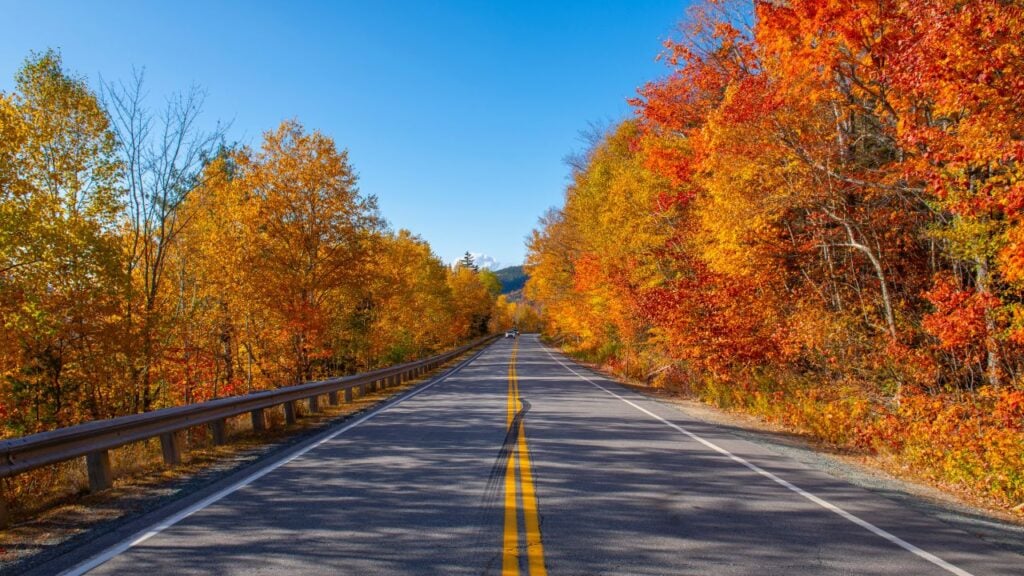
Former New Hampshire residents often find themselves missing small details long after they’ve packed up and moved.
These are the things New Hampshire natives miss most once they’re living somewhere else.
9 Things New Hampshire Natives Miss Most Once They Live Somewhere Else
