
6 Things That Are Illegal to Throw Away in Both North Carolina and South Carolina

Maybe you’ve been waiting to tackle that pile of garbage in your garage for a free Saturday, and your curb looks like the easy answer.
The law says not all of it belongs there.
These are the things that are illegal to throw away in both North Carolina and South Carolina.
Note: This is general information, not legal advice. Disposal rules are subject to change.
1. Used Motor Oil
Used motor oil is illegal to throw away in either Carolina.
North Carolina’s landfill ban names used oil outright, and no person may knowingly dispose of it in a landfill.
South Carolina’s law bars you from putting used oil in municipal solid waste, which is the regular trash, or otherwise discarding it.
The exception is delivering it to a used oil collection, energy recovery or recycling facility.
In North Carolina, many household hazardous waste collection centers accept used oil, and so do many auto parts retailers.
South Carolina’s Department of Environmental Services (DES) lists Advance Auto Parts, AutoZone, NAPA Auto Parts, O’Reilly Auto Parts, Pep Boys, Walmart and Jiffy Lube as participating retailers.
DES encourages residents to call ahead to make sure a location is a participating retailer.
DES also tells you to drain the oil into a clean, leak-proof container with a tightly sealed cap and to keep other fluids, water included, out of it.
2. Lead-Acid Car Batteries
North Carolina made it illegal to dispose of a lead-acid battery in a landfill in 1991, and South Carolina’s law keeps a used one out of mixed trash too.
Under North Carolina law, a retailer that sells you a lead-acid battery has to take your old one for recycling.
South Carolina bars you from putting a used lead-acid battery in mixed trash or otherwise discarding it.
The exceptions are delivery to a battery retailer or wholesaler, a registered collection or recycling facility, or a permitted secondary lead smelter.
In South Carolina, the fine can reach $200, and each improperly discarded battery counts as a separate violation.
Why the Word Knowingly Matters
Both states write their landfill bans around the word knowingly, which puts the focus on what you knowingly put into trash headed for a landfill.
North Carolina’s statute says the accidental or occasional disposal of small amounts of prohibited waste by landfill isn’t a violation.
South Carolina’s white goods and yard trash rules likewise apply to waste intended for collection or disposal at a municipal solid waste landfill.
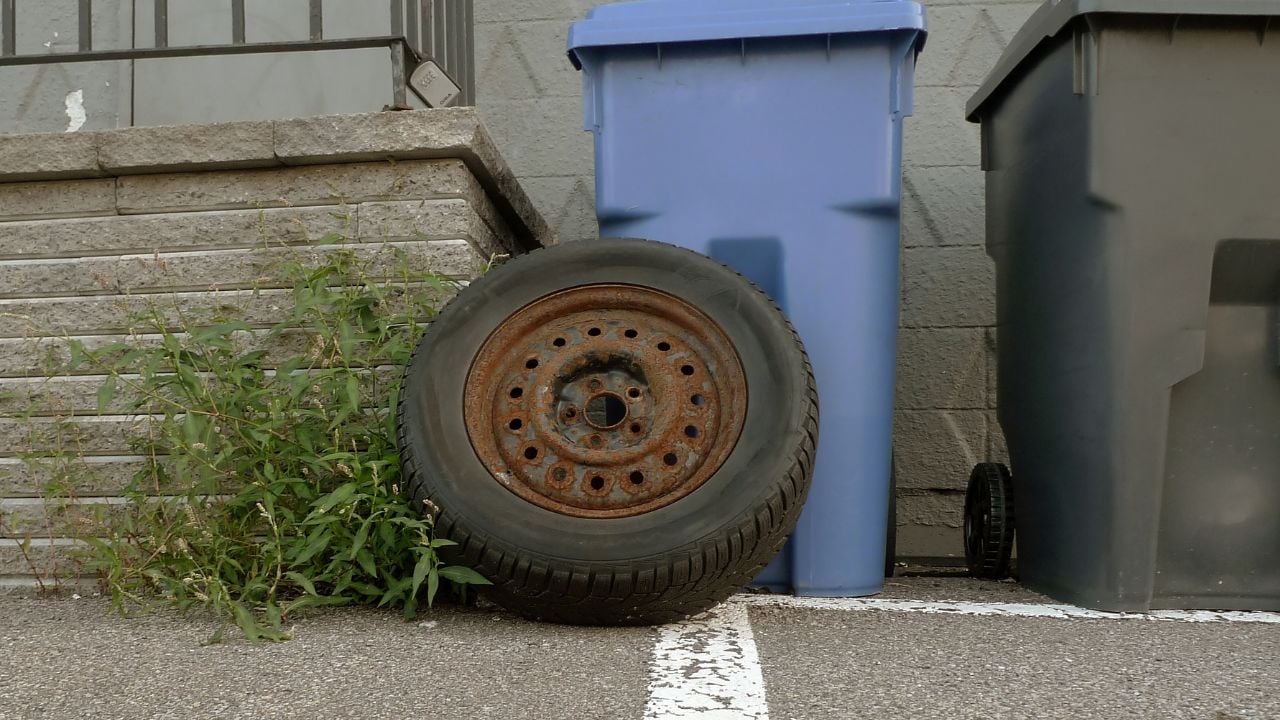
3. Whole Tires
Both Carolinas keep whole tires out of landfills.
North Carolina’s ban covers whole air-filled tires but not whole solid rubber tires.
Each North Carolina county is responsible for providing for the disposal of scrap tires within its boundaries, DEQ says.
South Carolina’s Department of Environmental Services says the state’s Solid Waste Policy and Management Act prohibits the disposal of whole tires in landfills.
The same law requires counties to manage waste tires generated within the county through collection and enforcement programs.
If you have whole tires to dispose of, your county’s tire program is the place to start in both states.
4. Large Appliances
If you’re hauling out an old fridge or washer, the legal term for it is white goods, and both states keep white goods out of landfills.
South Carolina’s definition covers refrigerators, ranges, water heaters, freezers, dishwashers, trash compactors, washers, dryers, air conditioners and commercial large appliances.
North Carolina’s landfill disposal ban lists white goods too.
DEQ’s white goods page says the term includes refrigerators, ranges, water heaters and freezers.
In South Carolina, you can’t include white goods with other trash bound for a landfill, and no landfill may accept them.
South Carolina’s fine can reach $200 for each appliance.
Retailers that sell white goods in South Carolina must post a written notice at their place of business telling customers the items may not be landfilled.
DEQ says North Carolina collects a $3 disposal tax on white goods at the retail level and redistributes the money to counties through the Department of Revenue.
5. Yard Trash
Yard trash headed for a landfill is restricted in both Carolinas, with room left for composting and approved sites.
North Carolina bans yard trash from landfills except those approved to take it under state rules.
A disposal area can also accept source-separated yard trash if it runs separate yard trash composting facilities.
North Carolina’s local program directory lets you look up what your city or county accepts and where to bring it.
South Carolina defines yard trash as solid waste made up solely of vegetative matter from landscaping maintenance.
South Carolina’s rule is about mixing. You can’t knowingly mix yard trash with other trash headed for a landfill or resource recovery facility.
A landfill there can’t accept loads made up mostly of yard trash at the gate unless it composts that waste at a separate facility or contracts for the composting.
South Carolina’s DES points to composting at home and notes that many local governments offer workshops, often with chances to buy compost bins.
6. TVs and Computers
Both states keep the old TV or computer you’re replacing out of landfill-bound trash.
North Carolina has banned the disposal of computer equipment and televisions since July 1, 2011.
South Carolina’s electronics law took effect the same day.
It bars consumers from discarding a covered computer, monitor, printer or television in trash headed for a landfill.
North Carolina’s ban reaches computers, monitors, printers, scanners and televisions.
Most North Carolina counties and some municipalities offer electronics collection through public drop-off locations.
DEQ adds that there are many opportunities to recycle through manufacturer or retail take-back programs.
In South Carolina, DES says each of the state’s 46 counties, as well as some municipalities, provides collection programs.
DES says many retailers and most manufacturers offer take-back programs too, though its list of them isn’t an endorsement of any retailer, manufacturer or program.
If your computer still works, North Carolina’s DEQ calls local charities a possible option, and South Carolina’s DES says to consider donating a working product to a non-profit organization.
Psst! Before you haul anything to the curb, take our Carolina recycling quiz and see how many you can get right.
Quiz
Carolina Trash IQ
Answer these questions on recycling, hazardous household waste and landfills in the Carolinas. We bet you can’t get them all right. Prove us wrong?
According to South Carolina’s Department of Environmental Services, about what share of what South Carolinians throw away each year is yard trimmings and food waste?
North Carolina Adds Lithium-Ion Batteries on Dec. 1
North Carolina's list of things you can't throw away grows on Dec. 1, 2026, when lithium-ion batteries join it.
That list already runs past these six, with aluminum cans, plastic bottles and oyster shells on it too.
South Carolina's DES, for its part, says batteries can and should be recycled and warns that improper disposal, particularly of batteries containing lithium, can cause fires or explosions.
North Carolina's Department of Environmental Quality (DEQ) says rechargeable batteries don't belong in trash or recycling carts.
You can bring them to a retailer drop-off, or contact your city or county about battery drop-off sites.
DEQ's list of devices with rechargeable batteries includes cellphones, tablets and laptops, power tools, and electric scooters and bicycles.
7 Hardee's Biscuit Orders North Carolinians Grew Up On

Hardee's says it opened its very first restaurant in Greenville, North Carolina, in 1960.
Many North Carolinians have a favorite order from childhood.
7 Hardee's Biscuit Orders North Carolinians Grew Up On
10 Things South Carolinians Do When It Snows Once Every Few Years

For some South Carolinians, snow is rare enough to feel like an event.
Many South Carolinians have a go-to way to celebrate when it finally shows up.
10 Things South Carolinians Do When It Snows Once Every Few Years
