
7 Assumptions About Wisconsin Winters That Locals Correct

You’ve lived through enough Wisconsin winters to think you’ve got this one figured out.
Maybe you do. Or maybe a few things you take for granted are only half true.
Here’s what the records say about some of them.
1. Equal Snow Statewide
Out-of-state visitors may picture the same winter snow from Kenosha to Bayfield.
The snow isn’t that even.
Southern counties average near 30 inches of snowfall, according to the Wisconsin State Climatology Office.
Totals of more than 150 inches are common along the counties immediately south of Lake Superior.
That can mean about five times as much snow for you to shovel up north as you’d see in the south.
Between late October and early May, measurable snow falls on nearly 70 days on average.
South central Wisconsin sees only 40 days of snow a year.
2. Around-the-Clock Plowing
You might figure a winter storm sends plows onto every highway all night.
The Wisconsin Department of Transportation (WisDOT) says plows usually operate 24 hours a day on higher-volume roadways when conditions warrant.
On lower-volume highways, though, plows usually work between 4 a.m. and 10 p.m., when conditions warrant.
The hours differ by highway.
In weather severe enough that plows make no headway or can’t operate safely, the trucks may come off the road until conditions improve.
With 754 snowplow routes, the average route takes about 2½ to 3 hours to complete.
Some cycle times can run as long as four hours.
County highway departments determine when and how to respond to a storm.
So the plows you see depend on your county.
Psst! How much do you know about winter? Take our quiz and see if you can ace it.
Quiz
Frozen North Trivia
Answer ten questions on record cold, Great Lakes ice and Wisconsin winter history. We bet you can’t get them all right. Prove us wrong?
What was the kickoff temperature at the Ice Bowl in Green Bay on December 31, 1967?
3. Lake Effect Only in the North
Winter lake-effect snow may sound like a Lake Superior matter.
On February 15 and 16, 2021, a heavy lake-effect band moved into southeastern Wisconsin, the National Weather Service in Milwaukee/Sullivan reports.
Snowfall along the Lake Michigan shore ranged from 10 to 16 inches in Kenosha, Racine and Milwaukee counties.
Kenosha's west side picked up about 14 inches.
Caledonia had about 11.
Farther inland, north of Milwaukee and west of Interstate 41, totals were only 1 to 4 inches.
That's a sharp cut off, so your total depended on how far inland you lived.
4. Road Salt at Any Temperature
If you trust winter road salt to work in any deep freeze, WisDOT's numbers say otherwise.
The minimum practical range for salt is a pavement temperature of 15-20°F and above.
That's pavement temperature.
The air temperature you check can differ from it by as much as 20 degrees Fahrenheit.
Salt will still melt snow and ice down to a pavement temperature of -6°F, the department says.
Even so, it can melt over five times as much ice at 30°F as at 20°F.
When pavement drops below 15°F, county highway departments will typically stop straight salt applications and begin adding other chemicals, such as calcium chloride or magnesium chloride.
5. Winters That Never Change
After enough winters, you may feel the season never changes.
The records disagree.
The 2022 State Climate Summary for Wisconsin says temperatures have risen more than 2°F since the beginning of the 20th century.
That warming has been concentrated in winter and spring, while summers have warmed less.
The State Climatology Office reports winter temperatures up 5 to 6°F across much of the state.
In Madison, ice cover on Lake Mendota has shown a consistent downward trend in duration since the late 19th century.
If you're waiting on a -40 morning, Wisconsin has seen far fewer -40 degree temperatures in recent decades.
6. Safe Ice After a Cold Snap
A few days of hard winter cold can make you feel a frozen lake is safe to walk on.
The Wisconsin Department of Natural Resources (DNR) says there's no such thing as 100 percent safe ice.
You can't judge ice strength by one factor, such as its appearance, age, thickness, temperature or snow cover.
One factor isn't enough.
Ice strength is based on a combination of several factors, and they can vary from water body to water body.
The DNR doesn't monitor local ice conditions or the thickness of the ice.
7. Ice Caves Every Winter
You'll need more than a cold winter to reach the Apostle Islands ice caves.
The National Park Service's March 2026 update lists one day of access that year.
Before that, stable ice allowed access only for a brief nine-day period in 2015.
From 2000 to 2023, the mainland ice caves were open for only 2 percent of all days.
That's a narrow window.
Most ice cave events since 2000 occurred in four outlier years: 2004, 2008, 2009 and 2014.
The caves have only been accessible during years when Lake Superior's ice coverage exceeded 90 percent.
Stable ice also takes extended periods of extreme cold, ideally below zero, paired with little or no wind.
Wind and waves can break up that ice in a matter of hours, the park warns.
From the Meyers Beach parking area, you'd walk at least 1.5 miles across the frozen lake to reach the caves.
9 Things Wisconsinites Put Away the Week the Boats Come Out of the Water
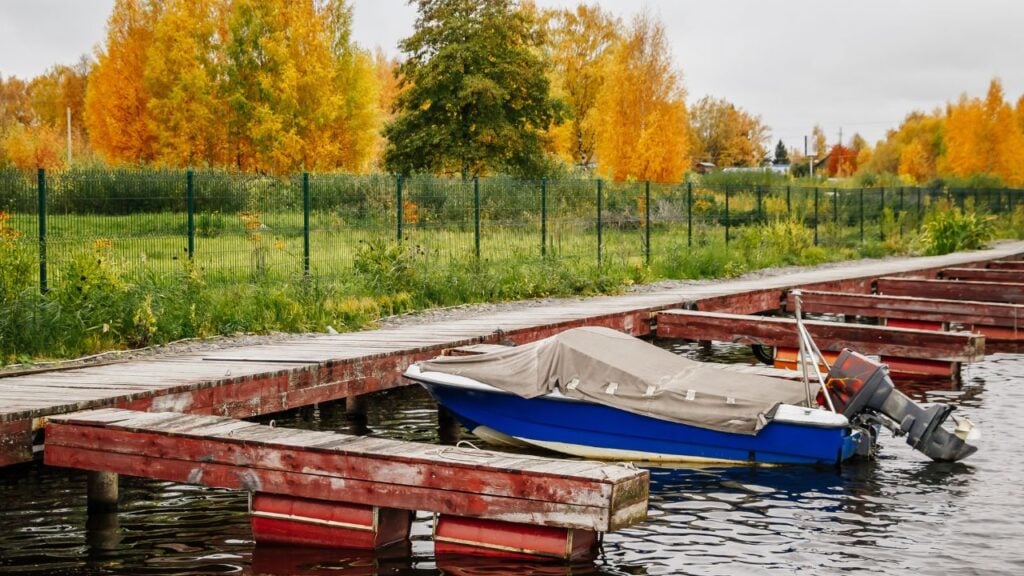
Once a boat comes out of the water, the rest of the season's gear has to go somewhere, too.
A few things on that list are easy to forget.
9 Things Wisconsinites Put Away the Week the Boats Come Out of the Water
8 Aldi Mistakes Wisconsinites Repeat Every Week

Some Aldi mistakes are easy to make, even for careful shoppers.
Others are harder to spot.
