
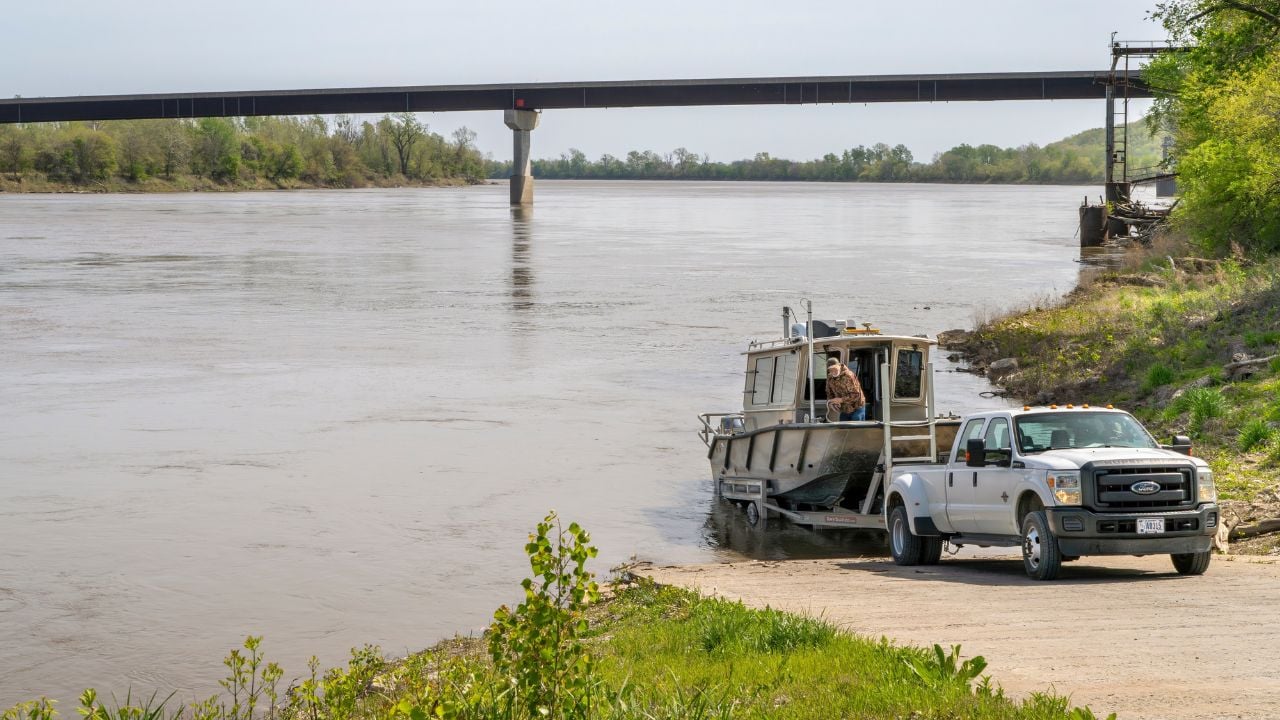
7 Boat Ramp Rules That Confuse First-Time Minnesota Visitors

Minnesota’s DNR runs more than 450,000 watercraft inspections a year at public boat launches.
A first-timer backing an Iowa or Wisconsin trailer down a Minnesota ramp often encounters rules that never came up back home, starting before the boat touches water.
These are the boat ramp rules that confuse first-time Minnesota visitors.
Note: This is general information, not legal advice. Boat ramp and watercraft rules are subject to change, so confirm the current requirements with the Minnesota Department of Natural Resources.
1. Pulling the Plug Too Late
Minnesota’s drain plug law doesn’t wait until a boater gets home.
State law requires the plug out, the bilge drained, and the livewell emptied before a boat ever leaves the water access.
That’s the part visitors miss.
Arrive at the next lake with the plug still in, and the rule’s already broken, since it has to stay out for the entire drive.
A citation can follow.
Anoka County posts a self-serve weed-removal rack right at its boat ramps so a boater can scrape a trailer clean before pulling away.
What Minnesota’s Drain Plug Law Covers
Minnesota’s drain plug law covers more than the plug boaters usually picture.
It reaches livewells, bilges, ballast tanks, and portable bait containers.
Every one of those has to sit open for the entire drive, not just at the ramp.
Pontoons get a pass, since those compartments hold air instead of water and don’t need a plug pulled unless they’re damaged.
A missing plug isn’t an excuse either, since marine dealers sell replacements for $4 to $15 that install in minutes.
2. Assuming Every Ramp Is Free
Nearly every public water access in Minnesota skips the launch fee entirely.
They’re open 24 hours a day too, unless a sign at the ramp says otherwise.
That free ride ends the moment a ramp sits inside a state park.
That’s the catch.
State parks require a vehicle permit to park there at all, boat trailer or not, running $7 for a single day or $35 a year.
Not every ranger station is staffed seven days a week, either.
A boater arriving early or late can end up buying that permit online at an empty pay station instead of from a person.
A ramp two miles down the road might cost nothing, while the state park entrance next door charges every car that pulls in.
3. Trusting an Out-of-State Registration Forever
Conservation officers in Minnesota can ask to see a boat’s registration the moment it launches, not months down the road.
State rule requires that certificate to sit on board and stay available for exactly that request.
Minnesota exempts an out-of-state boat from that requirement for up to 90 days.
That exemption only holds if the home state doesn’t require licensing that type of watercraft in the first place.
Ninety days sounds generous.
A summer at the family cabin runs longer than that.
The clock doesn’t reset with a quick trip back across the border.
Cross that line, and Minnesota expects its registration and decals on the boat.
A boater who waits until that deadline can’t fix it at the ramp, since a new Minnesota registration typically takes three to four weeks to arrive by mail.
Once issued, it covers three calendar years before it needs renewing.
4. Outrunning Your Boating Card’s Clock
A dock attendant at a Minnesota marina or resort will ask to see a rental boater’s card before handing over the keys.
A conservation officer can ask to see the same card out on the water.
Minnesota grants a separate grace period to a visitor running their boat, and it has nothing to do with the rental counter.
A nonresident operator can run a motorboat or personal watercraft on Minnesota’s water for up to 60 days without a Minnesota Watercraft Operator’s Permit.
That’s only true while they still meet their home state’s requirements.
Nothing extends it.
The clock matters more every year.
Minnesota is phasing the permit in by birth year, and it covers every operator born after June 30, 1987, by 2028.
A card that worked fine in June can stop covering the same visitor by August.
5. Arguing With the Inspector
Arguing with a watercraft inspector at a Minnesota boat ramp rarely works out for a first-time visitor.
State law gives inspectors the power to act on what they find during more than 450,000 inspections a year.
An inspector can deny a boat’s launch outright, or order it decontaminated before it ever touches the water, if they spot a problem.
Refuse the inspection, and the boat doesn’t launch.
The rule doesn’t bend.
The inspectors are DNR-certified, not volunteers waving cars through, and they’re trained to catch what a visitor’s eye would miss entirely.
6. Arriving After Hours
A boat launch in Minneapolis locks up the moment no inspector’s on duty.
Three of the city’s lake accesses, Bde Maka Ska, Lake Harriet, and Lake Nokomis, require an aquatic invasive species (AIS) inspection every single time a boat launches.
Show up when no inspector’s on duty, and the gate stays shut.
Locked means locked.
That rule runs from May 1 through December 1 every year, so it’s still very much in effect this fall.
A canoe or kayak carried in by hand skips the inspection, but any trailered boat doesn’t get that pass.
Psst! Think you’re ready to launch on a Minnesota lake? Run through this checklist and see where you stand.
7. Bringing the Wrong Motor to a Minneapolis Lake
No gas-powered boat motor may run on Minneapolis’s city lakes, regardless of size or horsepower.
A gas motor has to stay propped up and out of the water the entire time a boat is on one of those lakes.
The Minneapolis Park and Recreation Board allows electric trolling motors instead, and no permit is required to run an electric trolling motor.
Nothing else touches the lake.
A visitor towing a normal fishing boat can back all the way down the ramp before finding this out.
Minneapolis has run that electric-motors-only rule since 1960, according to the state’s summary of local water regulations.
9 Reasons People Are Leaving Minnesota in 2026

Minnesota has lost a net 47,865 residents to other states since 2019, a bigger drain than 33 other states saw over the same stretch.
These are the reasons so many Minnesotans are choosing somewhere else in 2026.
9 Reasons People Are Leaving Minnesota in 2026
11 Things Minnesotans Say That Baffle Everyone Else

Minnesotans didn’t pick up their accent from the movie Fargo, since Fargo’s writers borrowed it from them.
A century of Scandinavian settlers around the Iron Range and the Twin Cities left behind a vocabulary that still confuses anyone passing through for the first time.
