
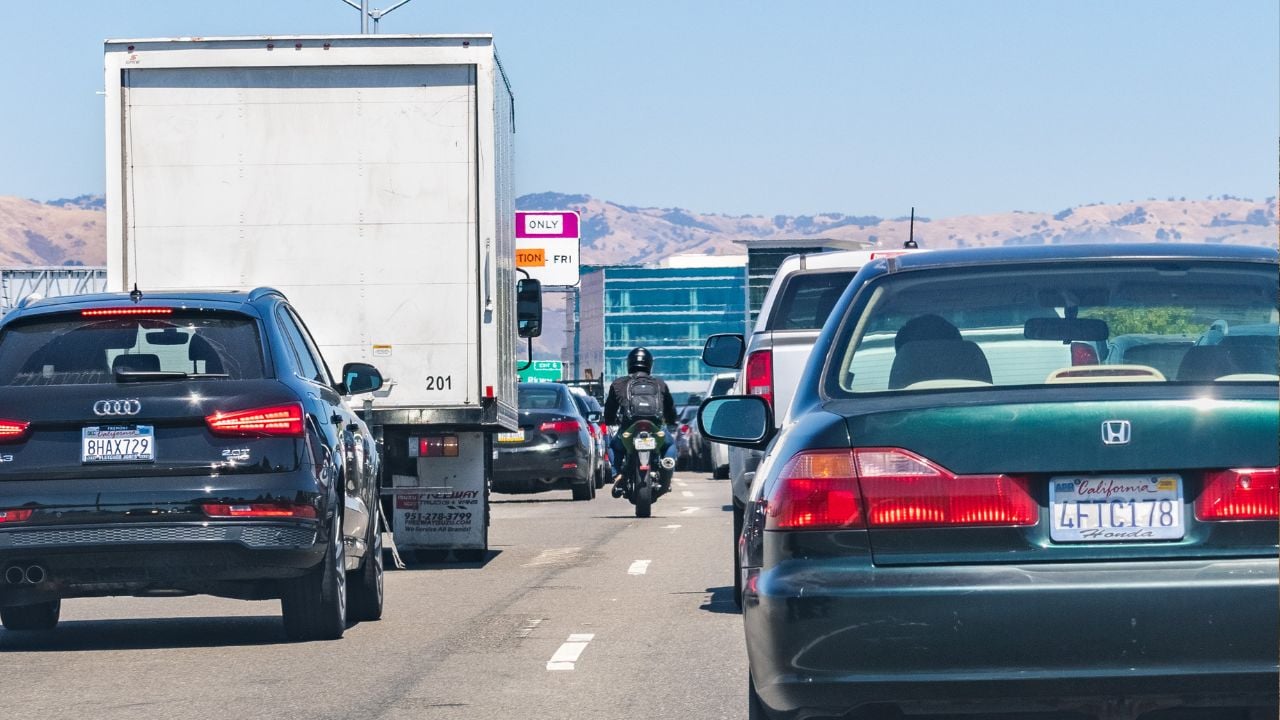
7 California Traffic Laws Drivers From Other States Break on Day One

Montana has no statewide law against texting behind the wheel.
California does, and it goes much further than that.
These are the California traffic laws that catch drivers from other states off guard on their very first day behind the wheel.
Note: This is general information, not legal advice. Traffic laws, fines, and deadlines are subject to change, so confirm current rules with the California Department of Motor Vehicles (DMV).
1. Not Stopping for an Unmarked Crosswalk
California treats every intersection like a crosswalk, painted lines or not.
A driver has to yield to a pedestrian crossing within any marked crosswalk, or within any unmarked crosswalk at an intersection, a rule spelled out in Vehicle Code Section 21950.
No paint required.
A driver from North Carolina learns the opposite rule at home, where state law flips the presumption: A pedestrian crossing anywhere other than a marked crosswalk has to yield to the car, not the other way around.
Bring that habit to a California intersection, roll through while someone steps off the curb, and an officer doesn’t need paint on the road to write the ticket.
Every corner counts.
California also expects the driver to slow down or stop well before the person reaches the lane, not just avoid hitting them at the last second.
2. Holding Your Phone at a Stoplight
California’s hands-free law bans holding a phone at all while driving, not just texting.
Only a phone mounted on the windshield, dashboard, or center console is allowed under Vehicle Code Section 23123.5, and a driver gets a single swipe or tap to answer a call.
Picking it up to read a text at a red light still counts as driving.
Montana has no statewide texting ban of any kind for drivers, the last state in the country without a texting ban.
That same habit becomes a moving violation the moment a Montana plate crosses into California.
Not a warning, either.
An officer can write the ticket on sight, whether the driver was calling, texting, or just checking a map app by hand.
3. Leaving a Back Seatbelt Unbuckled
Every seat in California carries the same seatbelt rule, front and back, for every rider.
An officer can pull a car over for an unbuckled belt alone, no other violation needed, since Vehicle Code Section 27315 makes it primary enforcement.
New Hampshire has no such law for anyone 18 or older, in any seat, making it the only state in the country without a seatbelt law.
No fine, no stop, nothing.
A New Hampshire transplant’s teenage passenger climbing into the back seat unbuckled is a habit built at home.
In California, that habit lands on the driver, not the passenger.
4. Ignoring the New Move Over Rule
Illinois drivers barely react to a stranded car with its flashers on, and a habit built there turns into a stop the moment it crosses into California.
Illinois limits its version of the move over law to police, fire, tow, and other authorized vehicles under its own Illinois Compiled Statutes (ILCS) section, 625 ILCS 5/11-907, so passing a stranded family sedan with its flashers on draws no ticket there.
California widened its own move over law at the start of 2026.
Assembly Bill 390 amended Vehicle Code Section 21809 so it now covers any vehicle stopped on the shoulder with hazard lights on, not only police cars, tow trucks, and ambulances.
A driver has to move over a lane, or slow down if changing lanes isn’t safe.
Same move in California, and the fine is capped at $50 under that statute.
A citation lands either way.
What Counts as “Stopped” Under California’s Rule
California’s move over law now applies the moment any vehicle sits on the shoulder with its hazard lights flashing.
It doesn’t matter whether the driver is a stranded commuter, a tow operator, or a California Highway Patrol (CHP) cruiser.
The trigger is the flashers, not the type of vehicle wearing them.
A driver who can’t safely change lanes still has to slow down well below the posted limit until the shoulder is clear.
5. Blocking a Lane-Splitting Motorcycle
California is the only state whose vehicle code spells out lane splitting as legal for motorcycles.
Riding between rows of stopped or moving cars in the same lane is exactly what Vehicle Code Section 21658.1 defines, though the statute stops there and leaves education guidelines to the California Highway Patrol.
CHP’s own driver guidance goes further: Deliberately blocking a splitting motorcyclist or opening a car door into their path is illegal.
The door is covered by Vehicle Code Section 22517‘s ban on opening a door into moving traffic.
Blocking falls under the same unsafe-lane-change rule, Vehicle Code Section 21658, that applies to any driver changing lanes without checking first.
A rule all its own.
Texas outlawed lane splitting for motorcyclists entirely in 2023, so the situation never comes up there.
A Texas driver’s instinct to nudge left and box out a motorcycle squeezing past is second nature at home.
That same nudge in California is its own violation, separate from whatever caused it.
Psst! How much do you know about California traffic law myths? Take our flip cards and see how many you can call correctly.
6. Riding Solo in the Carpool Lane
California gives a solo driver no way to buy into the carpool lane the way Georgia does on its I-85 Express Lanes, where a toll through the Peach Pass system substitutes for a headcount.
That toll option disappears the moment the car crosses into California.
Carpool lanes in California still enforce a strict occupancy minimum, and it just got stricter for solo hybrid and electric drivers.
The diamond lane’s minimum headcount comes from Vehicle Code Section 21655.5.
The old workaround for solo hybrid and electric drivers is gone.
A decal no longer helps.
California’s Clean Air Vehicle decal program ended October 1, 2025, after Washington declined to extend the federal authorization behind it.
A solo driver caught in a carpool lane now risks a fine of $490, decal or no decal.
No toll makes up the difference in a California carpool lane.
7. Skipping California’s 10-Day License Deadline
California doesn’t give new residents much runway.
A new resident gets 10 days to get a California driver’s license before driving legally requires it, a deadline set by Vehicle Code Section 12505.
Ten days, no grace period.
Vehicle registration follows its own clock, due within 20 days of becoming a resident.
Texas gives new residents 90 days before requiring a Texas license, and 30 days to register a car.
A driver who moved from Austin and planned to handle paperwork “sometime this month” is already weeks behind the California clock before the moving boxes are unpacked.
How Fast the Points Pile Up
Every driving ticket in California feeds into a point total, and the math surprises people who’ve never seen it explained.
Under Vehicle Code Section 12810, a standard moving violation like speeding or a cell phone ticket adds one point to a driving record.
The first ticket counts too.
Hit-and-run and driving under the influence (DUI) convictions cost two.
Rack up four points in 12 months, six in 24, or eight in 36, and the DMV’s Negligent Operator Treatment System moves toward an order of probation that includes a six-month suspension.
Two tickets in a bad month can put a new driver closer to that line than they’d guess.
Where a driver learned to drive doesn’t change the point count.
An out-of-state habit that draws a ticket in California adds the same point as any other, counted from the date the citation lands, not the date someone crossed the state line.
11 Things Californians Miss Most After They Leave the State

Leaving California looks great on a spreadsheet, right up until February, when the strawberries in a new state’s produce aisle taste like water.
A smaller mortgage doesn’t replace everything a Californian gets used to.
11 Things Californians Miss Most After They Leave the State
9 California Beach Towns Locals Love (and 4 Tourists Ruin)
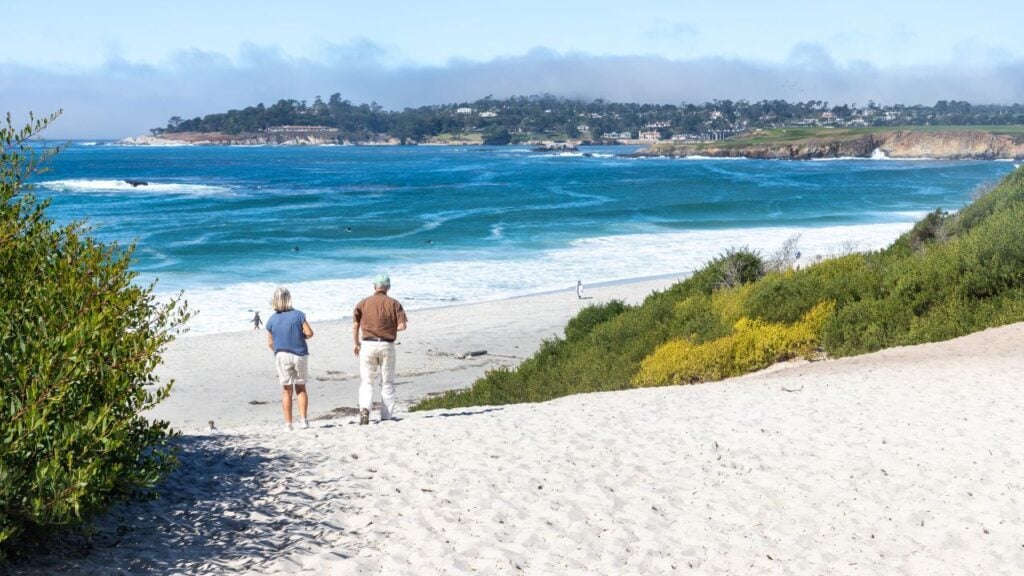
In Laguna Beach, a tourist circles the same block for the fourth time chasing a parking spot that isn’t there.
A local ninety minutes north parks outside a Cayucos bakery without giving it a second thought.
