
7 Chicago Hot Dog Rules Illinoisans Enforce on Out-of-Staters

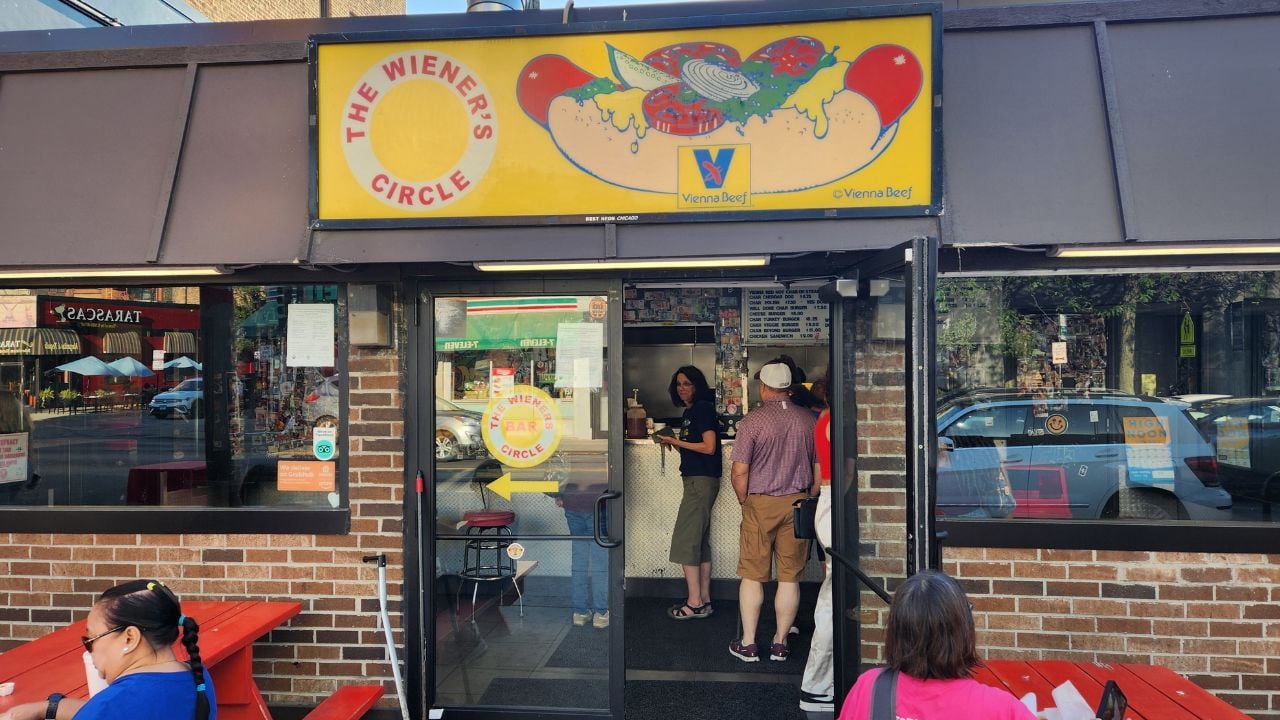
Order a hot dog wrong at Chicago’s Wiener’s Circle, and the whole line will hear about it.
Many out-of-staters don’t know the rules going in.
These are the rules Illinoisans enforce on anyone who didn’t grow up ordering a hot dog this way.
No Ketchup, Ever
Chicago hot dog stands treat ketchup as a threat to the whole build.
Ask for a squeeze bottle at many stands, and the answer is a look, not a bottle.
Former Chicago resident Barack Obama summed up the local standard years ago: Ketchup on a hot dog isn’t acceptable past the age of 8.
A handful of stands settle the argument before it starts and never stock the bottle at all, so there’s nothing to hand over even to a visitor who insists.
Push the issue, and the person behind the counter will explain the rule on the spot, politely or not.
The Wiener’s Circle Roasts Newcomers
The Wiener’s Circle, a Chicago hot dog stand on Clark Street, saves its sharpest insults for anyone who orders like a first-timer.
The Lincoln Park stand opened in 1983, and a co-owner started shouting at distracted customers to get their attention a few years later.
The bit stuck.
Staff and regulars now trade insults with anyone who fumbles an order, especially late at night.
A visitor who hesitates over the toppings or asks for something off the classic build becomes an easy target.
Every time.
The stand has famously roasted out-of-town comedians and National Football League (NFL) players passing through Chicago on camera for ordering wrong.
It treats an anonymous first-timer exactly the same way.
Chicagoans consider it a rite of passage, not a bad night out.
Say Nothing, Get Every Topping
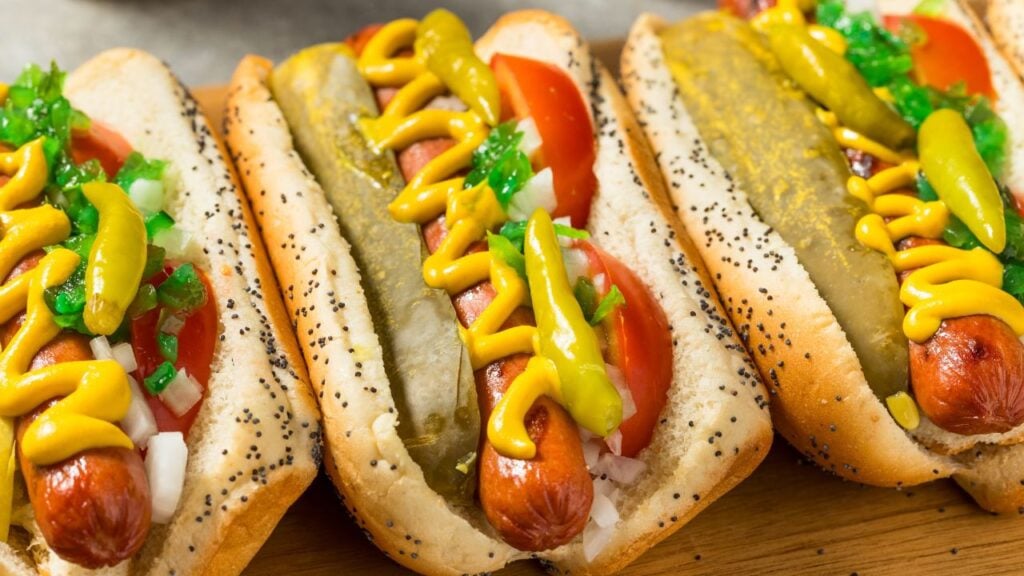
A Chicago hot dog vendor builds the classic seven-topping hot dog by default, whether a customer asks for it or not.
Mustard, relish, onion, tomato, a pickle spear, sport peppers and a dash of celery salt land on the bun in one motion, a build Chicagoans call getting it dragged through the garden.
Ask what comes on a Chicago hot dog, the way an out-of-town visitor sometimes does, and a counter worker will point you to the unwritten rules every stand in the city follows.
Say nothing at the counter, and that’s exactly what shows up in the wax paper.
Speak up first.
Otherwise, expect to pick toppings off after the fact, one by one, a fumble that marks a customer as new to the city.
Regulars name their exceptions before they reach the register.
Chicagoans treat that as the only polite way to customize a hot dog, and they expect a first-time visitor to catch on fast.
Sport Peppers Ride Along Automatically
Sport peppers ride along on every Chicago hot dog unless a customer says otherwise.
These small, pickled peppers carry noticeable heat, not just tang, hitting as much as 23,000 Scoville units, hotter than many jalapeños.
Vendors add them to the build without asking first, the same way they add mustard or onion.
Nobody warns you.
Sport peppers barely turn up on shelves outside the Chicago area, so out-of-staters rarely know the heat is coming before the first bite.
When a visitor reacts, Chicagoans don’t apologize for it.
They’ll point out the peppers are just part of the hot dog.
The fix is asking before the order goes in, not after the first bite.
Order It Grilled and Get Redirected
Ask a Chicago hot dog stand to grill your order, and the counter will correct the name before they correct the order: That’s a char dog, not a Chicago dog.
A char dog swaps the classic steam or boil for open flame, which chars the natural casing and changes the flavor completely.
The classic build only counts with an all-beef, natural-casing frank cooked the traditional way.
Vienna Beef set that standard at the 1893 World’s Fair, when two Austro-Hungarian immigrants sold their all-beef franks to fairgoers and never left the city.
The company’s frank still delivers a distinct snap when you bite into it.
Different order, different hot dog.
Chicagoans notice fast when a stand cuts corners with a bland, boiled hot dog that has no casing to bite through.
They’ll call that a hot dog with Chicago toppings, not a true Chicago hot dog, and the distinction matters enough that a stand will say so to a visitor’s face.
Steamed Poppy Seed, Never Toasted
A Chicago hot dog’s bun is as fixed as everything piled on top of it.
It has to be a steamed poppy seed bun, a tradition dating to 1909, when a Polish immigrant baker opened his Chicago bakery, according to the Chicago Tribune.
The steamer decides.
A toasted or plain bun turns the whole hot dog into something else entirely.
An out-of-stater who asks for it toasted anyway hears the same answer every time: This stand steams it, and that’s the only way it comes.
Chicagoans expect that tender, steamed give with a little crunch of poppy seed on top.
They notice fast when a vendor swaps it out.
Gene & Jude’s Gets a Pass
Gene & Jude’s, a Chicago-area hot dog stand in west suburban River Grove, breaks several of those rules on purpose.
Its build skips the tomato, the pickle spear and the celery salt, topping the hot dog with fresh-cut fries instead, a style regulars call the Depression Dog.
Founder Gene Mormino opened the stand in 1946, and it earned a spot in the Vienna Beef Hot Dog Hall of Fame by 2006.
Order the classic seven-topping build here, and the counter will explain that Gene & Jude’s never did it that way.
Ask for ketchup, the mistake many first-timers make, and the answer is the same one Gene himself gave decades ago: Not here.
The McDonald’s next door even runs a small side business selling ketchup packets to customers Gene & Jude’s turned away.
That’s the whole answer.
Chicagoans back this stand’s version without apology, and they’ll explain the exception to a confused visitor before the counter has to.
Other Chicago Stands Bend the Rules Too
Gene & Jude’s isn’t the only Chicago hot dog stand with its own rulebook.
Superdawg, the Northwest Side drive-in open since 1948, swaps in a pickled tomato instead of a fresh tomato.
Byron’s Hot Dogs on the North Side adds lettuce and cucumber, toppings the classic seven-item list never mentions.
None of that makes those stands less Chicago.
Out-of-staters should learn the seven-topping build first, not treat it as the only build that counts.
Psst! Think you know the rules behind a Chicago hot dog? Flip through these and see how many you get right.
More Hot Dog Stands Than Chain Burger Joints, and Locals Steer You to a Stand
Chicago has more hot dog restaurants than McDonald’s, Wendy’s and Burger King combined, and Illinoisans expect visitors to use that fact.
Roughly 2,000 stands citywide serve the Vienna Beef recipe alone, many of them small, family-run operations rather than chains.
Ask a Chicagoan where to grab a quick hot dog and mention a drive-thru chain instead.
Wrong answer.
Illinoisans redirect a newcomer toward an independent stand before the words finish leaving their mouth, whether that’s a corner spot in their own neighborhood or a landmark like Superdawg.
Settling for a fast-food hot dog in a city with this many hot dog stands is what out-of-staters do right before a local sets them straight.
A walk-up window and a couple of stools count as the whole dining room at many of these stands, and nobody minds.
Chicagoans would rather stand in line at a place like Gene & Jude’s or Superdawg than sit down somewhere the hot dog came off a heat lamp.
9 Habits That Embarrass Illinoisans the Second They Leave the State
Illinoisans swear they don’t have an accent, a walk, or a single giveaway habit.
They’re wrong on all three, and this list catches every one of them in the act.
9 Habits That Embarrass Illinoisans the Second They Leave the State
10 Things Illinoisans Do That Baffle Everyone Who Moves There
A new Illinois coworker hands over a shot the color of flat ginger ale on a first Friday out, and the whole table cheers when the newcomer chokes it down.
That’s just the first of several Illinois habits that catch outsiders completely off guard.
10 Things Illinoisans Do That Baffle Everyone Who Moves There
