
7 Chicago Hot Dog Rules Illinoisans Won’t Bend

You step up to a Chicago hot dog stand, and the cook is already listening to see what you’ll ask for.
There’s a right way, and the cook expects you to know it.
Here are the Chicago hot dog rules Illinoisans won’t bend.
1. No Ketchup
WTTW names ketchup as the one ingredient that stays off a Chicago-style hot dog.
Despite what you may have heard, it’s not illegal to put ketchup on a hot dog in Chicago.
It’s a custom, not a law.
Yellow mustard goes on instead.
The National Hot Dog and Sausage Council has a similar rule for hot dogs in general: No ketchup after age 18, as Time Out noted in 2008.
Vienna Beef’s senior vice president says ketchup’s sweetness and acidity don’t blend well with the other toppings.
Many Chicagoans won’t budge on it.
If you ask for ketchup at the counter, you’re ordering something other than a Chicago-style hot dog.
2. Toppings in a Set Order
A classic Chicago-style hot dog gets its toppings in a set order.
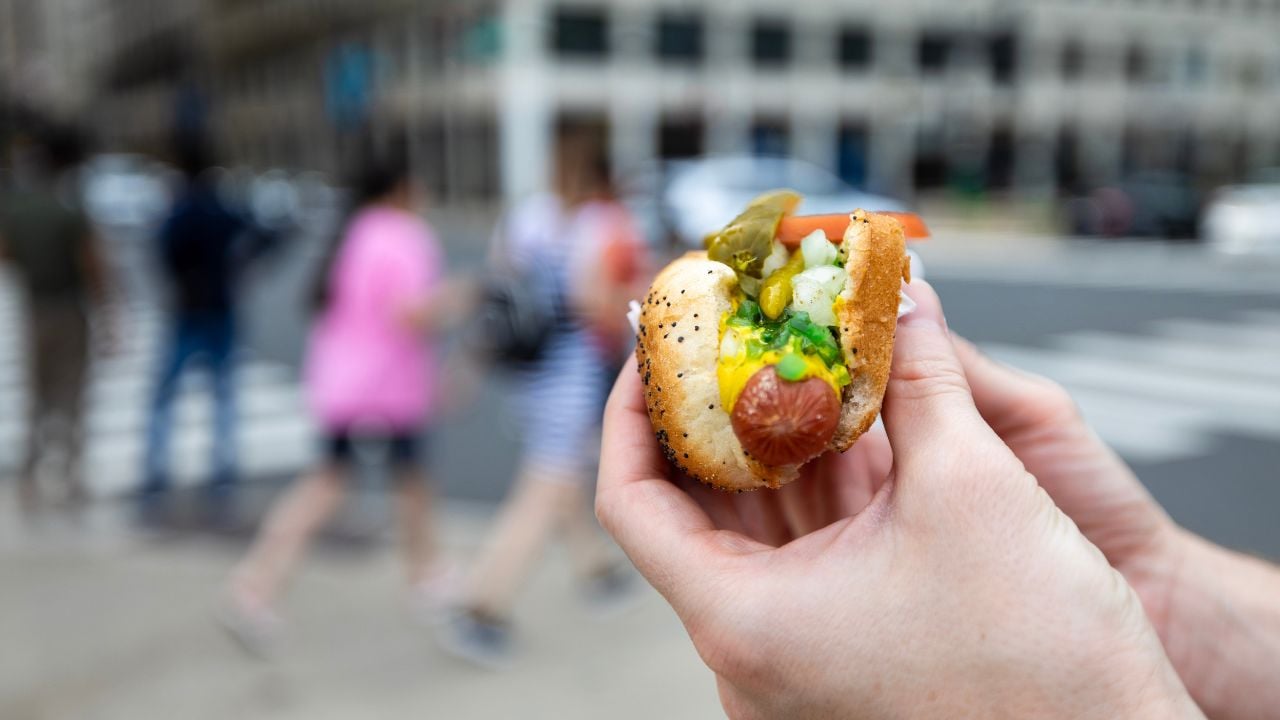
Mustard goes first, then relish, onions, tomatoes, pickle, sport peppers, and celery salt.
A good stand builds from the bottom up, with the order based on the toppings’ sizes.
Vienna Beef codified that lineup in the 1970s.
It spread through hot dog stands across Chicago and its suburbs, and through the company’s Hot Dog University.
Some delis call the full set “the works” or “dragged through the garden,” NPR reported in 2007.
That same year, about 80 percent of the vendors in Chicago used Vienna Beef frankfurters.
3. Poppy Seed Bun
A Chicago-style hot dog’s poppy seed bun reflects Eastern Europe.
Food historian Bruce Kraig says Rosen’s bakery introduced the bun locally, and it didn’t show up until after World War II.
The bun holds an all-beef frank.
If your bun has poppy seeds, the stand is likely building your hot dog the Chicago way.
4. Neon-Green Relish
Your Chicago-style hot dog comes with sweet pickle relish in a bright, neon green.
Vienna Beef makes the relish, and its color comes from a touch of blue food coloring.
The dye doesn’t change what you taste.
The sweet pickle relish is a British contribution to the dog.
Psst! How much do you know about Chicago food? Take our quiz and see how many you can get right.
Quiz
Chicago Food Trivia
Answer these questions on Chicago’s snacks, candy and sandwiches. We bet you can’t get them all right. Prove us wrong?
Which Chicago hotel’s kitchen is credited with creating the brownie for the 1893 World’s Columbian Exposition?
5. Sport Peppers
Sport peppers are small, slender, pickled green chilies that go on a Chicago-style hot dog whole, usually about an inch to an inch and a half long.
Expect two or three on your hot dog.
They run hotter than a banana pepper, so your first bite may surprise you.
The sport pepper's origin is unclear, according to WTTW.
One theory points to a Mexican-American addition dating back to the World's Fair.
The other points to Black Americans who brought them from Louisiana and Mississippi during the Great Migration.
Either way, they stay.
6. Celery Salt
Celery salt is the last topping on a Chicago-style hot dog.
Kraig says celery salt was invented in Cincinnati about 1872.
It was already showing up in recipes, cookbooks, and newspapers in the 1870s.
Exactly when it joined the hot dog is unclear.
One explanation is that it offered an easy way to spread celery flavor when fresh celery wasn't around.
7. Pickle Spear and Tomato Wedges
On a Chicago-style hot dog, a dill pickle spear goes on one side and two tomato wedges on the other.
The pickle spear shares the poppy seed bun's Eastern European roots.
Kraig ties the tomatoes to Mediterranean cooking, which means Greek and Italian.
If you check a few guides, some call for tomato slices instead of wedges.
How the Chicago Dog Began
Emil Reichel and Samuel Ladany introduced the all-beef hot dog at the 1893 World's Columbian Exposition, WTTW reports.
Their hot dog cost 10 cents.
At Maxwell Street Market, German butchers sold sausages that were expensive and labor-intensive until the commercial meat grinder changed that.
Jewish immigrants in the city wanted a kosher, all-beef option, which helped drive demand for the hot dog you know today.
Who created the first Chicago-style hot dog remains a mystery.
From Carts to Stands
If you picture a Chicago hot dog cart, you're picturing a cheap, quick lunch for immigrant workers.
But the city cracked down on the carts, calling them unsanitary.
Permanent hot dog stands eventually opened around the city.
The vegetables came next.
During the Great Depression, stand owners began adding vegetable toppings.
Fluky's, a stand that started in 1929, claimed to have invented the original Chicago-style dog.
For a nickel, you could get a hot dog loaded with condiments.
When the Rules Bend
Not every Chicago stand builds its hot dog the same way.
Gene & Jude's serves what it calls a Depression dog, which leaves off the pickle, tomato, and celery salt and dumps a pile of fries on top.
If you order the Depression dog, you're skipping three toppings from the standard build.
Superdawg, a drive-in on the northwest side, uses sausages that are larger than Vienna's, leaves off the celery salt, and pickles the tomato.
6 Downstate Illinois Towns and the One Claim to Fame Each Won't Let Go Of
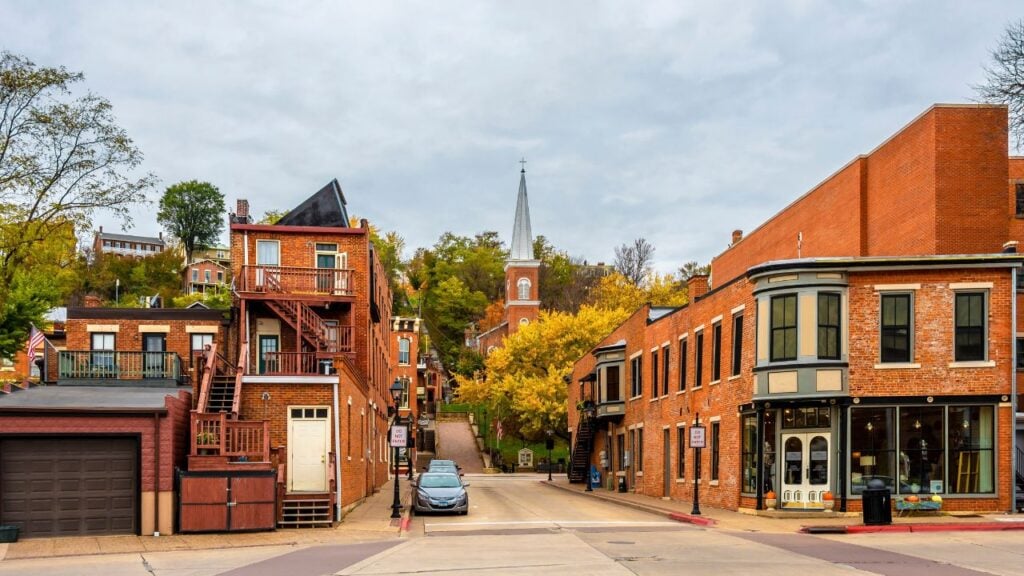
Some small towns are known for one big thing.
In Downstate Illinois, a few have built whole festivals around theirs, and they're not shy about it.
6 Downstate Illinois Towns and the One Claim to Fame Each Won't Let Go Of
4 Vehicle Sticker Rules That Get Chicago-Area Illinoisans Ticketed Without Moving Their Car
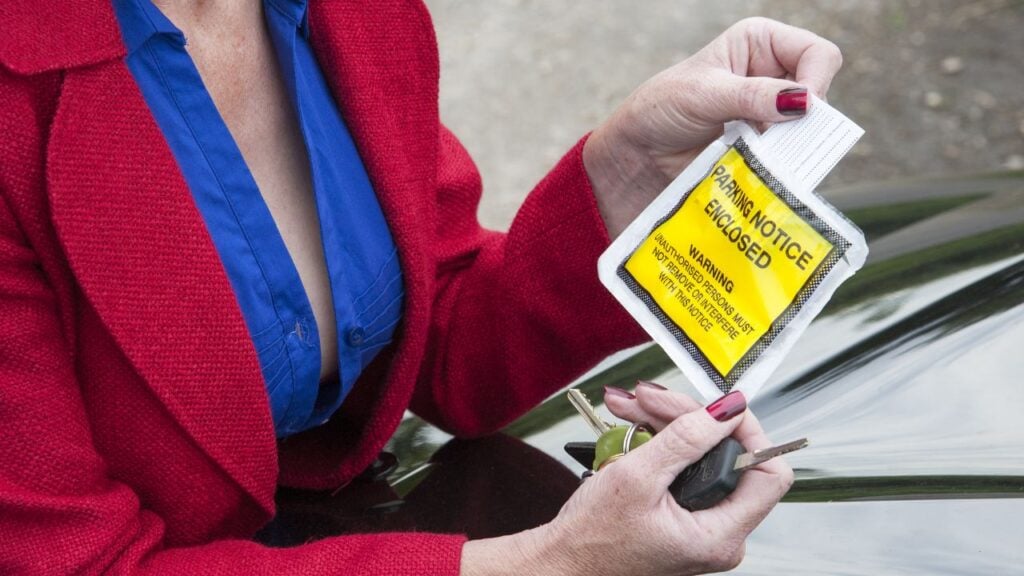
The worst parking ticket might be the one that lands on a car that never moved.
Chicago-area Illinoisans can get hit with one over small details that are easy to forget about.
4 Vehicle Sticker Rules That Get Chicago-Area Illinoisans Ticketed Without Moving Their Car
