
7 Farmers Market Mistakes That Cost Georgians Money Every Saturday

Farmers markets are supposed to save shoppers money.
For many Georgians, they don’t.
These are the farmers market mistakes costing shoppers money every Saturday.
1. Trusting a “No-Spray” Sign
Georgia farmers markets let any vendor hand-letter a “no-spray” or “pesticide-free” sign over their table, and nobody checks the claim before the market opens for the day.
That sign gets the least scrutiny on a Saturday, when the biggest crowds of the week move through the same handful of aisles.
Pay the organic markup off that sign alone. You’re often paying for a promise, not a guarantee.
That’s the honor system.
United States Department of Agriculture (USDA) Certified Organic means a paid inspector has reviewed a grower’s soil, seed and spray records, and a small grower can skip every step of that and still use the word “organic” on a sign.
What a “No-Spray” Sign Means at a Georgia Market
Georgia doesn’t require a farmers market vendor to prove a “no-spray” or “pesticide-free” claim before hanging the sign.
Federal rule lets any grower with $5,000 or less a year in organic sales use the word “organic” on their own, with no inspection and no paperwork filed.
That grower just can’t use the green USDA organic seal or call the produce “certified.”
So a sign reading “organic” and a sign reading “no-spray” can mean the exact same thing at a Georgia market table: The farmer’s word, and nothing else.
2. Skipping the SNAP Dollar Match
Georgia’s Fresh for Less program doubles a shopper’s produce budget at farmers markets across the state, and many eligible shoppers never ask for it.
Swipe a Supplemental Nutrition Assistance Program (SNAP) benefit using the Electronic Benefit Transfer (EBT) card it’s loaded on for $20 in fruits and vegetables. Wholesome Wave Georgia matches it dollar for dollar.
That hands over $40 total to spend the same visit.
That’s money on the table.
Saturday sees more shoppers move through Georgia’s farmers markets than any other day, so it’s also the day this match goes unclaimed more than any other.
The match covers fresh fruits and vegetables only, not honey, eggs, flowers or prepared food, and it only works at a market that runs the program in the first place.
Ask at the info booth before shopping, not after the tote’s already full, since some markets swipe the match at a separate table.
3. Never Checking the Scale’s Seal
Georgia’s Department of Agriculture inspects and seals commercial scales across the state, the same kind farmers market vendors use to weigh produce by the pound.
You’ll rarely check for that seal before a vendor weighs out your tomatoes or your okra.
Many shoppers skip that glance.
That’s easiest to do with a Saturday line building behind them.
A scale that’s off by even a little adds up fast at $4 a pound for blackberries, and you have no way to dispute the total without a seal to point to.
Look for the inspection sticker near the readout before your produce goes on the scale, not after the vendor’s already announced the total.
4. Never Tallying the Token Round-Up
Georgia farmers markets that run on a token system round every purchase up to the whole dollar, and few shoppers tally what that costs by the end of a visit.
A $3.65 pint of cherry tomatoes costs a full $4 in tokens.
The extra 35 cents never comes back in cash.
It adds up.
That gap multiplies fastest on Saturday, when Georgia’s token-based markets see their heaviest traffic of the week.
Buying tokens over and over in small batches, instead of tallying a shopping list first, is what drains the change.
Reload three or four times in a visit, and that 20-to-35-cent round-up hits three or four separate times instead of once.
Add up what you plan to buy before your first token purchase.
Buy that amount once instead of reloading stall to stall, so the rounding only costs you one round instead of several.
5. Paying Peak Price for Peaches
Georgia peaches run on a short calendar, with the harvest packed into roughly mid-May through mid-August, and a farmers market table selling “Georgia peaches” outside that window is selling something else.
Georgia isn’t even the top peach-growing state in its own region.
South Carolina usually beats it.
Pay a Georgia-peach premium at a September market without asking where the fruit came from, and you’re often paying extra for a peach trucked in from somewhere else, not a peach pulled off a tree outside Fort Valley that same week.
6. Not Confirming a True Vidalia
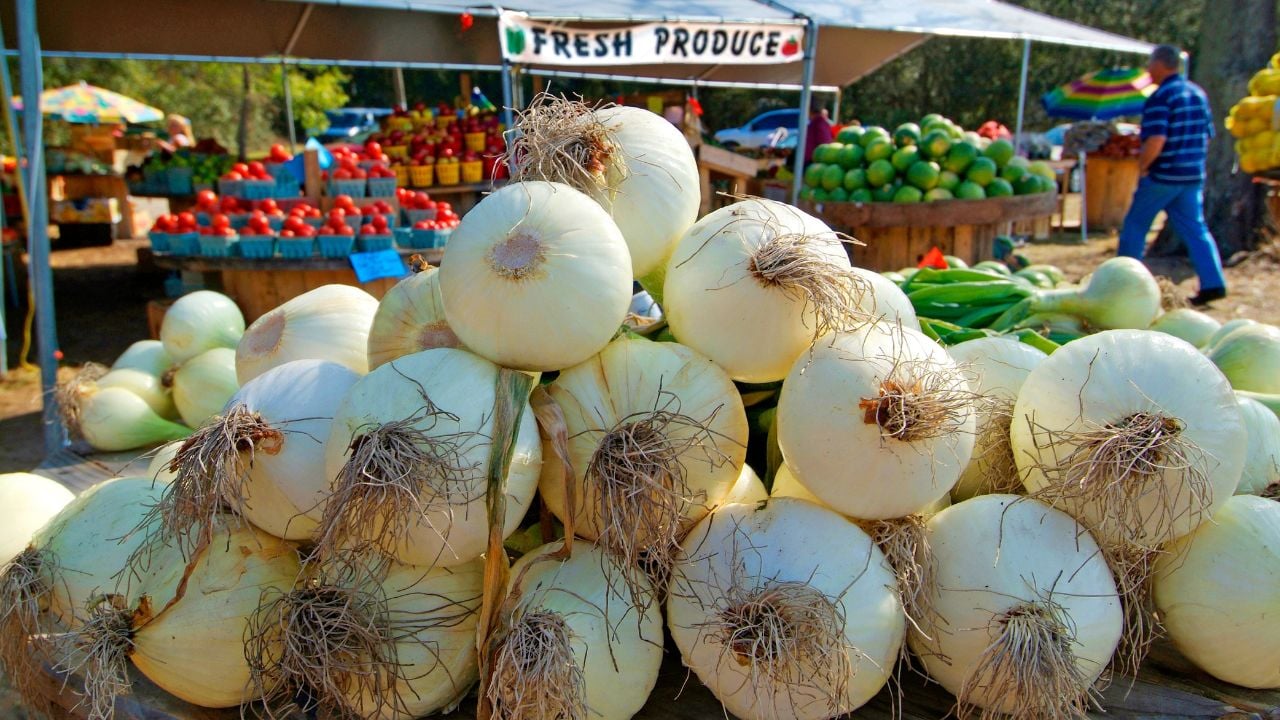
Georgia farmers markets set out dozens of onions labeled “Vidalia,” but that name is legally protected, not just a style of sweet onion, and only onions grown inside a federally defined 20-county pocket of South Georgia can wear it.
That protection comes from a 1986 state law and a 1989 federal marketing order. It carries its own official pack date every spring.
Selling or labeling a lookalike onion as a Vidalia is a felony under Georgia law, punishable by a fine up to $5,000 or up to three years in prison.
That’s a lot to risk over an onion.
Ask the vendor straight out whether a bag priced like Vidalias is the certified article or a lookalike sweet onion riding on the name, since the two often sit side by side on the same table.
Saturday’s bigger crowds make that mix easiest to miss.
7. Never Comparing Prices Stall to Stall
Georgia farmers markets don’t run one price for one product the way a grocery store does, and a dozen brown eggs can cost two different amounts twenty feet apart.
Every vendor sets a table’s prices alone, so the same quart of blueberries or the same jar of honey can carry a noticeable spread from one end of the market to the other.
One of the few researchers to measure that spread found vendors pricing the same zucchini anywhere from 22 cents a pound to $3 a pound within the same market visit.
That gap adds up fast.
Walk the whole market once before buying anything, especially on a Saturday when the most vendors and the widest price spread of the week show up.
That walk-through is the easiest built-in discount a Georgia farmers market offers, and it costs nothing but a few extra minutes.
Psst! How much do you know about Georgia’s farms and farmers markets? Take our quiz and see how many you can get right.
Quiz
Georgia Harvest IQ
Answer these questions on Georgia’s farms, crops and market history. We bet you can’t get them all right. Prove us wrong?
What year did the Atlanta State Farmers Market in Forest Park first open its gates?
Georgia's Farmers Market Boom
Georgia's Department of Agriculture keeps an official, annually updated map of every Georgia Grown-certified farmers market in the state, and the current count tops 50 locations, stretching from Savannah's coast to the mountains near Blue Ridge.
Every one of them sets its own rules, its own hours and its own vendor lineup.
No two run alike.
A statewide count of Georgia's farmers markets puts Saturday well ahead of any other single day: 20 of the 38 markets it tracks hold Saturday hours, more than double the next closest day.
The Georgia Grown Label's Fine Print
The Georgia Grown logo carries a legal requirement behind it, not just a marketing sticker.
A raw product wearing that logo, like a bag of okra or a flat of tomatoes, has to be grown in Georgia to use it.
No exceptions on raw produce.
A processed item, like a jar of peach jam or a bag of boiled peanuts, can carry the logo even with a few out-of-state ingredients, as long as the actual jarring or cooking happened inside Georgia.
So the logo means something different depending on whether a shopper is looking at a tomato or a jar of salsa, and it's worth asking a vendor which one applies before assuming every Georgia Grown sticker promises the same thing.
7 Aldi Habits Costing Georgia Shoppers Money
Aldi built its whole reputation on a low sticker price, and Georgia shoppers pack the parking lots off I-285 for exactly that.
The savings disappear just as fast if a shopper falls into one particular checkout-lane habit.
7 Aldi Habits Costing Georgia Shoppers Money
9 Georgia Foods That Make the Rest of the Country Go, "What?"
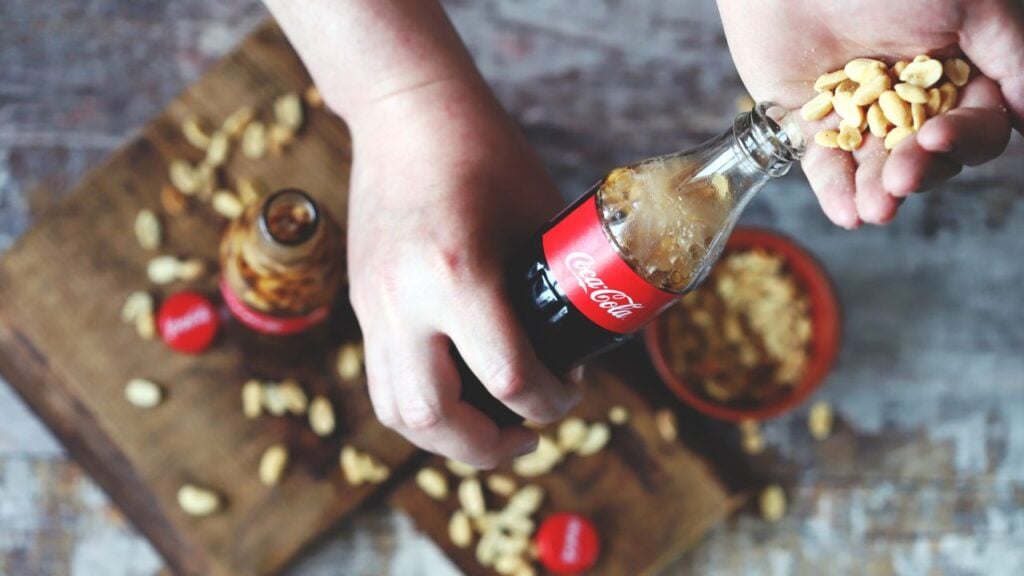
Georgia food is more than peaches and sweet tea to the rest of the country.
What Georgians pile onto a plate without blinking can send a first-time visitor sliding their chair back from the table.
9 Georgia Foods That Make the Rest of the Country Go, "What?"
