
7 Florida Lakes Locals Swear By (and 3 They’d Never Swim In)

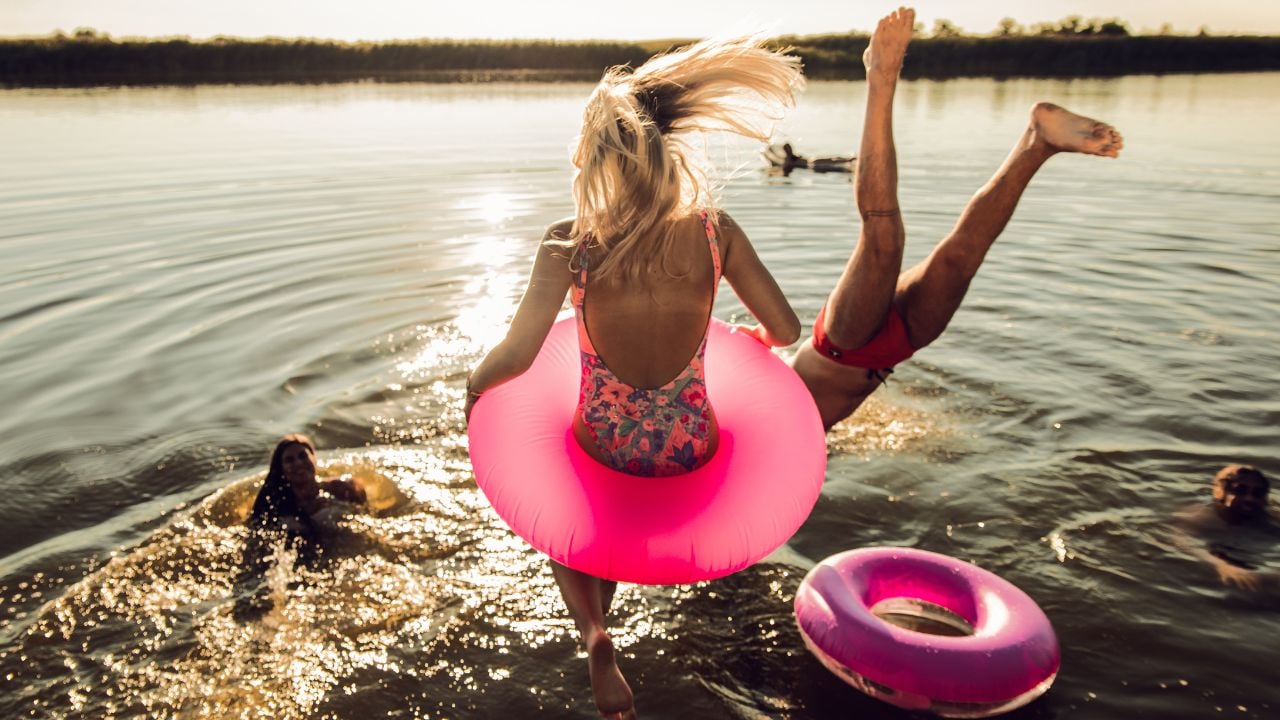
By noon on a Saturday, a dozen boats have rafted together on the sandbar off Lake Weir, coolers open, kids standing chest-deep on a hard sandy bottom.
Gator Joe’s is packing them in at one end, Eaton’s at the other.
Marion County families treat this lake like a backyard, and there’s a reason nobody drives an hour to do the same thing on certain other water.
These are the Florida lakes locals swear by, and those they’d never swim in.
1. Kingsley Lake
Kingsley Lake is the lake Clay County brings out-of-towners to when it wants to prove Florida water can run clear.
Nearly a perfect circle, it sits near Keystone Heights on the high, sandy spine of Trail Ridge.
Locals call it the Silver Dollar for that shape.
Wade in and the bottom stays firm and sandy, sloping out gently before it drops into a middle that runs more than 80 feet deep.
In the shallows you can watch your own shadow slide across the sand.
Half the shoreline belongs to Camp Blanding, the National Guard post, so developers never ringed it with condos.
It stayed swimmable.
2. Blue Cypress Lake
Blue Cypress Lake sits about 20 miles west of Vero Beach, at the end of a road most tourists never find.
This is where the St. Johns River starts its long run north to Jacksonville.
Cypress trees stand out in the shallows, knees poking up, glowing faintly blue when the morning sun hits them.
Ospreys own the place.
More than 200 nests ring the water, and ospreys wheel overhead all morning.
Bass guides work the edges at first light, and on a good morning you won’t see another boat.
Just birds.
3. Lake Weir
Lake Weir spreads across more than 5,600 acres of Marion County, and locals treat its sandbar like a public pool.
The bottom is sand, not muck, which is why families have swum off it for generations.
Boats raft up on the weekends between Gator Joe’s and Eaton’s Beach, two waterfront bars you can pull right up to.
There’s history in that first name.
Gator Joe’s sits near the house where Ma Barker and her son Fred died in a 1935 shootout with federal agents.
Locals still tell it.
Anglers come for the largemouth bass and the speckled perch, then trade the fish story over a basket of fried shrimp.
4. Lake Istokpoga
Lake Istokpoga, just outside Lake Placid, is the name serious bass anglers drop first.
At nearly 27,000 acres, it’s the fifth-largest lake in Florida, and one of the shallowest, averaging about four feet deep.
Shallow, weedy water is where big bass hide.
Anglers rate it among the best bass lakes in the state, and 10-pound catches turn up on the lake year after year.
Come winter, the speckled perch bite fills the fish camps around Lake Placid.
Locals plan around it.
5. Lake George
Lake George is the giant of this list, the second-largest lake in Florida at roughly 46,000 acres.
It’s a wide spot on the St. Johns River, hemmed in on the west by the Ocala National Forest.
The water turns brackish.
Salt springs feed in along the bottom, enough that Lake George holds blue crabs a long way from any coast.
Anglers chase largemouth bass, catfish, and the striped bass that run up the river with the tide.
On a hazy afternoon, you lose the far shore.
6. Lake Santa Fe
Lake Santa Fe, out past Melrose, is where the sailboats go for clean wind and clean water.
The state tags it an Outstanding Florida Water, and researchers rank it among the clearest lakes they’ve studied.
Nearly 6,000 acres of it, the big lake and Little Lake Santa Fe joined next door.
You can see your feet standing waist-deep.
That’s the draw.
The town of Melrose barely has a stoplight, and the folks on the water like it that way.
7. Lake Dora
Lake Dora anchors the Harris Chain of Lakes, and the people of Tavares built their town around it.
Tavares bills itself as America’s Seaplane City, with a floatplane base right on the water off Wooton Park.
The runway is the lake.
From Lake Dora you can idle through the shady Dora Canal into Lake Eustis, and keep going across a chain of connected lakes.
Mount Dora’s shops sit up the hill, and the sunset cruises leave from the docks below.
Someone’s always on the water.
Psst! How much do you know about Florida’s lakes and the wild things living in them? Take our quiz and see if you can ace it.
Quiz
Florida Lake IQ
Answer these questions on Florida’s lakes, critters, and springs. We bet you can’t get them all right. Prove us wrong?
A rare brain-infecting amoeba turns up in warm Florida freshwater. What’s it called?
Where Locals Won't Swim
Florida water isn't all sandy bottoms and clear springs.
A few lakes earn their bad name the hard way, with alligator counts and health department signs.
Give these three a wide berth.
1. Lake Jesup
Lake Jesup hugs the edge of Oviedo and Sanford in Seminole County, and it packs more alligators per acre than any lake in Florida.
Wildlife officials put the count north of 13,000.
That's not a typo.
The lake spills into the St. Johns, and the gators love its shallow, marshy shoreline.
Airboat tours run out of the Black Hammock daily, and the guides point out 14-footers like they're landmarks.
People launch boats and fish the edges.
Nobody swims.
2. Lake Okeechobee
Lake Okeechobee is the biggest lake in Florida, and in a bad summer, its water goes green as pea soup.
In the warm months, blue-green algae spreads across it, and the blooms can carry toxins.
State health departments post alerts around the big lake nearly every year.
The Florida Department of Health puts it plainly: Don't swim in or around blue-green algae.
The toxins can bring rashes, stomach trouble, and worse.
Boiling the water only concentrates them.
Anglers still fish the lake for its famous speckled perch.
They stay in the boat.
3. Lake Munson
Lake Munson sits just south of Tallahassee, and for decades it's had a reputation as one of the dirtiest lakes around.
Stormwater runs off the city's streets, down Munson Slough, and into the lake, feeding thick algae summer after summer.
When the toxins spike, the Leon County health department posts alerts telling people not to swim, wade, or ski in it.
Fish pulled from Munson carry advisories too.
Nobody wades in.
The county has tried drawdowns, dropping the water level on purpose to dry out and scrape the muck off the bottom.
For now, you watch Munson from the bank, not the water.
The herons and the ospreys don't mind, and neither do the birdwatchers who come to see them from the shore.
6 Florida Springs Locals Avoid (and 3 They Pack Their Cooler For)
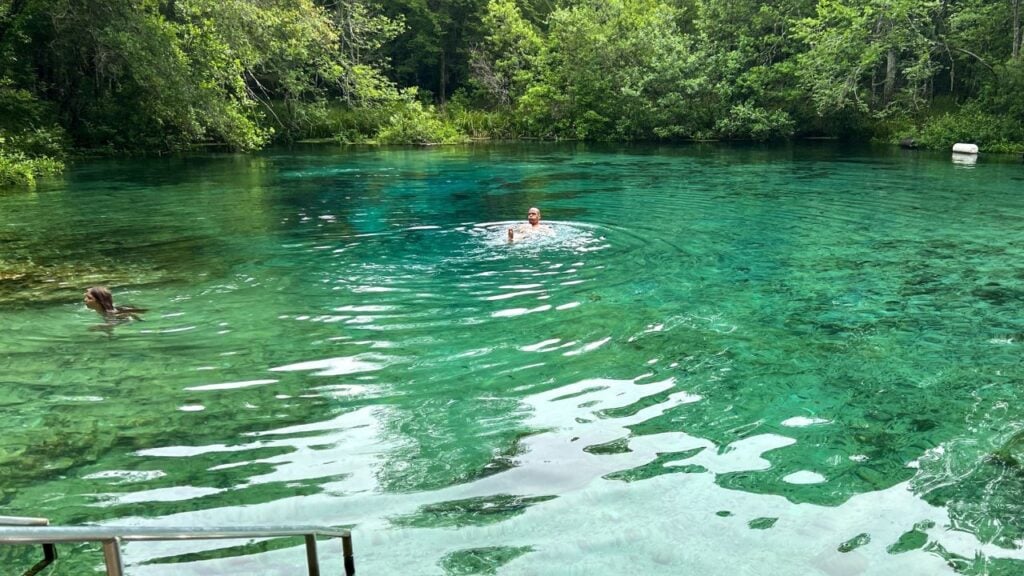
Not every famous Florida spring is worth the parking headache.
The big names off I-75 fill their parking lots by 9 a.m., so locals slip off to calmer water most tourists drive right past.
6 Florida Springs Locals Avoid (and 3 They Pack Their Cooler For)
7 Florida Beaches Locals Skip (and 4 They Drive Hours To Reach)
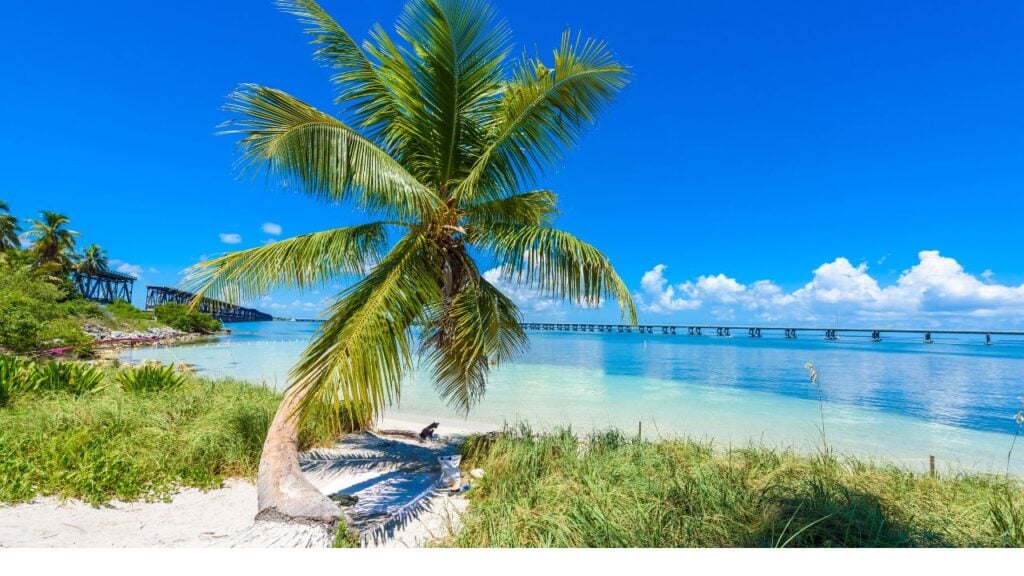
A family from out of state circles the same beach parking garage for the third time, windows down, tempers up.
Two exits south, a Floridian is already unfolding a chair on empty sand.
7 Florida Beaches Locals Skip (and 4 They Drive Hours To Reach)
