
7 Gadgets North Carolinians Can’t Throw in the Trash Starting Dec. 1

Every home has a drawer where old gadgets go to retire.
It’s a fine system until the drawer won’t close and your trash can starts to look like the easy answer.
Here are the gadgets North Carolinians can’t throw in the trash starting Dec. 1.
Note: This is general information, not legal advice. Disposal rules are subject to change, so confirm the current requirements with the North Carolina Department of Environmental Quality (DEQ).
1. Electric Toothbrushes
DEQ lists the electric toothbrush as a lithium-ion gadget, so starting Dec. 1 it can’t go out with the trash.
Yes, even your toothbrush.
DEQ’s bathroom list also names electric shavers, hairstyling tools and scales, so the whole counter deserves a glance.
Don’t pry the battery out of the handle, though, since DEQ tells local governments to warn residents against removing embedded batteries.
Brush and battery travel together.
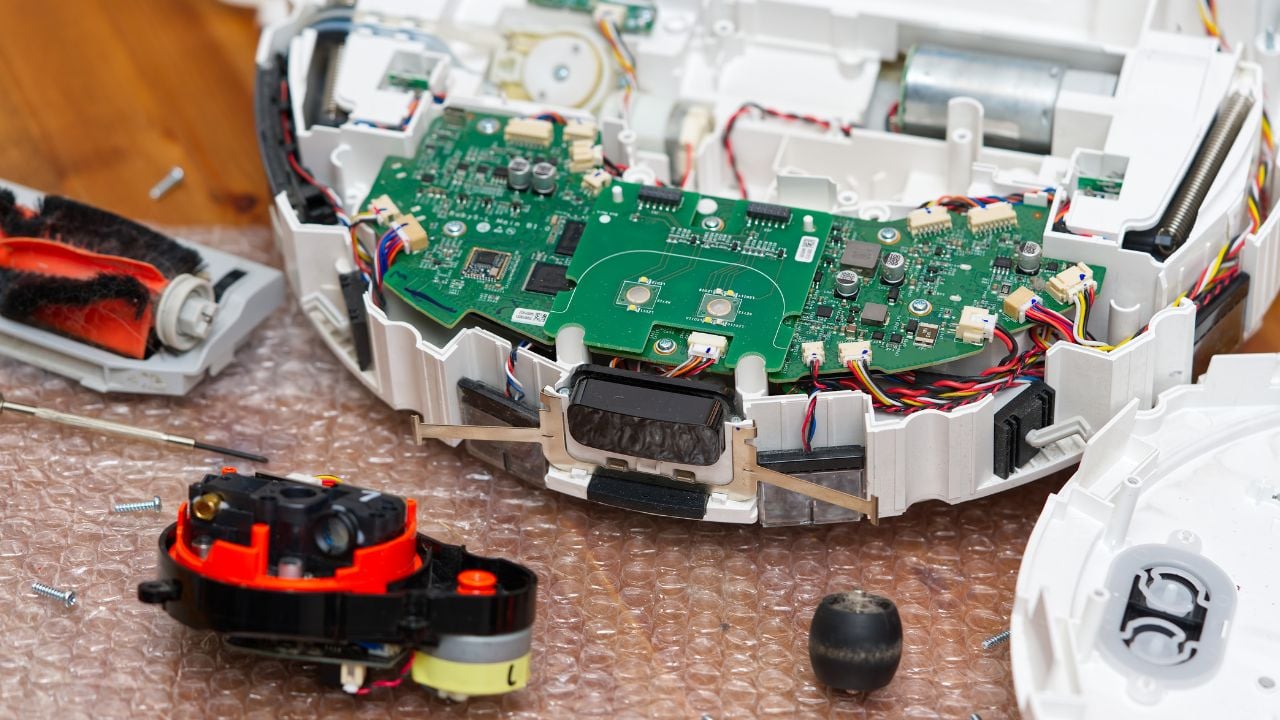
2. Robot Vacuums
Think your dead robot vacuum can sneak into the recycling cart instead of the trash?
It can’t.
DEQ’s living room list names robot vacuums, so the lithium-ion ban starting Dec. 1 covers yours.
A vacuum with the battery still inside belongs in neither the trash nor the recycling.
Even a vacuum that quit behind the couch counts.
That list also names remote controls and chargeable toys, though the ban reaches only their lithium-ion batteries.
3. E-Readers
If an old e-reader is waiting in your nightstand, DEQ lists it as a lithium-ion gadget, so it can’t go out with your trash after Dec. 1.
Its reading days are done.
Sleep apnea machines sit right beside it on DEQ’s list.
4. Wireless Headphones
Wireless headphones are on DEQ’s list of everyday devices powered by lithium-ion batteries, so a worn-out pair can’t go out with the trash after Dec. 1.
The music has stopped.
If yours are stashed in a gym bag or a desk drawer, a drop-off site is their next stop.
5. Smartwatches
Starting Dec. 1, a smartwatch you’ve retired can’t go out with the trash, since DEQ lists smartwatches among everyday lithium-ion devices.
Time’s up for the watch.
DEQ’s household list also names fitness trackers, so a band that stopped counting your steps is covered.
Psst! Curious how many of your gadgets might run on lithium-ion batteries? Tick what’s true for you and see where you stand.
6. Power Banks
Is a power bank a gadget or just a battery in a case?
It doesn’t matter.
DEQ names power banks as lithium-ion gadgets, so they can’t go out with the trash after Dec. 1.
If a few are rattling around in your tote bag or glove box, plan a drop-off.
A power bank that no longer holds a charge still counts.
7. Hearing Aids
DEQ lists hearing aids among its lithium-ion gadgets, so a rechargeable pair with a lithium-ion battery can’t go out with the trash after Dec. 1.
Some rechargeable hearing aids have a built-in lithium-ion battery that can’t be swapped for standard pill batteries.
Since that battery is built in, DEQ’s warning against removing embedded batteries is worth heeding.
If a retired rechargeable pair is sitting in a case on your dresser, ask the drop-off site how it takes hearing aids.
Spares may count.
What the Law Covers
Starting Dec. 1, North Carolina bans lithium-ion batteries from landfills, whether they’re loose or still inside a device.
That includes the phones, tablets and laptops you’d expect.
Then there’s the oddball: DEQ’s household list even names musical greeting cards.
Not a typo.
A birthday card that still plays a tune may need a drop-off site if its battery is lithium-ion.
The law targets anyone who knowingly disposes of a banned item in a landfill, and incinerators join the ban on Dec. 1.
It also says accidental or occasional disposal of small amounts isn’t a violation.
Why the Ban Exists
Gadgets with lithium-ion batteries can cause fires during transport, at landfills and at recyclers, the Environmental Protection Agency (EPA) says.
At recovery facilities, processing can crush or damage the batteries, which may create a fire hazard.
So the battery in your trash bag is a bigger problem than you’d guess.
In January 2025, an improperly discarded lithium-ion battery started a fire at Wake County’s North Wake hazardous waste site, with repairs estimated at more than $1.5 million.
Ouch.
Where Old Gadgets Go
DEQ’s advice for old lithium-ion gadgets is to always take them to a designated drop-off location.
You have two choices.
For household rechargeable batteries, DEQ lists a store drop-off or your local government’s drop-off site.
Participating stores show up on The Battery Network’s locator map, DEQ says.
Pick whichever is closer to your errands.
To see if your community has a drop-off site, call your city or county or check DEQ’s map.
Prepping Gadgets for Drop-Off
Prep rules for lithium-ion gadgets can differ by drop-off site.
Ask before you go.
Wake County’s household hazardous waste sites serve only Wake County residents, so you’ll need a different site if you live in another county.
How to Pack Gadget Batteries for Wake County
Wake County asks you to tape both terminals on loose lithium-ion batteries or put each battery in a plastic baggie.
Clear tape works best so handlers can read the battery chemistry.
Then place the batteries in a non-conductive, non-airtight container, such as a plastic tub or glass jar, with no metal and no lid.
Swollen Batteries
A swollen lithium-ion battery inside a gadget is a potential fire hazard, the EPA says.
The trash is the wrong place for it, even before the ban starts.
Swollen means damaged.
If you don’t see an imminent fire threat, call the maker, the retailer or your local household hazardous waste program for disposal guidance.
If you think a fire is about to start, you may need to call 911.
9 North Carolina HOA Rules That Cost Homeowners Who Ignore Them

Your homeowners association (HOA) may have more power over your house than you’d guess.
Some of it doesn’t need a courtroom at all.
9 North Carolina HOA Rules That Cost Homeowners Who Ignore Them
6 Things That Change at the North Carolina DMV in Your 60s
If you’re in your 60s, your next trip to a North Carolina driver license office may not go the way it used to.
Some of what you did at the counter for decades may be different now.
