
7 Home Features That Become Unexpectedly Frustrating as Virginians Get Older

A grandfather in Lynchburg braces both hands on the sink before he stands up off the toilet, a small maneuver he never used to think twice about.
Nothing in his house changed.
He changed.
So has nearly a fifth of Virginia, since the U.S. Census Bureau puts 18.4% of the state’s residents at 65 or older.
These are the home features that become unexpectedly frustrating as people get older.
Note: This is general information, not legal or construction advice. Permit rules vary by locality and are subject to change.
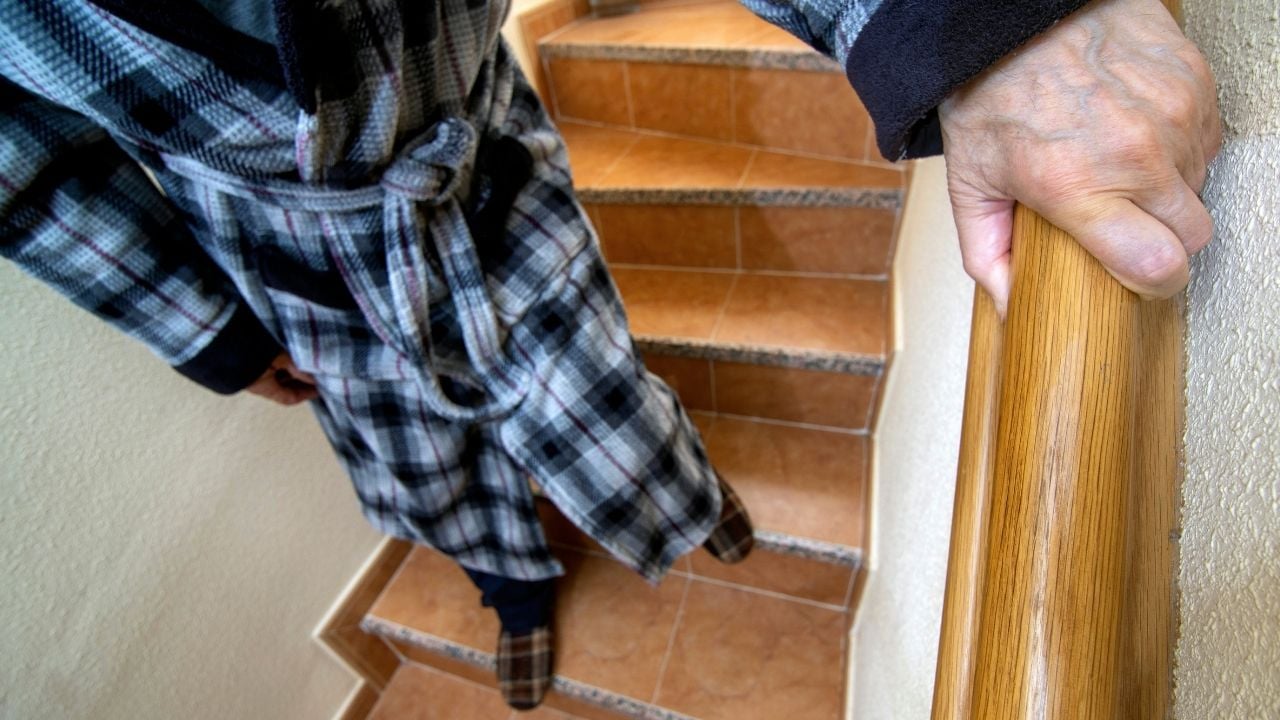
1. Split-Foyer Entry Stairs
Virginia homeowners in a split-foyer house start climbing the moment they walk through the front door, before they even reach the living room.
Fairfax County’s own historic survey of its postwar neighborhoods counts split-level and split-foyer houses among the standard designs built across the county mainly from 1950 to 1980, including entire subdivisions like Mantua.
Walking in means climbing immediately, whether up toward the main floor or down toward a finished basement, with no flat spot to set down a bag of groceries first.
That felt easy at 35.
It gets harder once knees stiffen, once a hip replacement changes how stairs feel, once carrying anything up a half-flight turns into a two-handed negotiation with the railing.
Virginia’s population is graying at the same time its housing stock is aging, since 18.4% of residents are now 65 or older, a share that keeps rising every year.
A split-foyer entry doesn’t offer a workaround, either.
There’s no bedroom on the main level to retreat to, and no way around the stairs at all.
2. Step-Over Tub-Shower Combos
Virginia homeowners with a standard tub-shower combo perform one motion so often they stop noticing it by their thirties, lifting a leg over the tub wall.
That wall typically stands taller than a single stair step, and clearing it means balancing on one leg on a surface that’s often wet.
Older adults are treated in emergency rooms for falls on flooring at six times the rate of younger adults, according to the U.S. Consumer Product Safety Commission.
That’s not a small gap.
Some Virginia homeowners solve the problem by converting the tub into a curbless, walk-in shower, which removes the step.
Making that swap usually means more than a simple fixture replacement.
Converting a Virginia Bathtub Usually Needs a Permit
Virginia homeowners who swap a fixture for an identical replacement, without touching the water lines or the drain, often skip the permit process.
A full tub-to-shower conversion is different, since it typically relocates the drain and the supply lines, and that kind of work falls outside the fixture-replacement exemption in Henrico County’s guidance.
Permit rules aren’t uniform across Virginia, since cities and counties administer the state’s building code locally, so a project that needs a permit in one county might not in the next.
3. Standard-Height Toilets
Standing up from the toilet is where many older Virginians notice their knees first, before anything else in the house gives them trouble.
Standing from a low seat asks for more knee bend and more hip strength, exactly when both are already in shorter supply.
Every inch counts there.
Federal accessibility guidelines set an accessible toilet seat at 17 to 19 inches, measured to the top of the seat, several inches taller than a typical older toilet.
Many Virginians grab the sink or a nearby towel bar on the way up instead.
Neither one was built to hold that kind of weight.
4. Round Doorknobs
Grip strength is often the first thing arthritis takes, and a round doorknob puts that grip to the test every time a Virginian reaches for it.
The twist that follows is where the trouble starts.
A lever handle opens with a simple push, skipping the grip and twist a knob demands, according to hand specialists at Yale School of Medicine.
The knob doesn’t budge.
A homeowner switching every interior doorknob to a lever can usually finish the swap with a screwdriver and an afternoon, no contractor or permit required.
Psst! How much do you know about the home features that get harder to live with as you age? Flip these six cards to separate the myths from the facts.
5. Plush Wall-to-Wall Carpet
Plush, deep-pile carpet in a Virginia living room or hallway feels like the softer choice underfoot, which is exactly the problem as the years pass.
Federal accessibility standards cap a carpet’s pile at half an inch, since anything deeper snags a cane tip, a walker wheel, or a shuffling foot.
Soft isn’t safe.
A carpet that felt plush and comfortable at 45 becomes the thing a walker catches on at 80, or the reason a cane tip sinks in instead of gripping the floor.
Low-pile carpet or hard flooring with a nonslip finish solves the same softness problem without the snag.
6. Narrow Interior Doorways and Hallways
A hallway doorway rarely gets a second look in a Virginia home, until a walker has to fit through it.
Many interior doorways in these houses were framed to a standard 30-inch size, plenty wide for anyone walking through empty-handed.
Federal accessibility guidelines require at least 32 inches of clear width for a single wheelchair to pass.
A 30-inch door frame leaves noticeably less than that once the frame and hinges take their share, well under the 32 inches federal guidelines require.
That gap matters.
A doorway a homeowner walked through for thirty years without noticing turns into a genuine bottleneck the day a walker or a wheelchair becomes part of daily life.
Widening it later means reframing the wall, which is construction work, not a quick fix.
7. Upper Kitchen Cabinets
Builders in Virginia typically hang upper kitchen cabinets 18 to 20 inches above the counter, well within reach for someone in their thirties.
Federal accessibility guidelines cap an easy, unobstructed reach at 48 inches, well below where a standard cabinet’s top shelf usually sits.
The stool comes out now.
Reaching for a mixing bowl on the top shelf used to be automatic, a habit built into a Virginia kitchen’s daily rhythm without a second thought.
It starts asking for a step stool first, then a steadying hand on the counter, then a family member around to grab the thing down instead.
9 Virginia Well Water Rules Rural Homeowners Get Wrong

More than 1.6 million Virginians pull their water from a private well instead of a public system, and that comes with its own rulebook many homeowners never read until something goes wrong.
These are the Virginia well water rules that trip up rural homeowners more than anyone expects.
9 Virginia Well Water Rules Rural Homeowners Get Wrong
7 Morning Habits That Instantly Give Away a Non-Virginian
More than 170,000 people have moved to Virginia since 2020, and native Virginians can spot the new arrivals before 7 a.m. many mornings.
These are the morning habits that give a non-Virginian away before their coffee even kicks in.
