

7 in 10 Missouri Voters Worry About Affording Health Care, a 2026 Poll Found, and Rural Voters Worry Most

If you’re choosing a 2027 health plan this month, the premium is probably only one of the bills on your mind.
The grocery receipt and the gas pump haven’t been easy on Americans’ budgets either.
Here’s what the 2026 SLU/YouGov Poll found about Missouri voters and the worry about affording health care.
Note: This is general information, not insurance or financial advice. Premiums, plan options and deadlines are subject to change, so confirm the current details with HealthCare.gov or your insurer.
Who Ran the Poll and How
The SLU/YouGov Poll is a partnership between Saint Louis University and the polling company YouGov.
If you’re a likely Missouri voter, you’re in the group this poll surveys on a broad range of issues.
YouGov interviewed 900 of those voters between August 13 and August 24, 2026.
Results came out in September.
The respondents came from an opt-in survey panel, which means they chose to sign up.
YouGov then weighted the responses to match known characteristics of the state’s voters.
Each person was asked whether they were worried about being able to afford each of five costs.
These are the cost worries likely Missouri voters reported, starting with health care, the one that worries them most.
Health Care at 69%
Health care drew more worry than any other cost the poll listed, at 69%.
You can round that to about 7 in 10 likely voters.
The lead is narrow, though.
For comparison, KFF, an independent source of health policy research, polled U.S. adults in January 2026.
It found that 66% worry about being able to afford health care for themselves and their families.
The wording and sample differ, so the two figures aren’t a direct match.
In its February 2026 wave, the poll also found that 81% of Missouri voters support setting caps on insulin costs.
If you’re wondering how firm the 69% lead is, the box below breaks down the margin of error.
What the SLU/YouGov Poll’s 69% Can Show
The SLU/YouGov Poll lists a margin of error of ±5.92 percentage points for its cost questions.
For health care, that puts the 69% somewhere between roughly 63% and 75%.
If you compare health care’s 69% with the 66% for groceries and for gas, the 3-point gap sits inside that margin of error.
You’re reading a measure of worry about being able to afford each cost, not a count of what voters pay.
The sample is likely voters, a narrower group than all Missouri adults.
Other Costs in the Poll
Behind health care, food and groceries tie with gas for second place, at 66% each.
Utilities follow at 62%.
Property taxes rank last at 59%.
A national poll from KFF, the health policy group, also put health care first, with 32% of U.S. adults very worried about affording it.
That compares with 24% for food and groceries and 17% for gas and transportation.
If you earn more than $100,000 a year, you aren’t alone in worrying about food or gas.
In that income group, 55% of voters worry about food and 62% about gas.
Rural Voters at 77%
Rural voters reported more worry about affording health care than urban voters did, at 77% to 64%.
The gap is 13 points.
SLU’s release lists no separate margin of error for rural or urban voters, and it doesn’t define either term.
Each group is a smaller slice of the 900 voters polled, so its margin of error would run wider than the ±5.92 points listed for the cost questions.
If you live in a rural part of Missouri, you can read the 77% as a sign the worry runs high, not as an exact count.
Psst! How much do you know about health care and household costs? Take our quiz and see if you can ace it.
Quiz
Cost of Living IQ
Answer these questions on Medicare, Missouri taxes and household bills. We bet you can’t get them all right. Prove us wrong?
What is the 2026 Medicare Part A deductible for each inpatient hospital benefit period?
Marketplace Enrollment and Deadlines
Missouri's health insurance marketplace had nearly 366,000 enrollees for 2026, according to the Missouri Independent.
That report, citing federal Centers for Medicare & Medicaid Services (CMS) data, lists 417,000 enrollees in January 2025.
Congress expanded the federal premium subsidies in 2021 and later extended them through 2025.
Those subsidies expired at the end of 2025 without another extension.
The report also cites KFF, the health policy group, which estimated that a $55,000 household's premium costs rose nearly $1,500 a year heading into 2026.
HealthCare.gov says you can apply for Medicaid and the Children's Health Insurance Program (CHIP) any time, all year.
Open enrollment for 2027 plans began November 1.
The deadline is January 15.
If you enroll or change plans by December 15, 2026, and pay your first premium, coverage starts January 1, 2027.
Enrolling from December 16 through January 15 moves the start date to February 1.
A life event, such as losing other coverage, may qualify you for a Special Enrollment Period after open enrollment closes.
Dollar Tree Held $1 for 35 Years, but Missourians Now See Items Up to $7
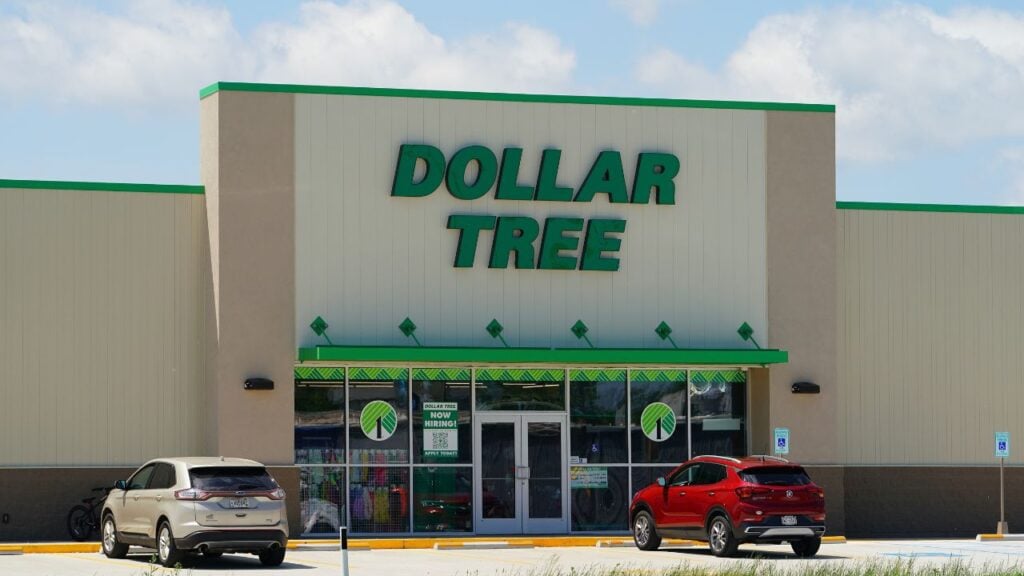
Dollar Tree shopping used to be easy, since almost everything cost the same.
But Missourians who still shop there know that's no longer the case.
Dollar Tree Held $1 for 35 Years, but Missourians Now See Items Up to $7
6 Ozarks Traditions Arkansas and Missouri Both Claim

A state line doesn't mean much in the Ozarks.
Arkansans and Missourians who grew up in the hills may each say a tradition started on their side.
