
7 Kitchen Tools North Carolina Cooks Should Have Replaced Years Ago

How many tools in your kitchen drawer have you been using well past when you should have replaced them?
Most North Carolina cooks couldn’t say.
They’ve never had a reason to check.
These are the kitchen tools North Carolina cooks should have replaced years ago.
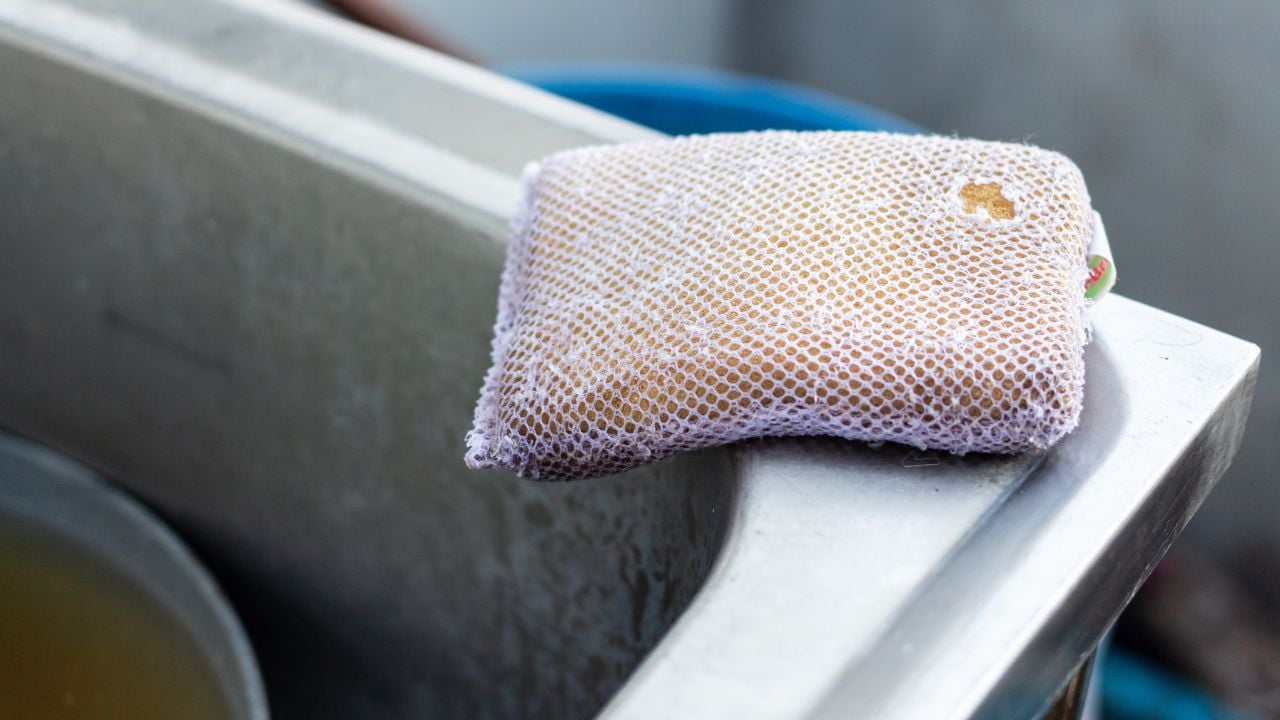
1. Kitchen Sponges
Your kitchen sponge does more scrubbing in than almost anything else on your kitchen counter.
It also holds onto everything it scrubs.
NSF International (NSF), the public health and safety organization that certifies water filters and appliances, tested common household items for bacteria.
Dish sponges and rags came back positive for coliform bacteria more than 75% of the time, worse than the kitchen sink, the countertop, or anything else they swabbed.
NSF’s own guidance is to replace a sponge every two weeks, sooner if it starts to smell.
That’s two weeks, not two months.
Most cooks stretch a sponge for a month or longer, wringing it out and hoping for the best.
Hope isn’t a sanitizing method.
A three-pack of sponges costs a couple of dollars at Food Lion or Ingles Market, cheaper than a bad case of food poisoning and the day of work it costs you.
2. Nonstick Pans
A nonstick pan wears out fast once it’s pulling double duty for weeknight dinners and Sunday biscuits.
North Carolina kitchens ask a lot of theirs.
Once the coating chips, scratches, or starts to flake, Consumer Reports says it’s time to toss it.
Breann Chai, who runs the outlet’s cookware testing, put it plainly: A damaged coating can flake straight into whatever’s cooking.
A 2025 study from the University of North Carolina at Chapel Hill’s Gillings School of Global Public Health tracked how per- and polyfluoroalkyl substances (PFAS), also called forever chemicals, build up in the body.
The researchers’ advice on cookware was blunt: Stop cooking on a nonstick pan once the coating turns scratched, flaking, or worn down.
Not tomorrow.
A new pan at Belk or Marshalls costs less than most cooks expect.
That’s one less scratched coating adding to what’s already building up in the body.
3. Plastic Cutting Boards
From Sunday chicken to summer tomatoes still warm from a Piedmont garden, plastic cutting boards take a beating across North Carolina.
An agent with North Carolina State University’s Cooperative Extension says a board with hard-to-clean grooves can end up being a place where bacteria grows.
Bacteria wins.
That’s not a board worth keeping.
The fix is simple: Retire a board once the grooves run deep enough to catch a fingernail, or once it stains and won’t scrub clean.
A fresh board costs a few dollars at Ace Hardware or in the housewares aisle at Walmart.
There’s no reason to keep scrubbing at grooves that already lost the fight.
4. Wooden Spoons and Boards
From the spoon stirring a pot of pinto beans to the board holding a Sunday roast, wood shows up everywhere North Carolina cooks turn.
Wood is a porous material.
Once it cracks, food safety guidance treats it the same as a plastic board with deep grooves.
Bacteria settles into the crack.
Scrubbing doesn’t reach it.
Food safety researchers at the University of Maine Cooperative Extension recommend conditioning it monthly with food-safe mineral oil, which keeps the wood from drying out and splitting in the first place.
North Carolina’s humidity swells wood one week and dries it out the next.
That’s how a spoon handle ends up split down the middle by August.
Once a board or spoon cracks, retire it from cooking duty instead of oiling around the damage.
A cracked spoon still makes a fine plant stake.
Psst! How many of these kitchen tools have you been overdue to replace? Run through this checklist and see where you stand.
5. Plastic Food Storage Containers
Somewhere in every North Carolina kitchen is the drawer stuffed with mismatched lids and containers that used to be see-through.
Food safety researchers at Iowa State University Extension say to swap out a container the moment food stored in it develops a change in taste, an odor, or a stain that won’t scrub out.
Scratched or stained plastic isn’t just ugly.
It’s a place for bacteria to hide.
It’s also a place for chemicals to leach into whatever’s warming up next to it.
That’s not safe.
A fresh set of Rubbermaid or Pyrex containers costs less at Walmart than replacing the lunch you toss because a warped lid didn’t seal.
6. Oven Mitts and Potholders
An oven mitt is supposed to keep a hot pan handle off your skin.
A scorched, flattened mitt won’t.
Iowa State University Extension’s home safety guidance is direct: Replace worn mitts.
Never grab a hot pan with a damp mitt.
Wet fabric transfers heat almost instantly.
That’s how burns happen.
A quilted mitt at Ace Hardware costs a few dollars.
An emergency room visit for a kitchen burn costs far more than that.
7. Can Openers
Every time a recipe calls for a can of butter beans or diced tomatoes, a North Carolina kitchen reaches for its can opener.
Commercial food safety training for restaurant staff covers one moment clearly: Once a groove develops in the cutting wheel, metal shavings can end up in the food.
The fix is to replace the blade, or the whole opener, right away.
Most home cooks never check the wheel.
They just keep twisting past the skips and the extra effort it takes to finish the can.
That’s the sign.
A new can opener, whether it’s a classic Swing-A-Way or an OXO Good Grips, works the way it’s supposed to from the very first can.
That’s one less thing to fight with on a Tuesday night.
The Cheapest Places to Retire in North Carolina in 2026

Hyde County holds the title for the cheapest place to retire in North Carolina, with one of the lowest median property tax bills of any county in the state.
Bertie County and Robeson County land right behind it, both with tax bills and home prices that stay well under the state average.
The Cheapest Places to Retire in North Carolina in 2026
9 Sneaky Bank Fees Costing North Carolina Retirees in 2026

Think that free checking account opened in Raleigh costs nothing?
Banks make a steady living on charges most customers never read, and a retiree on a fixed income feels every one of them harder.
